

Bottom Line: Bopl Battle is the rare party brawler where the joke and the mechanics are the same thing — a physics sandbox disguised as a fighter, held back only by its hard refusal to entertain you when you're alone.
The Gameplay Loop
The loop is almost aggressively simple to describe and deceptively deep to master. You draft. You fight. Someone dies laughing. You draft again. Round-to-round, the variables shift because your loadout shifts, and because your opponents' loadouts shift against you. This is the core insight Bopl Battle gets right where lesser party games stumble: the game isn't the arena, it's the interaction between the tools.
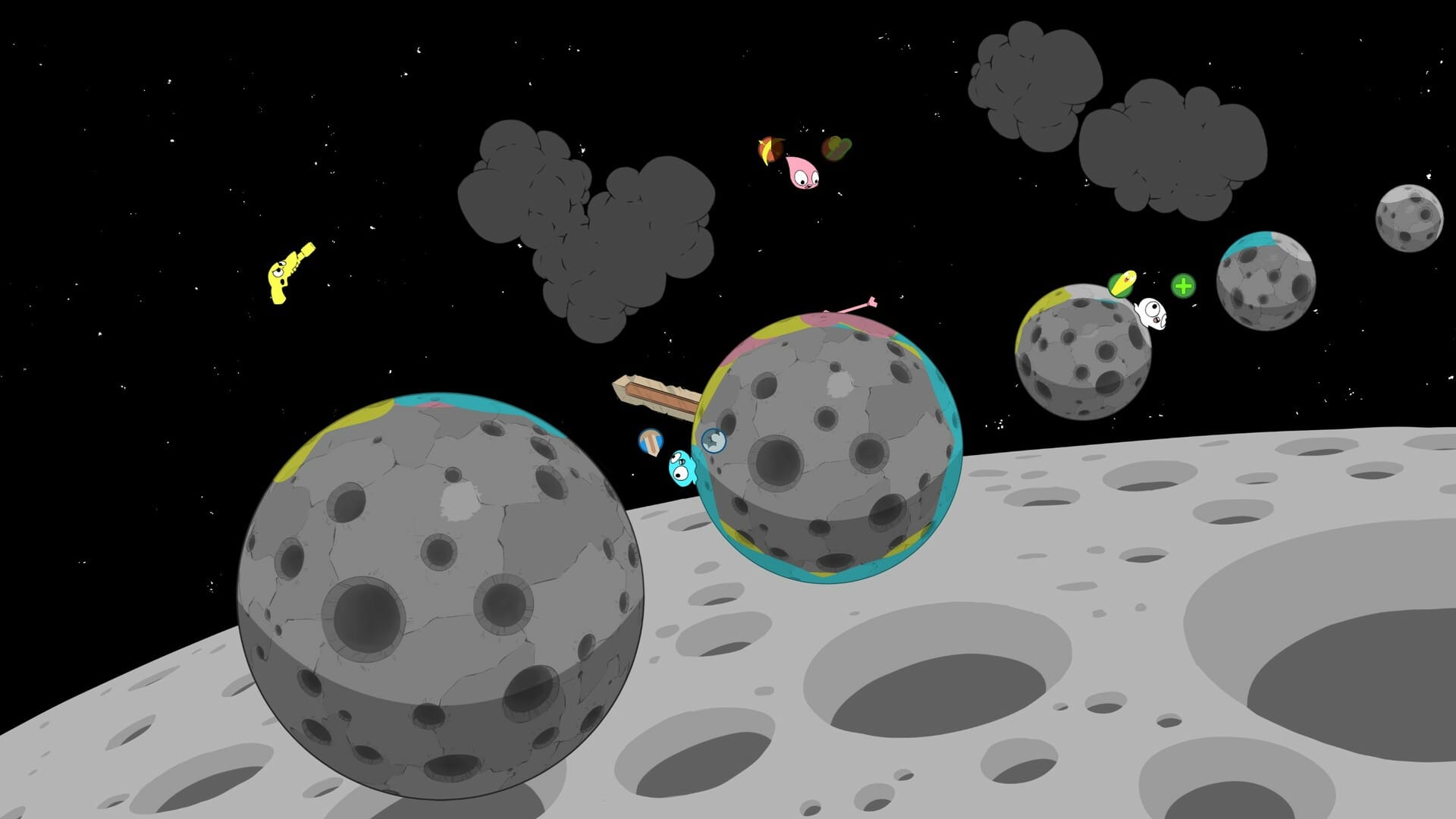
Consider what "freeze time" means in a vacuum. It's a strong ability. Now hand your opponent a growth power and a grappling hook at the same moment. Now add a black hole one of you spawned three seconds ago that's still exerting pull on every loose object on screen. The freeze doesn't just stop a character — it freezes a system mid-collapse, and whoever reads that frozen tableau fastest wins. This is emergent design working exactly as intended. The developer built the physics and the abilities; the player builds the moment.
That emergent quality is Bopl Battle's genuine competitive edge. Most party brawlers front-load their fun and then decay into repetition once you've seen the bag of tricks. Here, the combinatorial math keeps generating novelty well past the point where you'd expect familiarity to set in. Two players who know every individual ability cold can still surprise each other, because the combinations outnumber anyone's ability to rehearse them.
The Skill Ceiling Problem — and Why It Isn't One
There's a legitimate worry hiding in a game this chaotic: does skill actually matter, or is it a slot machine? Bopl Battle threads this well. The chaos is readable. Arenas are small and uncluttered, character silhouettes are clear, and the physics — while unpredictable in outcome — are consistent in behavior. A skilled player isn't someone who memorized a build; it's someone who reads a chaotic board faster and improvises a response. The randomness is in the situation, not the controls. That distinction is everything. It's the difference between Mario Party luck and Smash Bros. mastery, and Bopl Battle lands closer to the latter than its goofy blobs suggest.
The Onboarding and the Ceiling of Access
Here's where I stop cheerleading. Bopl Battle has no single-player campaign and no bots. None. This isn't an oversight — it's a stated design philosophy. And I respect the honesty. But respect isn't the same as endorsement.
The practical consequence is severe: if you boot this game up alone, there is functionally nothing to do. You cannot learn the abilities in a low-stakes environment. You cannot practice reading the chaos. You cannot even confirm the game is fun before you've dragged three friends into a lobby. For a game whose entire value proposition is discovering synergies, the absence of any solo sandbox to discover them in is a real, self-inflicted wound. A single practice mode against dumb bots — not a campaign, just a sandbox — would have removed the one asterisk that follows this game everywhere. Its absence means the onboarding friction isn't in the design; it's in your social calendar.