
Overview
Broken Age arrived carrying more baggage than any adventure game in recent memory. This was the project that broke Kickstarter — Tim Schafer’s Double Fine asked for $400,000 to make a modest throwback and the crowdfunding campaign became a landmark event, dragging the entire conversation about crowdfunded game development into daylight. That kind of money and expectation is a curse as much as a blessing, and the game that eventually shipped in two acts wears both.
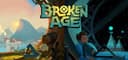
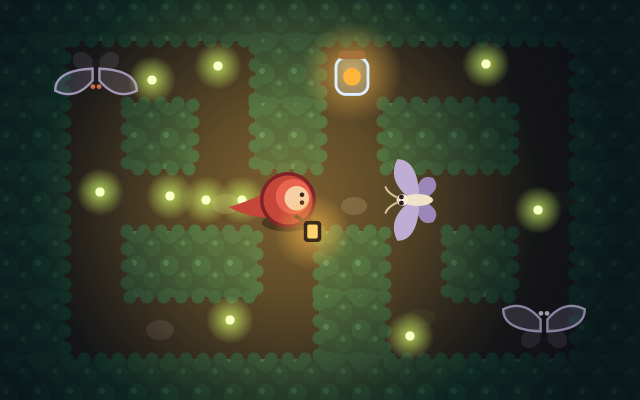
Strip away the origin story and what remains is a hand-painted, family-friendly point-and-click adventure in the classic LucasArts tradition, made by many of the people who defined that tradition in the first place. Schafer’s fingerprints — the ones you know from Grim Fandango and Day of the Tentacle — are all over the humor and heart. The structure is the hook: two protagonists, two worlds, one seat you can hop between at will. Vella Tartine is a baker’s daughter in a candy-colored village that ritually offers its young women to a devouring beast called Mog Chothra, and she is furious about it. Shay Volta is a boy trapped in a cushioned, sunless existence aboard a spaceship run by a smothering computer that stages fake “adventures” to keep him docile. One story is about escaping a death sentence dressed as tradition; the other is about escaping safety dressed as love.
Positioned against its contemporaries, Broken Age is the prestige indie — the adventure game that wanted mainstream respectability. It courts newcomers with gentle onboarding and courts genre veterans with the promise of a real Schafer story. For a while, it delivers on both. Then Act 2 asks a harder question about whether ambition and budget actually met in the middle.
Key features
- Dual-Protagonist Structure: Two fully separate stories — Vella’s and Shay’s — that can be toggled between freely, each with its own tone, cast, and puzzle logic, engineered to collide in a surprising mid-game twist.
- Hand-Animated Storybook Art: Every frame looks illustrated by hand, a lush cel-style aesthetic that leans into silhouette, color, and whimsy rather than technical horsepower.
- A Voice Cast That Punches Way Above the Genre: Elijah Wood as Shay and Masasa Moyo as Vella anchor a roster that includes Jack Black, Jennifer Hale, Wil Wheaton, and Pendleton Ward — delivering feature-film-quality performances in a category that usually can’t afford them.
Analysis
The Gameplay Loop
Broken Age is a classic inventory-and-environment adventure with the training wheels thoughtfully installed. Players explore hand-drawn scenes, talk to eccentric characters, collect objects, and combine or deploy them to clear obstacles. There’s no verb wheel, no pixel-hunting cursor from 1993, no dying, no dead ends. The interface gets out of the way. For anyone who bounced off the genre’s old cruelty — the moment-you-needed-a-hint-line-in-1995 kind of cruelty — this is a deliberate, welcome softening.
Act 1 is where the design sings. The puzzles are logical, the solutions are legible, and the pacing keeps things moving between two worlds so that neither wears out its welcome. Vella’s world offers a rebellion to organize: escaping a “Maidens Feast” that everyone else treats as an honor. Shay’s world offers a quieter comedy of manners against an AI mother who tucks him in and calls it freedom. The freedom to switch works as a pacing tool, not just a menu convenience. Hit a wall in one story, jump to the other, let the subconscious chew, come back. Smart design.
Then the twist lands, and it’s a good one — the kind of structural reveal that recontextualizes everything assumed about how these two worlds relate. No spoilers here. It’s the best single moment in the game.
Where the Rope Runs Out
Here’s the problem, and it’s the problem that defines the game’s reputation. Act 2 is not the equal of Act 1. The narrative momentum that carried the first half stalls, and the puzzle design overcorrects hard. After a first act criticized in some corners as too easy, Double Fine cranked the difficulty into obtuseness. Players revisit environments they’ve already seen — a transparent stretch to justify a two-act split that always felt more like a funding and scheduling reality than a storytelling choice.
The worst offender is the notorious wiring puzzle, a logic gauntlet that swaps the game’s intuitive, character-driven problem-solving for abstract, trial-and-heavy busywork. It’s the kind of puzzle that stops the story cold. When a game has spent hours teaching players to think like its characters, asking them to instead brute-force a circuit diagram feels like a different game entirely bolted onto this one. Several Act 2 puzzles share that DNA: difficulty for its own sake, padding a runtime that the story didn’t need padded.
And then it ends — abruptly. The convergence the whole structure promised resolves faster and thinner than the buildup earns. The seams of a production that had to become two things at once show through: the game that was pitched, and the game the budget and timeline actually allowed.
None of this erases what works. The writing is frequently wonderful, the characters land emotionally, and the central metaphor — two kids fighting the people who love them into cages — is more resonant than the whimsical packaging suggests. But a review has to grade the whole arc, and the arc sags precisely where it should crescendo.
Visuals & performance
This is the easy part. Broken Age is beautiful, full stop. The art direction — overseen with Nathan “Bagel” Stapley’s storybook sensibility — trades polygon-counting for pure illustration, and it has aged better than nearly anything from its era because it never chased realism to begin with. Vella’s world glows in warm pastels; Shay’s ship hums in soft, sterile curves. Character design is expressive and legible.
Peter McConnell’s orchestral score, performed by the Melbourne Symphony Orchestra, does exactly what a great adventure soundtrack should: it disappears into the emotion of a scene and swells only when needed. As a 2D game of modest scope, it’s light on hardware by design — there’s no performance story to tell here, and that’s a compliment to the art direction.
Platform nuances
The switch between input schemes reveals a design that was, quietly, built for touch.
- iOS: Arguably the ideal home. A point-and-click game becomes a point-and-tap game with zero friction, and the tablet-sized canvas flatters the art. At a 4.5/5 store rating, it’s the most natural fit — tap to move, tap to interact, no cursor overhead. Great commuter play.
- Steam (PC): The traditionalist’s version. Mouse-and-keyboard precision is fine, though the interface is so streamlined it can feel under-utilized on a full desktop rig. The enthusiasm for the game is real, and so is the Act 2 grumbling.
- Nintendo (Switch): The most compromised. Handheld touch mode recovers much of the iOS magic, but docked play routes everything through cursor navigation via the stick, which introduces exactly the kind of imprecise pointer movement this genre lives and dies on. Playable, but it’s the version where the controls feel translated rather than native.
Final verdict
Broken Age is a game worth being glad exists, and hard to call great. The first act is a small marvel — funny, gorgeous, and structurally daring in a way that makes the crowdfunding circus that birthed it feel forgiven. The second act is the sound of a project running out of runway, trading its best instincts for filler and frustration right when it should be soaring. What’s left is a flawed, frequently beautiful adventure carried by writing, art, and voice work that most games in the genre can only envy. We recommend it only to players who prize craft over challenge: come for the art and the twist, brace for the sag, and don’t expect the ending to hold the weight of everything that came before it.
Reviewed by the Rankeno Puzzle & Casual Desk. Scores are out of 10; the overall score is the desk’s editorial judgement, informed by the four sub-scores above. How we review


