
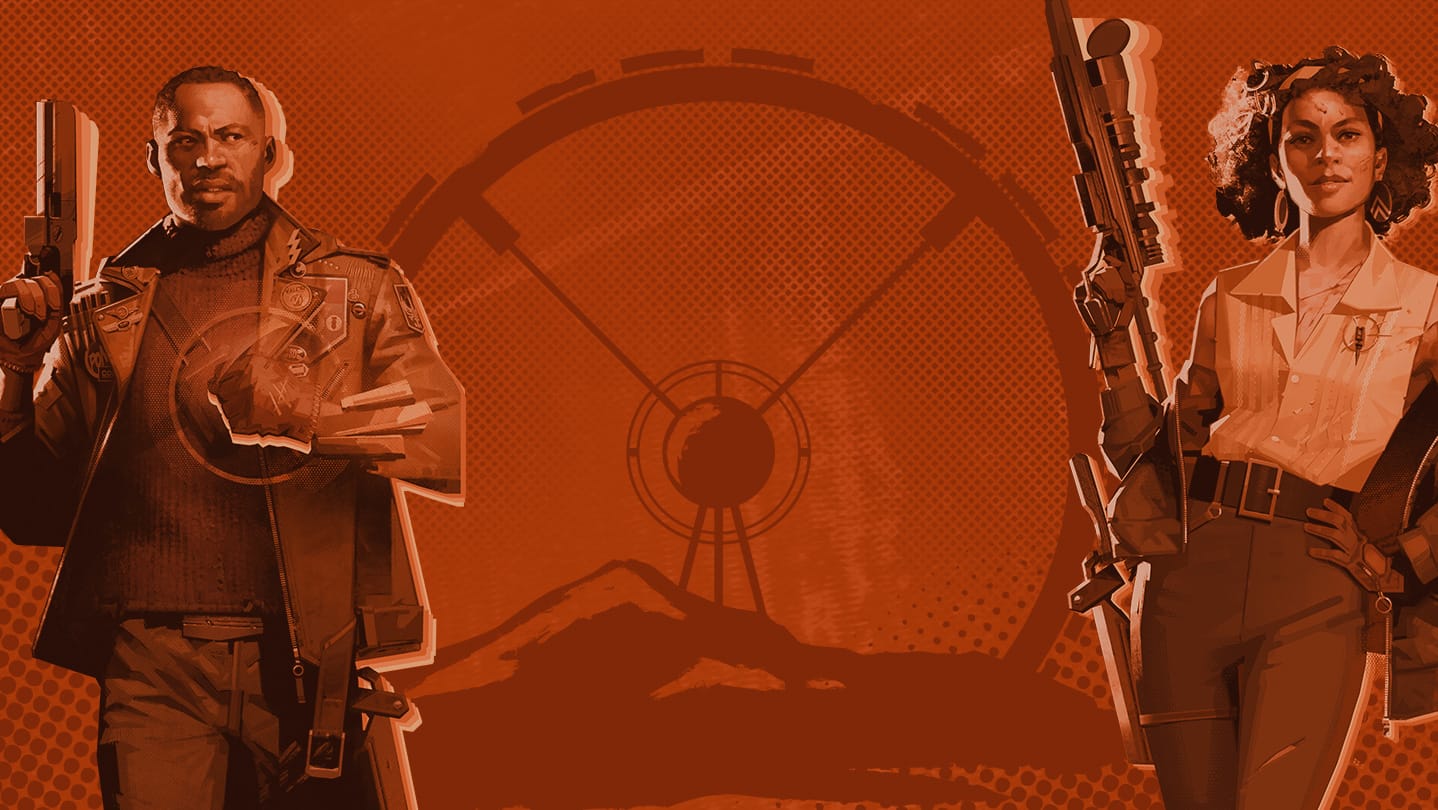



Bottom Line: Arkane’s most ambitious experiment is a clockwork masterpiece of social engineering and supernatural violence, even if the gears occasionally grind under technical friction.
The Knowledge Economy
The core of Deathloop isn't the shooting—though the gunplay is punchier than anything Arkane has produced previously—it is the iterative mastery of the environment. Most games treat "replaying" a level as a failure or a grind; Deathloop treats it as an evolution. On your first visit to The Complex at Noon, you are a rat in a maze, dodging Eternalists and fumbling with locked doors. By your tenth visit, you are a god. You know exactly which window is left unlatched, which guard has the keycard, and exactly how many seconds you have before a turret detects your presence.
This sense of player-driven discovery is the game’s greatest triumph. There is a profound satisfaction in hearing a snippet of dialogue in the Morning that reveals a secret path usable only in the Evening. The "Golden Loop"— the theoretical perfect run where all eight targets are eliminated—is the ultimate reward, but the journey of failed loops, narrow escapes, and "Aha!" moments is where the real game lives.
Combat, Slabs, and Mechanical Friction
Arkane’s signature "Slabs" return here, granting Colt powers that break the rules of conventional shooters. Nexus, which links the fates of enemies so that a single headshot kills a whole squad, is a standout for those who prefer efficiency over chaos. However, the game occasionally struggles with its own AI. While the Visionaries are formidable due to their unique kits and scripted defenses, the rank-and-file Eternalists often suffer from a lack of tactical awareness. There were moments during my playtesting where I could pick off three guards in a row without the fourth so much as glancing away from his graffiti.
This lack of enemy reactivity can occasionally deflate the tension, making the world feel less like a living island and more like a shooting gallery. Fortunately, the Julianna invasion mechanic solves this brilliantly. When a human player enters your world, the tempo shifts instantly. You stop being the hunter and start looking for traps. It forces you to engage with the map’s verticality and hideouts in ways the AI never could. It is the friction that keeps the loop from becoming too comfortable.
UI and Narrative Flow
The interface is a triumph of style, but it occasionally prioritizes form over immediate utility. The Lead Tracking system is essential for keeping your various objectives straight, but navigating the various menus between missions can feel like a chore. That said, the voice acting—specifically the banter between Colt and Julianna—is some of the best in the industry. Their relationship provides the emotional anchor for what could have otherwise been a cold, mechanical exercise. Julianna isn’t just an antagonist; she is a mirror, mocking your failures and providing the narrative justification for why you keep waking up on that same beach.