
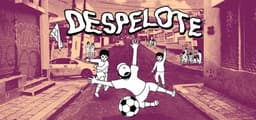
Bottom Line: Despelote is a masterclass in hyper-specific cultural storytelling, using a soccer ball as a tactile anchor to recreate the ephemeral magic of childhood and national fervor. It’s less a sports simulation and more a sensory-rich dip into a memory that feels both deeply personal and universally resonant.
The core genius of Despelote lies in its rejection of traditional sporting goals. In any other game, a soccer ball is a tool for scoring. Here, it’s a conversational device. When you kick the ball at a group of neighbors, you aren't trying to start a match; you’re inviting a reaction. The physics engine isn't tuned for professional precision; it’s tuned for the clumsy, exuberant energy of a kid in a park. The ball catches on uneven pavement, ricochets off concrete walls, and occasionally gets stuck in places it shouldn't. This "friction" is intentional. It grounds you in the space.
The Gameplay Loop of Memory
Most "slice-of-life" games suffer from a lack of mechanical purpose, often devolving into "walking simulators." Despelote solves this by giving the player a constant, secondary task: don’t lose the ball. As you navigate the streets of Quito, the ball becomes an extension of your presence. You find yourself idly juggling while listening to a conversation about the local economy or the upcoming match against Uruguay. It mimics the way children occupy their bodies while the "adult" world happens around them.
The narrative doesn't hit you over the head with exposition. Instead, it’s tucked away in the corners of the map. You might kick your ball into a fruit stall, prompting a grumpy but nostalgic lecture from the vendor, or discover a hidden courtyard where a radio is blasting the play-by-play of a qualifying match. The environmental storytelling is world-class, capturing a specific moment in Latin American history—the transition to the US dollar, the political instability, and the singular, unifying hope provided by the national team.
Interface and Intention
The UI is almost non-existent, which is a blessing. The game trusts the player to explore. The interaction logic is consistent: if you see it, you can probably kick something at it. This simplicity allows the player to focus on the rhythmic complexity of the world. The Spanish voice acting is left untranslated in many instances where it functions as background noise, enhancing the feeling of being a child who understands the vibe of a conversation without necessarily grasping every political nuance.
If there is a critique to be made, it’s that the experience is undeniably brief. You can see most of what Quito has to offer in a few hours. However, criticizing Despelote for its length is like criticizing a short story for not being a sprawling novel. Its brevity ensures that the atmosphere never curdles into repetition. Every street corner feels handcrafted, and every interaction feels like it was placed there with surgical intent.


