
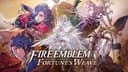
Overview
Most tactics series eventually have to pick a lane. Fortune’s Weave refuses to. It is a Nintendo Switch 2 exclusive that folds ideas from Fire Emblem: Three Houses and Fire Emblem: Engage (a colosseum, dungeons and free exploration) into a single-player campaign that runs long, and it splits that campaign across multiple protagonists.
The setting is the Dagda Empire, which flourished for centuries under the rule of the gods. The threat is Balor, a demon god. The response is a group of heroes whose stories intertwine across past and present. Time travel binds the routes together: heroes move between eras to gather allies, and the same idea justifies a rewind feature on the battlefield. Divine favor plays a similar double role. It frames the world’s theology and also unlocks Blessings that strengthen heroes in combat.
Battles keep the series’ turn-based, grid-based foundation. The headline addition is Blaze Arts, signature attacks that cost the user’s own HP. Between battles, the city of Dagsion serves as the hub. Players train, recruit allies and upgrade abilities there, and the Heroic Games tournament adds special rules and terrain effects to its matches. A world map and dungeons extend the game outward, with turn-based encounters called Clashes inside.
The design risks are clear:
- a slow start
- a repetitive free-time phase
- routes that differ less than expected
- writing that can feel shallow or disjointed
- a steep difficulty
For a game that asks for a long commitment, those caveats carry weight.
Key features
- Multiple Intertwined Routes: Heroes whose stories cross past and present, traveling through time to gather allies against Balor. Each route is built to carry the depth of a full Fire Emblem campaign.
- Blaze Arts: Signature hero attacks paid for with the user’s own HP. Each one trades survivability for impact.
- Blessings: Battlefield boosts unlocked by earning divine favor.
- Rewind: A turn-back mechanic tied directly to the time-travel premise.
- Dagsion and the Heroic Games: A hub city for training, recruiting and ability upgrades. Its tournament matches can impose special rules or terrain effects.
- World Map, Dungeons and Clashes: Free exploration with turn-based encounters in dungeons.
- Scale and Flexibility: A long campaign, several difficulty levels, and TV, tabletop and handheld play.
- Expansion Pass: A paid add-on with new story content and extra content waves.
Analysis
Multiple Routes, One War
Splitting the story across several heroes changes what the long runtime means. The total comes from multiple campaigns that reference one another, with time travel connecting them. Each route is built to carry the depth of a full Fire Emblem game. If that holds, the value case is simple: a purchase buys several complete strategic arcs, each with its own roster decisions.
The weakness sits in the same place as the strength. The routes can feel less distinct than expected, and the premise explains why. Heroes fighting a demon god across overlapping eras will share threats, places and allies. The time-travel framing encourages links between routes more than contrast. The design rewards players who care how the threads connect more than players hunting for radically different campaigns. We consider that a fair trade. Still, the promise of intertwined stories sets up an expectation of difference that this structure struggles to meet.
Blaze Arts and the Economics of HP
The strongest idea in the combat design is also the easiest to explain: Blaze Arts cost HP. In a turn-based grid game, HP is the buffer that decides whether a unit survives the enemy’s next turn. Charging HP for a signature attack turns every Blaze Art into a positioning question. Will this strike remove the threat, and where will the weakened hero be standing afterward? A free special move invites thoughtless use. A self-damaging one forces the planning the genre exists to test.
Blessings pull in the other direction. Divine favor unlocks boosts for heroes, so the system pairs a self-inflicted cost with an earned reward. Each hero gets paired levers to manage over a campaign, and the combat gets a clear risk curve. The tactical combat is among the series’ stronger recent work. The HP economy is the most likely reason, because it adds a decision at exactly the moments where most tactics games hand out free spectacle.
Rewind: Theme as Safety Net
Undo features divide tactics players. They remove the sting of misjudging an enemy’s range, but they also lighten the weight of every commitment. Fortune’s Weave gives its rewind a story reason: in a plot built on time travel, turning back the clock belongs to the world. The case for the feature is strongest at the top of the difficulty curve, which is high. A long campaign with demanding maps needs a way to absorb a bad turn without forcing a full restart, and rewind provides it. How much it softens the tension depends on how freely a player uses it. The several difficulty levels give players a second way to tune the challenge.
Dagsion and the Downtime Loop
Dagsion has dual jobs, and on paper it handles them unevenly. As home of the Heroic Games, it holds the game’s most interesting idea outside the main campaign: matches that add special rules or terrain effects. Modifiers like these target a common weakness of long tactics games. Players settle on a dominant formation and stop thinking. A tournament that changes the rules forces rosters to adapt and gives trained units somewhere to prove themselves.
As a management hub for training, recruiting and upgrading, Dagsion draws the sharpest complaint: the free-time phase gets repetitive. That is a structural hazard. A between-battle loop repeated across a long campaign compounds every bit of friction it contains, and multiple routes multiply the repetitions. The tournament is the reason to visit Dagsion. The chore list is the cost of living there.
World Map, Dungeons and Clashes
Free exploration on a world map and in dungeons widens the game beyond its story battles. Clashes, the turn-based encounters inside dungeons, give combat a second venue. In principle, that venue lets players test units and build strength before harder story battles, which matters in a difficult game. The risk is filler, since side combat in a long game can dilute the main campaign. Side content that doubles as a way to ease the difficulty earns its place, though.
Pacing and Writing
The main complaints trace back to the multi-hero structure. The slow start is the cost of introducing several protagonists, past and present eras and a pantheon before the threads pay off. The writing, which can feel shallow or disjointed, faces the same problem. Every scene has to serve its own route, the larger time-travel plot and the links between them. Ambitious structure strains characterization, and Fortune’s Weave appears to pay that price in places. Players who come to Fire Emblem mainly for character drama should temper their expectations. Players who come for the maps get the better end of the deal.
Visuals & performance
The premise gives the art direction a difficult brief: a divine empire with centuries of history, a demon god, a tournament city, and the same world shown across past and present. The most important visual job is legibility. Players need to know at a glance which era they are in and whose thread they are following, because the whole structure depends on that sense of place.
The interface also carries more than usual for the series. Before committing a move, players have to weigh several things:
- a Blaze Art’s HP cost against the damage it deals
- which Blessings are active
- any special rules or terrain effects in a Heroic Games match
A tactics interface succeeds when it shows those numbers before the decision, not after the consequence. With this many modifiers stacked together, the forecast screen determines whether players can trust the presentation.
Performance expectations follow from the genre. A turn-based, grid-based game places little demand on input latency or split-second frame pacing. The hardware’s main role is presentation and the transitions between hub, world map and dungeons. As a Switch 2 exclusive, the game targets a single platform, with no older or weaker version to accommodate.
Platform nuances
Fortune’s Weave exists only on Nintendo Switch 2, so there are no parity questions. The tradeoff is that original Switch owners cannot play it.
- TV, Tabletop and Handheld: All are supported. Turn-based combat suits handheld play especially well, because the game waits on every decision and each battle ends at a natural stopping point. That matters for a long campaign.
- Controller-First Input: Moving a cursor across a grid maps cleanly to sticks and buttons, so the core interaction works the same in every mode.
- Expansion Pass: A paid add-on with new story content and extra content waves. With a base campaign already long, the pass suits players who finish every route and want more. It is not needed to get a complete game.
Final verdict
Fortune’s Weave makes its strongest argument on the grid. Blaze Arts turn special attacks into HP wagers, Blessings reward earned favor, the Heroic Games change the rules, and the rewind gives a demanding difficulty a way out that fits the story. The multi-route structure supplies the scale: a long campaign, with each route built to carry the depth of a full Fire Emblem game. The costs are real and predictable: an opening that takes too long, a management phase in Dagsion that repeats across multiple routes, routes that overlap more than the premise suggests, and writing that strains under its own structure. We rate it Great: a clear recommendation for tactics players who own a Switch 2 and have patience for a slow first act, with reservations about pacing, repetition and route differentiation. Players who come to Fire Emblem chiefly for its characters should expect the maps to outshine the script.
Reviewed by the Rankeno Puzzle & Casual Desk. Scores are out of 10; the overall score is the desk’s editorial judgement, informed by the four sub-scores above. How we review