Overview
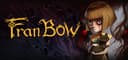
Horror games love a monster. Killmonday Games, the two-person Swedish studio behind Fran Bow, understood something more unsettling: the scariest thing you can hand a player is a ten-year-old girl who has seen too much. Released on August 27, 2015 by married developers Natalia Martinsson and Isak Martinsson, this is a point-and-click adventure that wears the skin of a fairy tale and bleeds something far darker underneath.
The setup is grim and deliberate. Fran witnesses the murder of her parents, flees into the woods with her cat Mr. Midnight, and wakes up institutionalized at Oswald Asylum with the cat gone and the world convinced she’s mad. Her prescribed pills, Duotin, don’t calm her — they crack reality open, dropping her into the Ultrareality, a viscera-slicked mirror world where the puzzles, the truth, and the horror all live. The whole game turns on that toggle between the sanitized surface and the rot beneath it.
Positioned squarely in the crowded indie horror-adventure space of the mid-2010s — the era of Detention, Little Misfortune (Killmonday’s own follow-up), and a wave of hand-drawn narrative games — Fran Bow stood out by refusing to be tasteful. It’s gross. It’s tender. It’s frequently both in the same frame. Its long-tail reception has been emphatic for a game with no marketing budget and no publisher backing, and a Metacritic score of 70 reflects critics who admired its ambition while noting its rough edges.
What makes it matter isn’t the gore. It’s that the gore has a reason. This is a game about how a traumatized child metabolizes the unbearable, and it uses its medium — the click, the object, the shift between worlds — as the actual mechanism of that psychology. Few games at this price point have aimed this high.
Key features
- Dual-Reality Mechanic: Popping Duotin flips Fran between the mundane world and the Ultrareality. It’s not a gimmick — objects and states in the nightmare world reshape the normal one, making perception itself the core puzzle tool.
- Hand-Drawn Everything: Dozens of hand-painted backgrounds and a large cast of characters, all rendered in a storybook-gone-wrong style that lands somewhere between Tim Burton and a Victorian anatomy textbook.
- Logic-Based Adventure Puzzles: Classic inventory-and-environment problem-solving, deepened by the world-shifting layer and punctuated by arcade-inspired mini-games that break up the pace.
- A Story With a Spine: Themes of loss, institutionalization, and mental illness handled with unusual seriousness, anchored by the Fran–Mr. Midnight bond that keeps the whole thing from tipping into pure misery.
Analysis
The Gameplay Loop
Strip away the atmosphere and Fran Bow is a traditional point-and-click: examine, collect, combine, apply. The genre’s grammar is familiar — every hotspot probed, every object hoarded, every inventory item tried against every locked door until something gives. Anyone who knows The Longest Journey or the Wadjet Eye catalog already knows the vocabulary.
The Duotin mechanic is what lifts it above homage. Taking the pill doesn’t just swap the wallpaper for something bloodier — it changes what’s actionable. A gap in the normal world might be a bridge in the Ultrareality. A harmless object gains teeth. The best puzzles ask the player to hold both states in their head at once, planning a move in one reality to change a condition in the other. When it clicks, it’s genuinely clever design, and it makes the horror functional rather than decorative. The nightmare is a tool. It’s a tool.
Where the Logic Frays
Here’s the honest part. Some of these puzzles are obtuse to the point of hostility. Fran Bow belongs to that lineage of adventure games where the intended solution occasionally lives on a different logical plane than the player. There are walls that aren’t about cleverness — they’re about guessing which pixel the designers decided mattered, or intuiting a leap of dream-logic that makes sense only in retrospect. The dual-reality system, for all its cleverness, multiplies the search space: now every dead end has two worlds’ worth of objects to re-examine.
This is the game’s real friction point, and it’s not evenly distributed. Chapters three and beyond lean hardest on abstract, symbol-driven puzzles likely to send a meaningful chunk of players to a walkthrough. For some, that’s a betrayal of the immersion. It’s the one place where the craft slips — the difference between a puzzle that’s hard and one that’s merely unclear.
Story as the Engine
Most adventure games treat narrative as the reward for solving puzzles. Fran Bow inverts it. The puzzles are the price of admission to the next revelation, and the revelations are what the game is actually about. The script refuses to condescend. It sits Fran squarely inside real psychological trauma — grief, dissociation, the terror of being disbelieved by every adult around her — and trusts the player to feel the weight without narration spelling it out.
The pacing is a slow bloom. The early chapters read almost like a macabre children’s book. Then the floor drops. By the mid-game the story is interrogating whether the Ultrareality is hallucination, metaphor, or something literally true within its fiction, and it has the confidence never to fully answer. Mr. Midnight is the emotional load-bearing wall — the one uncomplicated love in a story built from loss — and the game knows exactly how much to lean on him.
If there’s a narrative flaw, it’s the landing. The buildup is so patient and so charged that the resolution can feel like it arrives a beat too fast, resolving its cosmic ambitions more quickly than the setup promised. It’s a common criticism, and a fair one. But it’s the disappointment of a game that reached high, not one that never tried.
Visuals & performance
The art is the game. Every background is hand-painted, and the style — soft, storybook linework fused with disturbing body horror — creates a tension no 3D engine could fake. The Ultrareality shifts are full re-imaginings of a scene, and the craft on display is remarkable for a two-person team. Character designs skew grotesque in the best way, memorable and specific.
The soundtrack, by Isak Martinsson, does quiet, essential work — melancholic and eerie, it earns the “hauntingly beautiful” label the game reaches for. As a 2D adventure of modest scope, the game is light on hardware by design, and nothing in its technical makeup demands much of a machine. The one design-level grumble worth logging is the occasional pixel-hunt, where an interactive hotspot is small or poorly telegraphed against the dense artwork — a UI clarity problem more than a technical one.
Platform nuances
On Steam, Fran Bow is in its native habitat. Mouse-and-keyboard is the point-and-click’s mother tongue: precise cursor control suits hotspot hunting and inventory juggling, and the desktop framing suits a game built for long, uninterrupted evenings.
On Nintendo Switch, the calculus shifts. Handheld play and a touchscreen map well onto the click-an-object core — tapping the screen is arguably more intuitive than a cursor for this genre. Docked play routes the player through stick-driven cursor control, which is the weakest way to experience the game; nudging a pointer across dense art to find a small hotspot introduces exactly the kind of friction the mouse eliminates. Undocked, the Switch version becomes the more intimate one — a dark little fairy tale held in two hands. That framing fits Fran’s story better than a monitor ever could.
Final verdict
Fran Bow is a horror game that would still work if every scare were stripped out of it — because underneath the blood, it’s about a child trying to survive an unsurvivable year with the one creature who loves her back. That emotional core is unshakable, and Killmonday built an inventive dual-reality engine around it. The obtuse puzzles and a hurried finale keep it from greatness, and they matter. But for players with patience for old-school adventure cruelty, this is an easy recommendation — proof of how much two people with a clear vision can accomplish.
Reviewed by the Rankeno RPG & Adventure Desk. Scores are out of 10; the overall score is the desk’s editorial judgement, informed by the four sub-scores above. How we review