

Bottom Line: Humanity is a hypnotic, high-concept puzzle masterclass that proves crowd control can be both zen-like and intellectually grueling. It is a rare piece of digital architecture that feels as good to solve as it does to simply watch.
Humanity succeeds because it understands spatial flow. Most puzzle games are about static solutions; Humanity is about dynamic management. The early hours are deceptive, teaching you the basic vocabulary of movement. You place a "turn" tile, and the crowd obeys. You place a "jump," and they leap in unison. It feels meditative, almost rhythmic, as you watch the white-clad figures march to the beat of a minimalist electronic soundtrack.
The Mechanics of Mass
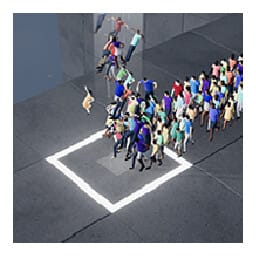
The brilliance lies in the physics of the crowd. These aren't just sprites; they are a fluid. When you command a crowd of three thousand people to take a sharp turn on a narrow bridge, the internal pressure of the mass causes those at the edges to spill into the abyss. You begin to think less like a gamer and more like a civil engineer. You aren't just solving a puzzle; you are mitigating disaster. The onboarding friction is remarkably low, but the complexity ceiling is astronomical. By the time the game introduces "The Others"—rival crowds of grey-clad humans—the game shifts from a peaceful march to a frantic tactical skirmish. Managing the "Goldy" statues (collectible high-value NPCs within the crowd) while simultaneously fending off a rival group requires a level of multitasking that few games in this genre demand.
Conflict and Scale
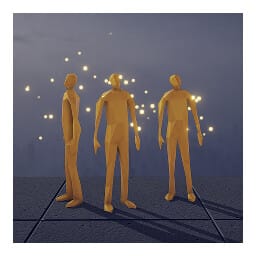
The mid-game pivot into strategic combat is where Humanity might lose the "zen" crowd, but it's where the game finds its teeth. Using your crowd to push blocks, activate switches, and physically shove "The Others" off the map turns the humans into a weaponized resource. It's a stark, almost uncomfortable metaphor for resource management. The scale here is the star. Seeing the screen filled with thousands of individual units, all being calculated in real-time without a hint of frame-rate stutter on a decent Steam rig, is a technical marvel.
The Creative Tail
The inclusion of a Stage Creator isn't just a "nice to have" feature; it is the game's lifeblood. The tools are surprisingly intuitive, allowing for the creation of puzzles that often surpass the developer's own stages in terms of deviousness. This community-driven ecosystem effectively solves the "content rot" that plagues many puzzle titles. Once you’ve mastered the 90-stage campaign, there is a literal infinite supply of user-generated content that keeps the mechanics fresh.