
Bottom Line: A masterclass in probability management that strips the predatory skin off slot machines to reveal a brilliant, satirical roguelike engine-builder.
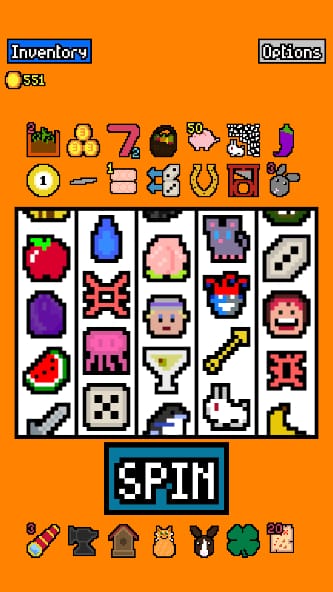
The genius of Luck be a Landlord lies in its subversion of the "gambler's fallacy." In a traditional slot machine, the house always wins because the math is fixed against you. Here, the developer hands you the keys to the math. The early game is a desperate scramble for consistency. You start with a handful of basic symbols—a coin, a cherry, an anchor—that barely produce enough to cover your first rent payment. The tension in these opening minutes is palpable; one bad string of spins can end a run before it even begins.
The Mechanics of Synergy
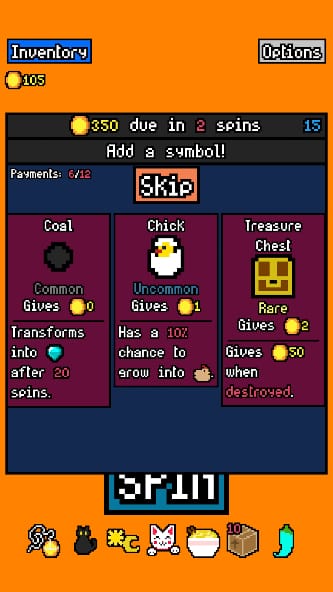
However, as the "deck" grows, the game shifts from a survival horror of finances into a complex optimization puzzle. You aren't just looking for high-value symbols; you’re looking for catalysts. The Beekeeper, for instance, is worthless without Flowers, but a single Beekeeper can turn a field of Flowers into a gold mine. This creates a fascinating risk-reward dynamic. Do you take the Egg now, hoping it eventually hatches into a Chicken that might lay a Golden Egg, or do you take the guaranteed three coins from a Shiny Pebble?
The depth is staggering. You eventually learn to manage the "density" of your machine. Too many symbols and you’ll never see your combos; too few and you’re vulnerable to "empties." You start utilizing Removal Tokens to prune the weak links, treating your slot machine like a bonsai tree. It’s a process of mathematical refinement that feels incredibly rewarding when a plan comes together. Seeing a screen full of symbols trigger a cascade of animations and sound effects as your bankroll explodes is a dopamine hit that rivals any AAA blockbuster, made all the better because you engineered that outcome.
Satire and the Gig Economy
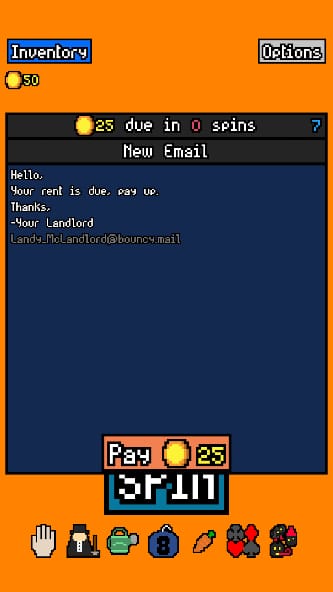
There is a sharp, satirical edge to the presentation. The landlord's demands aren't just a gameplay timer; they represent the crushing weight of the gig economy. You are trapped in a loop of generating wealth just to see it immediately siphoned away by a landlord who does nothing but demand more. This thematic resonance gives the game a "soul" that many abstract deckbuilders lack. When you finally reach the end of a run and "defeat" the landlord, it feels like a genuine triumph over an oppressive system.
The UI and Onboarding
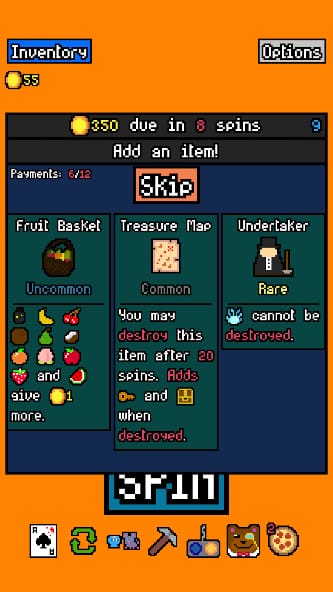
If there is a flaw, it’s in the initial friction. The game doesn't hold your hand, and the sheer volume of symbol interactions can be overwhelming for a newcomer. The interface is utilitarian—some might even call it sparse—relying heavily on tooltips to explain complex interactions. While this keeps the screen uncluttered, it requires a significant amount of "homework" during your first few hours. However, once you internalize the icons, the gameplay flow becomes lightning-fast. You can burn through a full run in 20 minutes, making it the quintessential "just one more spin" experience.