

Bottom Line: Magic Research is a meticulously balanced, text-driven masterclass in incremental design that trades flashy graphics for deep, compounding systems and a refreshing respect for the player's time.
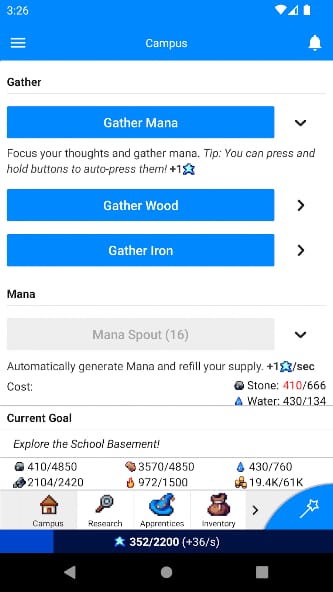
The core appeal of Magic Research lies in its compounding complexity. At the start, the experience is almost jarringly sparse. You click to study, you wait for mana to refill, and you research basic spells. But within an hour, the game’s "semi-automated" engine begins to hum. You aren't just a student; you are an architect of automation.
The Gameplay Loop & Automation
The brilliance of the loop is how it handles the transition from active play to passive management. Unlike many idle games that force a hard choice between the two, Magic Research encourages a hybrid approach. You direct your apprentices to automate the mundane—gathering ingredients or casting basic buffs—while you focus on the high-level strategy of which school to prioritize next.
The inclusion of Alchemy and Conjuration introduces a layer of resource management that feels more like a classic Euro-style board game than a mobile clicker. You aren't just waiting for a bar to fill; you are balancing a budget of mana and materials. If you over-invest in combat spells, your campus expansion slows down. If you focus too heavily on research speed, you might find yourself ill-equipped for the "boss" encounters that guard progress. This constant strategic pivoting keeps the "boring" parts of the incremental genre at bay.
Combat and Strategy
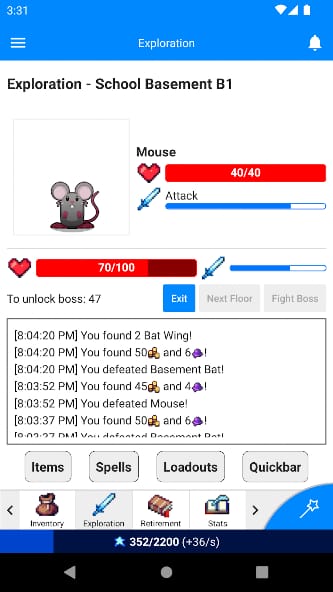
Combat is where the "Research" in the title truly earns its keep. While the battles are semi-automated, your "build"—the combination of equipped gear and active spells—is the deciding factor. The game demands that you actually understand your toolkit. Facing a high-defense golem? You’ll need to swap from raw fire damage to armor-shredding illusions or alchemical poisons. This requirement for tactical preparation elevates the game above its peers, where combat is often just a simple stat-check.
The Prestige Economy
The "Retirement" system is the game’s version of prestige, and it’s handled with remarkable sophistication. Rather than a total wipe that leaves you feeling like you've wasted your time, retiring feels like a strategic reload. You carry over powerful bonuses and knowledge that make the subsequent run significantly faster and more interesting. The "Time Pieces" system acts as the perfect lubricant here; if you’ve been away from the game for a day, you can use your accumulated time to blast through the early stages of a new retirement, getting you back to the "cutting edge" of your progress in minutes rather than hours. It is a rare example of a developer acknowledging that their players have lives outside the screen.