Bottom Line: Nine years after its Wii U debut, Mario Kart 8 Deluxe remains the most polished, complete, and mechanically honest kart racer ever shipped. It's not just the best game on Switch — it's the reason many Switches exist.
The Gameplay Loop
Mario Kart 8 Deluxe's core loop is deceptively deep, and the depth lives in drift management. Every corner is a micro-transaction: initiate the drift early enough to charge a mini-turbo, hold it long enough to upgrade to orange or purple sparks, release at the apex. Chain that across three laps and you're playing a rhythm game disguised as a racer. The skill ceiling — inside drifting bikes, fire-hopping debates, frame-perfect shortcut jumps at 200cc — is high enough that the competitive time-trial community is still active nearly a decade in.
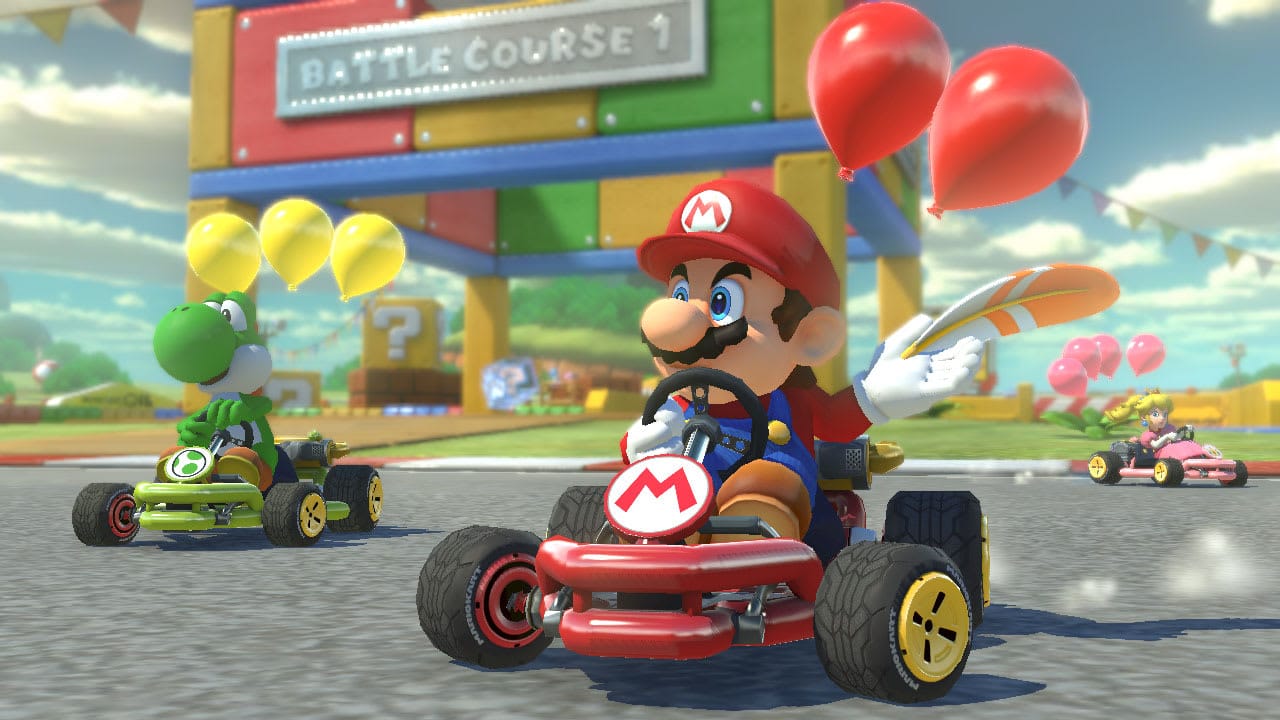
The two-item system is the Deluxe edition's smartest mechanical addition. In the original, item strategy was mostly reactive: get a shell, use a shell. Now there's inventory management. Frontrunners hold a Super Horn in the back slot as Blue Shell insurance. Mid-pack players stack aggression. The returning Boo (steal an opponent's item) and Feather (battle-mode jump) add texture without bloating the roster. Item balance isn't perfect — more on that below — but it's the most considered it's ever been in the series.
The Rubber-Band Problem
Here's the critique the game's defenders wave away and shouldn't: Mario Kart's item distribution is position-weighted by design, and at its worst, it punishes competence. A flawless two-and-a-half laps can be erased by a Blue Shell, a Lightning strike, and a Red Shell arriving in the final 400 meters, in that order, through no fault of your own. Nintendo would call this party-game democracy. I'd call it a deliberate design tension the game never fully resolves. It's tolerable — even charming — in a living room. In serious online play it can feel like the game is negotiating against your skill. Deluxe softens the sting (the Super Horn exists, dual slots enable defense), but the fundamental tension is load-bearing and permanent.
Battle Mode, Redeemed
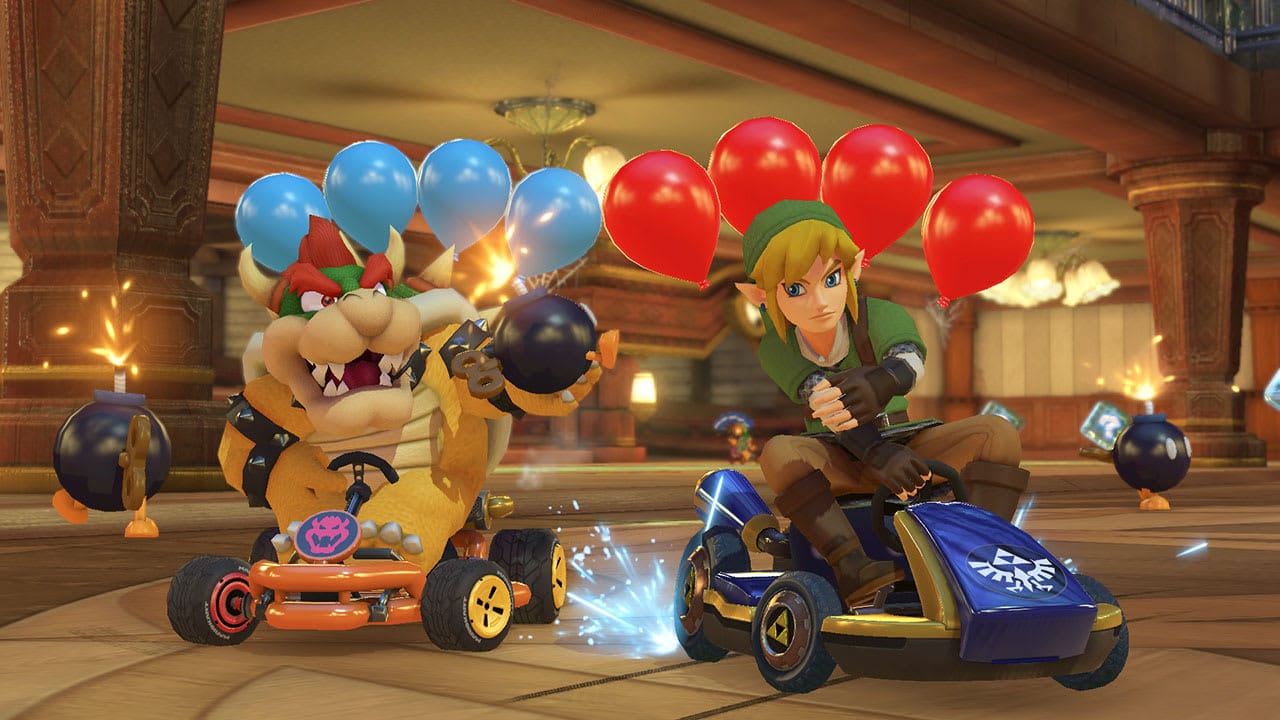
The Wii U version's Battle Mode was an embarrassment — repurposed race tracks standing in for real arenas. Deluxe rebuilt it from scratch with eight dedicated arenas and five modes. Balloon Battle is the classic. Bob-omb Blast is gleeful chaos. Renegade Roundup — essentially cops-and-robbers with Piranha Plants — is quietly the best team mode Nintendo has designed in years. This isn't a bonus feature; it's a second game bolted onto the first, and it's the single strongest argument for Deluxe over its Wii U ancestor.
Onboarding Without Condescension
Nintendo's accessibility work here deserves specific praise because of how it's implemented. Smart Steering doesn't take the wheel; it nudges. Auto-accelerate removes one input without removing agency. Critically, both are per-player toggles — so a parent running 150cc manual can share a split-screen with a kid on full assists, and both are playing the same race honestly. That's the difference between an accessibility option and an accessibility system. Most studios still haven't learned it.
The one place onboarding friction survives is kart customization. The stat differences between bodies, tires, and gliders are real and meaningful — and the game communicates them through abstract bar charts that hide the underlying values. Serious players end up on community spreadsheets. That's a UX failure Nintendo has simply never bothered to fix.