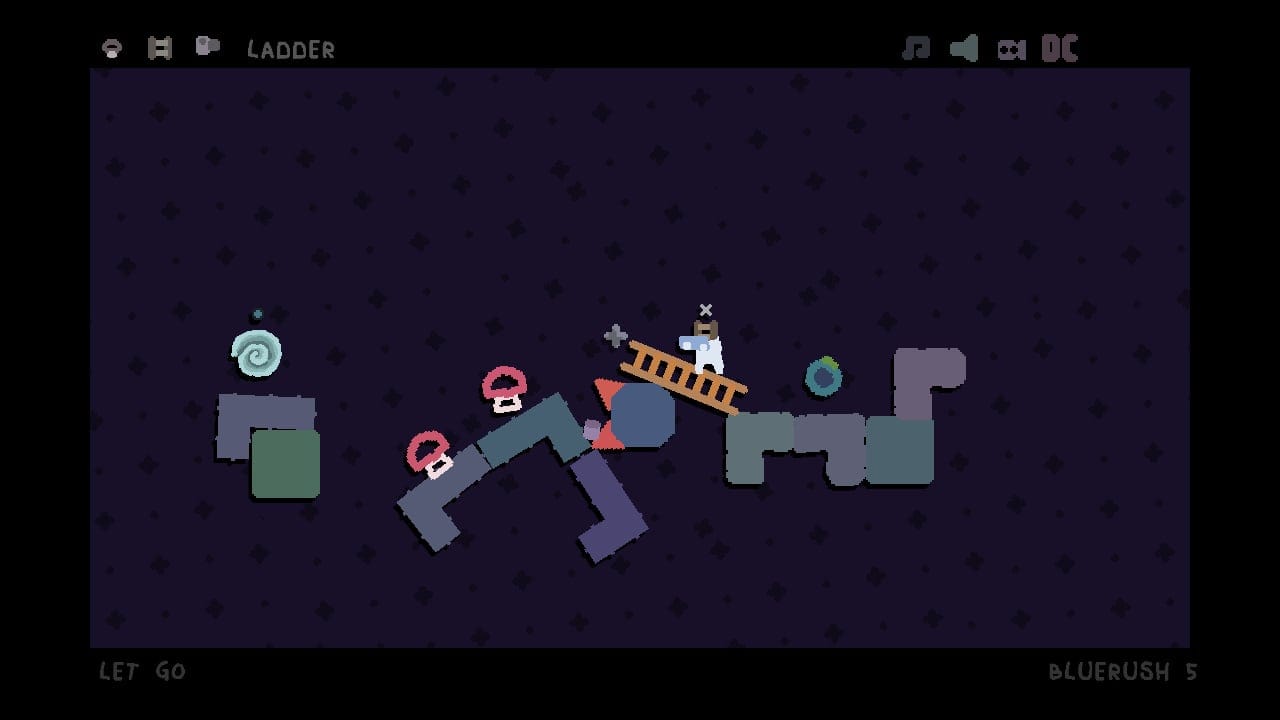

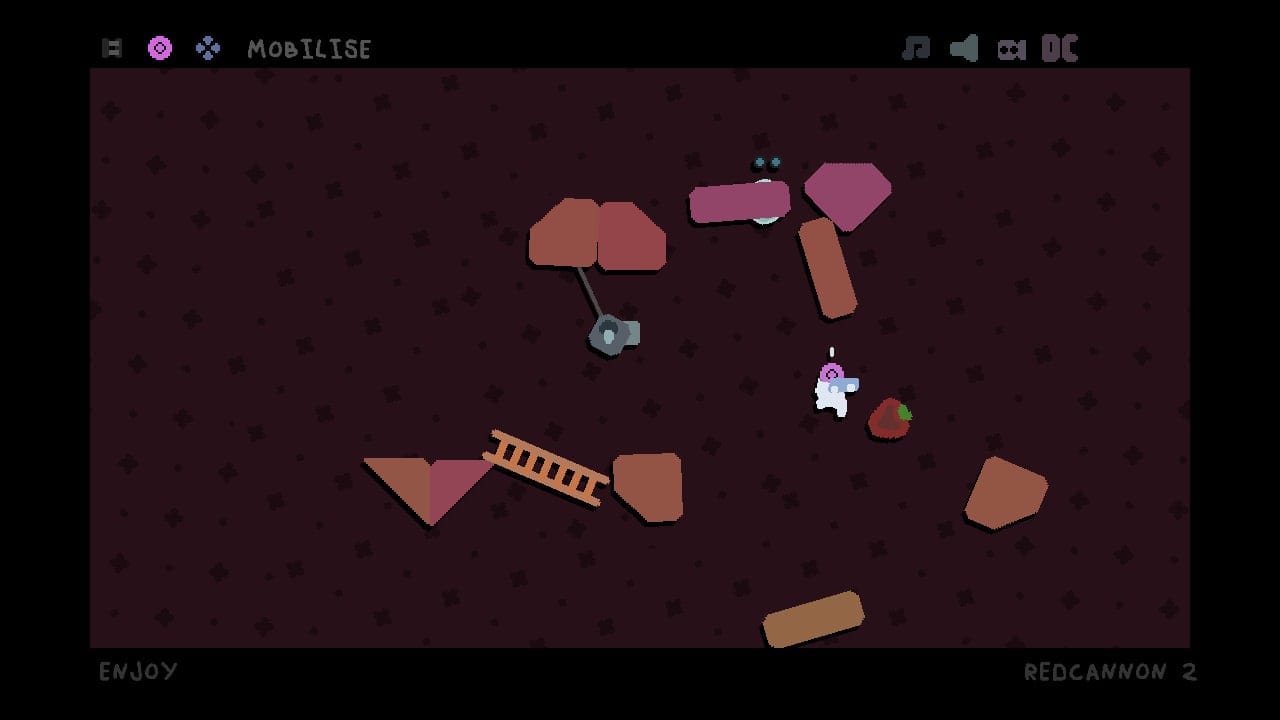
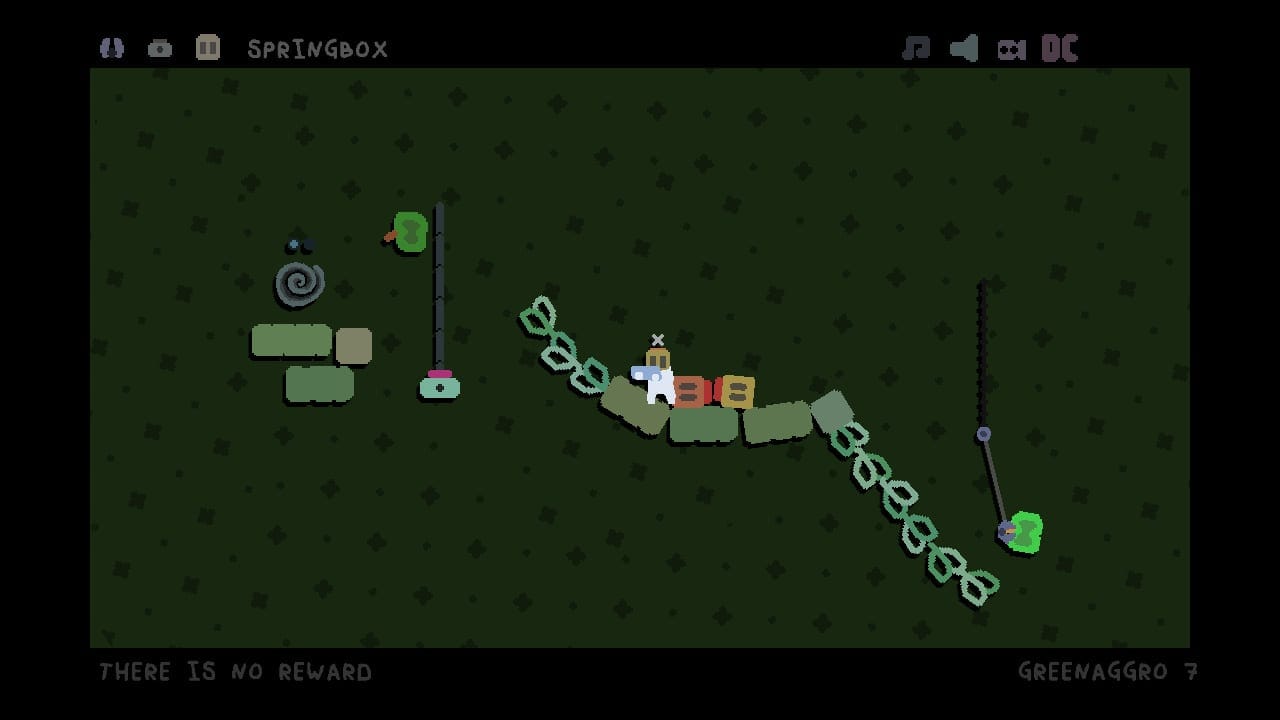
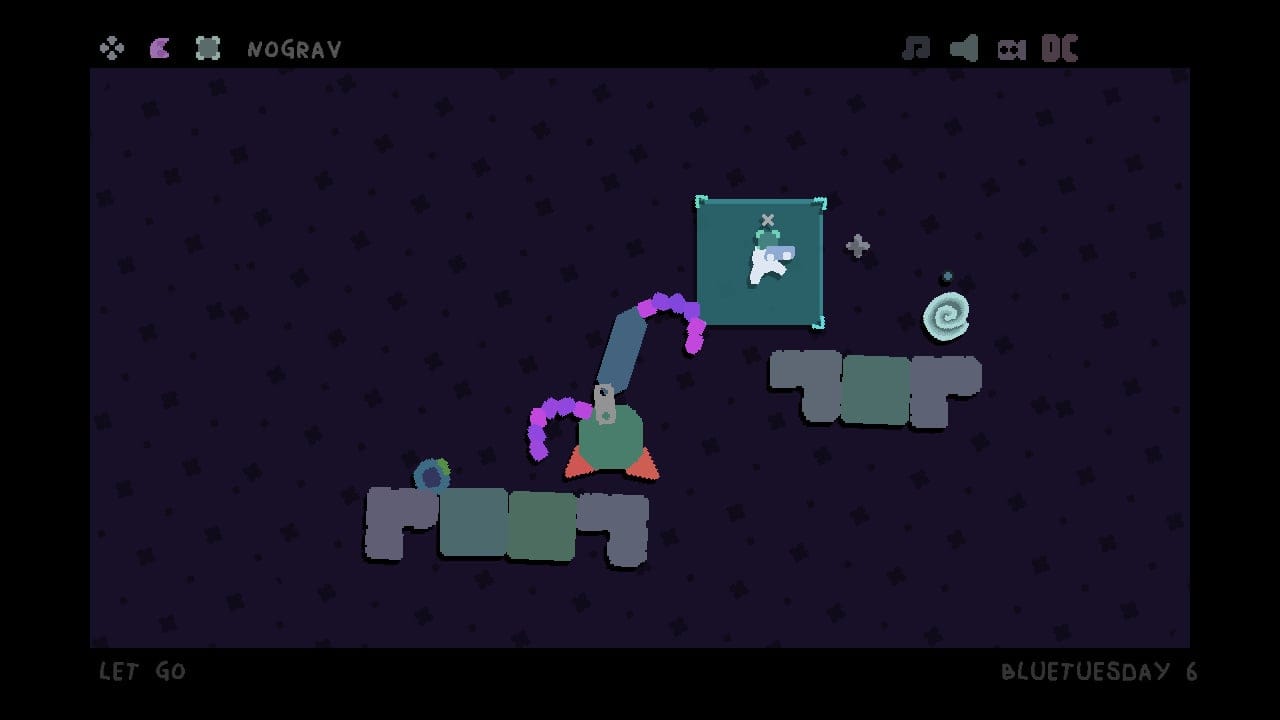
Bottom Line: Stuffed Wombat’s Mosa Lina is a brilliant, deeply hostile anti-puzzle game that rejects the cozy curation of modern platformers, forcing players to rely on raw physics exploitation and creative desperation. It is a masterclass in emergent gameplay, even if its brutal randomness occasionally crosses the line from challenging to mathematically impossible.
To understand Mosa Lina, one must first dismantle the concept of fairness in game design. Most modern games are designed to make you feel smart. They are carefully calibrated machines that present an obstacle, teach you the mechanics, and then reward you with a dopamine hit when you execute the intended solution. Stuffed Wombat actively rejects this coddling, choosing instead to drop the player into an uncompromising sandbox of sheer mechanical indifference. By stripping away designed solutions, Mosa Lina shifts the game’s core loop from deduction to raw, desperate improvisation.
When you drop into a level with a grappling hook, a bomb, and a useless flopping fish, and the exit is positioned behind an impenetrable wall of spikes, your initial reaction is confusion, followed closely by irritation. But once you accept that the game does not care if you win, a strange liberation occurs. You stop looking for the "right" way and start testing the limits of the game's physics. Can you use the explosion of the bomb to propel a crate across the gap, then grapple onto the flying crate mid-air? Yes, you can. Can you use the flopping fish to trigger a pressure plate through a microscopic pixel gap? Absolutely. This is a game that doesn't just allow you to cheat; it practically demands that you write your own rules.
This is the true brilliance of the game's mechanics: it transforms the player from a puzzle-solver into a system-exploiter. You are constantly searching for loopholes, leveraging gravity, momentum, and item collisions to bypass obstacles. The sheer variety of the 48 tools ensures that you are constantly forced to learn new, absurd synergies. A gravity-inverting cocoon might seem useless in a flat level, but when combined with a teleporting butterfly, it becomes a high-speed slingshot that can launch you across the screen.
The Friction of True Randomness
However, this commitment to unguided chaos is a double-edged sword. Because there is no backend algorithm ensuring that your rolled tools are compatible with your rolled level, you will inevitably encounter setups that are mathematically impossible. You will run out of items, find yourself physically blocked with no recourse, and be forced to restart your run.
In a lesser game, this would be a fatal flaw. In Mosa Lina, it feels like part of the developer’s hostile thesis. The game does not respect your time in the traditional sense; instead, it demands that you respect its systems. This creates a high-friction onboarding experience. Players who demand fairness, clean progression, and elegant level curves will find Mosa Lina deeply frustrating. But those who relish the act of breaking a game, who find joy in the messy, unpredictable collisions of physical objects, will find an incredibly rewarding sandbox. It’s a game that thrives on the hilarity of failure and the ecstatic triumph of a completely scuffed, unintended victory.