
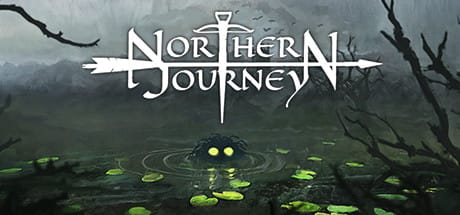
Bottom Line: Northern Journey is a staggering achievement in atmosphere that prioritizes raw creative vision over technical perfection, delivering a surreal Norse odyssey that feels like a lost artifact from a more imaginative era of game design.
The Architecture of Isolation
To play Northern Journey is to accept a specific kind of mechanical friction. The movement is fast—sometimes dangerously so—and the world is designed with a verticality that demands constant spatial awareness. You aren't just traversing a map; you are solving a landscape. Whether you are ziplining across a yawning chasm or diving into the murky depths of a swamp, the game constantly forces you to interact with the terrain in ways that feel tactile and risky.
The level design is the real star here. Unlike the procedurally generated emptiness of many modern titles, Brunegård’s world is dense and deliberately paced. There is a specific rhythm to moving from the claustrophobic tension of a dark forest into the breathtaking scale of a mountain peak. The transition isn't just a visual change; it’s an emotional shift. The game understands the power of the "reveal," using its lofi visuals to suggest massive, ancient structures and entities that the player’s imagination is forced to complete.
Ballistics and Bugs
Combat in Northern Journey is where the game’s "jank" becomes most apparent, yet it somehow works within the context of the nightmare. This is a game about projectiles. You spend much of your time backpedaling away from oversized, unsettling insects while trying to lead your shots with a slingshot or bow. It feels unrefined, frantic, and occasionally frustrating. But in an era where combat is often a series of canned animations and "press X to win" prompts, there is something refreshing about the raw, physics-based chaos on display here.
The enemy variety is genuinely impressive. With over 50 unique types, you are constantly forced to adapt your tactics. The creature designs lean heavily into the "unsettling" category—huge, twitching arthropods and spindly horrors that feel right at home in the game's Norse-Lynchian fusion. The lack of "polish" in the combat animations actually enhances the horror; the way an enemy skitters toward you feels unpredictable and organic rather than a scripted sequence.
The Solo-Dev Soul
We need to talk about the "jank." Yes, the platforming can be unforgiving. Yes, the collision detection occasionally loses its mind. In any other game, these would be marks against the final score. Here, they feel like the brushstrokes on a canvas. There is a human presence behind every weirdly shaped rock and every haunting chord of the soundtrack.
The game’s refusal to hold your hand or smooth over its rough edges is its greatest strength. It assumes the player is intelligent and patient. It doesn't offer a "user-friendly" experience; it offers a journey. The friction you encounter—the weird physics, the cryptic UI, the sudden difficulty spikes—serves to make the world feel more real, more indifferent to your presence. You are an intruder in this wilderness, and the mechanics reinforce that status at every turn.