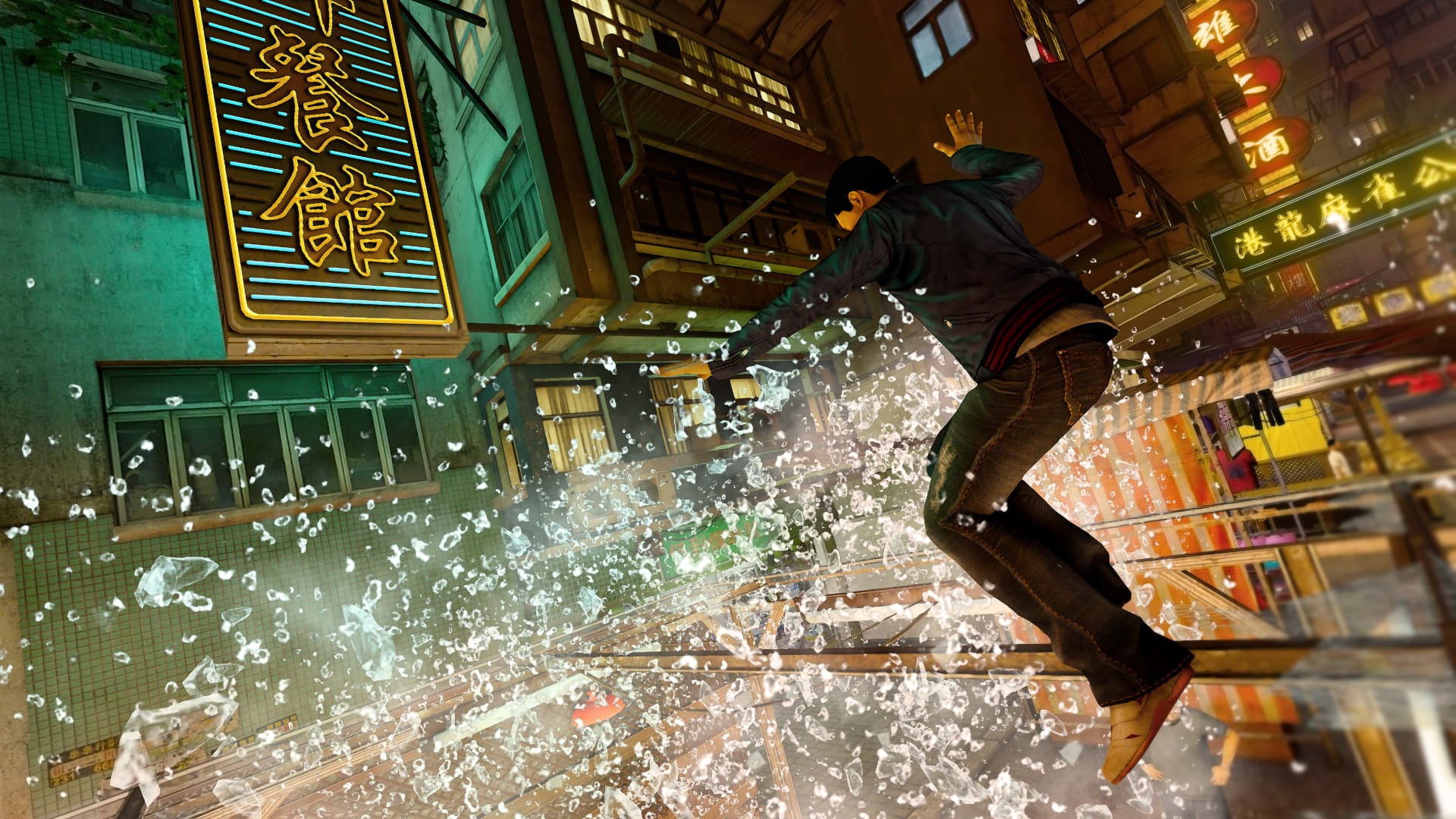

Bottom Line: Sleeping Dogs remains a masterclass in open-world storytelling and visceral martial arts combat, easily outshining its contemporary sandbox rivals with sheer attitude, character, and a gritty portrayal of Hong Kong.
The Dual-Identity Gameplay Loop
Most sandbox games suffer from a profound sense of ludonarrative dissonance; your protagonist is a cold-blooded killer in gameplay but a lovable rogue in cutscenes. Sleeping Dogs sidesteps this trap through its elegant, three-tiered progression system consisting of Triad XP, Police XP, and Face XP. Every mission is a tightrope walk. Commit vehicular manslaughter or cause excessive collateral damage, and your Police score drops, denying you access to defensive upgrades or tactical equipment. Conversely, to earn Triad XP, you must engage in brutal combat, executing complex combos and environmental finishers to prove your loyalty to the Sun On Yee.
This design creates a brilliantly tense loop. You are actively penalized for behaving like a standard GTA psychopath when wearing your detective hat, but forced to shed your moral compass when operating in the criminal underworld. Face XP acts as the social currency, representing your reputation among the citizens of Hong Kong. Gathering Face XP unlocks luxury clothing, high-performance cars, and combat buffs, integrating Wei's rising material success into the gameplay. It is a rare example of a progression mechanic that serves the narrative, reinforcing Wei’s descent into psychological compartmentalization.
Brutalism in Motion: Melee Combat over Gunplay
The defining triumph of Sleeping Dogs is its absolute rejection of the cover-shooter meta that dominated the early 2010s. Instead, United Front Games crafted a highly kinetic martial arts system that feels incredibly satisfying. Drawing obvious inspiration from the Batman: Arkham rhythm, combat relies on striking, grappling, and a highly responsive counter-button.
However, the game replaces the clean, PG-13 heroism of Batman with a visceral, cinematic brutality. Wei doesn't just knock enemies out; he uses the environment. Shoving a triad thug into an active ventilation fan, slamming an overhead car lift onto an opponent, or impaling a gangster on a meat hook are not just stylish flourishes—they are crucial mechanical tools to manage crowd control and boost your Triad XP. The feedback loop of breaking an enemy’s block, countering a knife strike, and immediately transitioning into an environmental execution is exceptionally rewarding.
When firearms are eventually introduced, they are treated as high-stakes escalations rather than default tools. The gunplay is cinematic, punctuated by an Action Hijack mechanic that lets you leap from a speeding motorcycle onto a delivery truck, or vault over cover in slow motion to line up headshots. It is bombastic, self-aware, and perfectly paced.
The Friction of Undercover Life
If there is a flaw in the loop, it lies in the uneven distribution of side activities. While street racing, karaoke, and cockfighting provide a charming representation of local culture, they occasionally feel like checklist tasks that interrupt the high-stakes narrative momentum. Onboarding is relatively smooth, but navigating the map's denser districts can occasionally expose minor camera lag in tight spaces. Despite these minor structural complaints, the core gameplay loop remains incredibly cohesive, refusing to let the player forget that Wei Shen is always one misstep away from a shallow grave.