

Bottom Line: Solar Ash is a masterclass in kinetic movement and scale, offering a "flow state" experience that is occasionally hamstrung by its own repetitive structural ambitions.
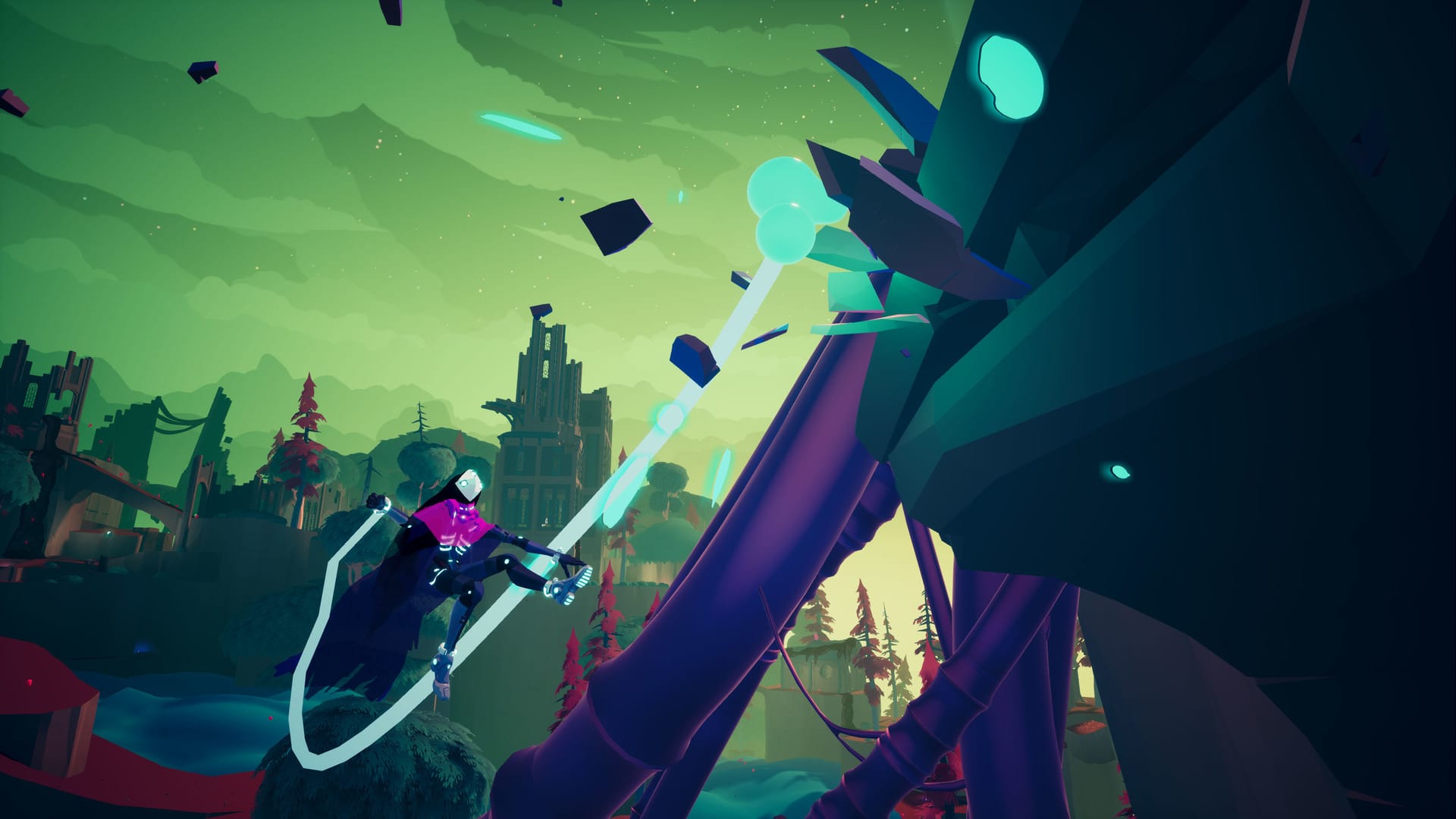
The core of Solar Ash is not found in its combat or its menus, but in the mechanical friction—or lack thereof—between the player and the world. The game thrives when it allows you to enter a "flow state." Navigating the Ultravoid requires a constant balancing act of grappling, grinding, and boosting. Heart Machine has tuned the controls with an expert eye for responsiveness and latency, ensuring that Rei feels light but never out of control. When you are chaining a rail grind into a grapple-point launch and landing perfectly on a cloud of ash, the experience is nothing short of transcendent.
The Loop and Its Limitations
However, the brilliance of the movement eventually runs into the reality of the gameplay loop. Each biome follows a predictable cadence: arrive, explore, clear a series of "corrupted anomalies" under a time limit, and then face the area's Sentinel. The anomaly-clearing is essentially a high-speed time trial, forcing you to hit specific nodes in a sequence. While this reinforces the mastery of movement, it can become repetitive by the third or fourth region. The "onboarding friction" is low, but the variety doesn't always scale with the environment's complexity. You are doing the same thing in a different neon-colored sandbox, and while that thing is inherently fun, the lack of mechanical evolution over the game's six-to-eight-hour runtime is a notable oversight.
Scaling the Giants
The true highlights are the Sentinels. These encounters are clearly inspired by Shadow of the Colossus, but they operate at a much higher tempo. Scaling these gargantuan beasts is a high-stakes race against time and gravity. You aren't just fighting a boss; you are platforming on a moving, living mountain. These moments represent the peak of the game's design, where the scale of the environment and the speed of the character harmonize perfectly. The minimalist combat—a simple one-button strike—is clearly designed to stay out of the way of the movement. It’s effective, but it lacks the depth found in Heart Machine's previous work, which may leave some fans of Hyper Light Drifter feeling slightly undernourished.
Narrative Weight
The story is one of melancholic determination. It doesn't beat you over the head with exposition; instead, it lets the environments and the haunting soundtrack do the heavy lifting. Rei’s interactions with the remnants of the Ultravoid’s previous victims add a layer of tragic world-building that rewards exploration. It’s a story about the cost of salvation and the weight of loss, and while it doesn't always land its emotional beats with the same precision as its platforming, it provides a sufficient "why" for the "how" of the gameplay.