
Bottom Line: Tavern Master is a masterclass in "cozy" logistics, trading the life-or-death stakes of the medieval genre for a deeply satisfying, creative building loop that turns floor-planning into an addictive art form.
The core of Tavern Master is its ludic loop: you buy ingredients, you sell drinks, you buy better furniture to attract wealthier patrons, and you repeat. On paper, it sounds pedestrian. In practice, it is a masterstroke of incremental reward. The game excels at making the player feel constantly "on the verge" of a breakthrough. You aren't just placing a table; you are optimizing the pathfinding efficiency of your waitress, ensuring she can hit three groups of thirsty peasants before returning to the bar.
The Engineering of "Cozy"
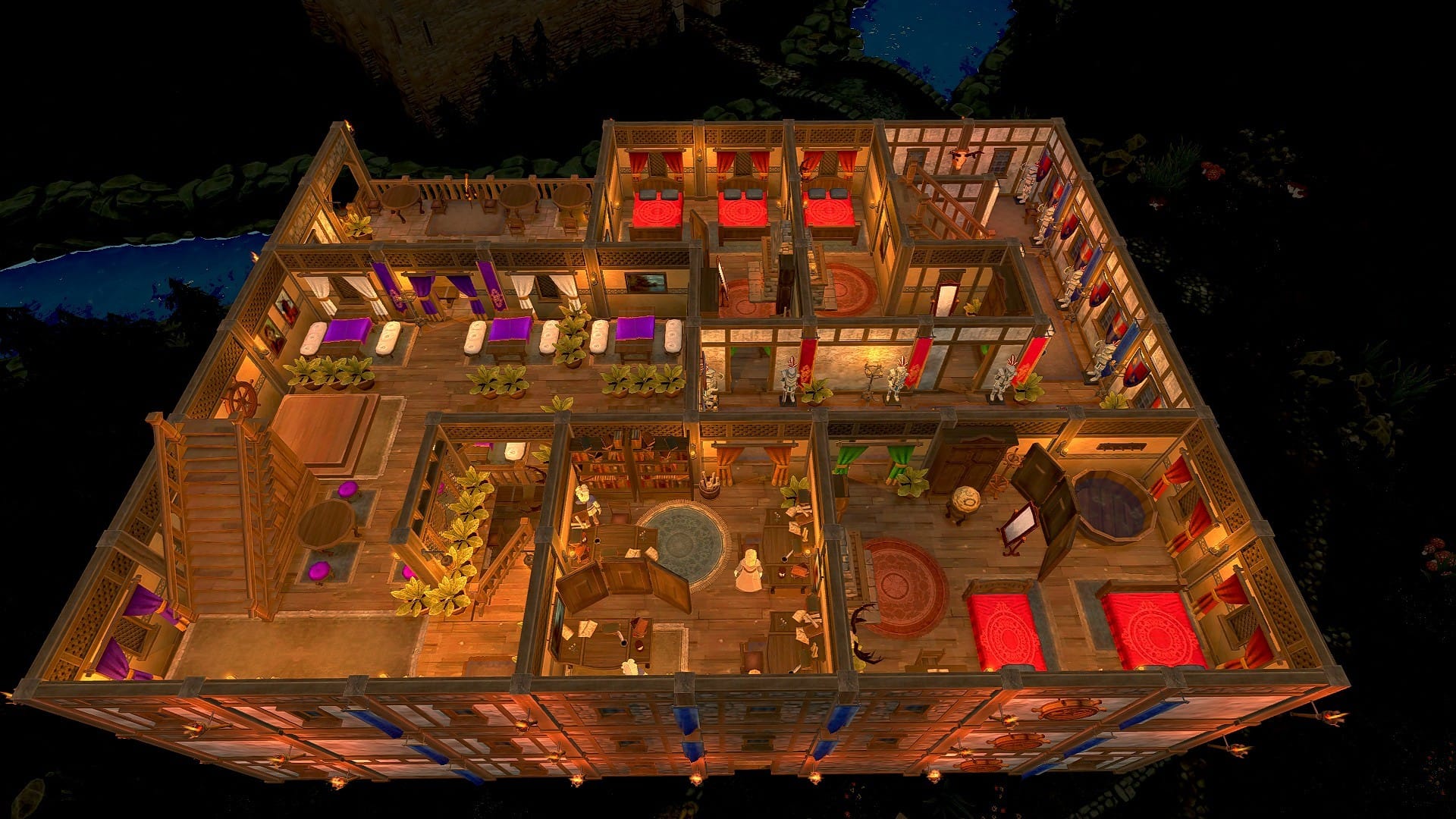
What separates this from a mobile-style "clicker" is the tactile nature of the construction. Most management sims treat furniture as a stat-boost; here, it feels like an architectural choice. The grid system is forgiving yet precise, allowing for a level of aesthetic expression rarely seen in the genre. When you move from serving ale on a dirt floor to hosting a banquet for a Duke in a candle-lit hall with specialized "orange wine," the sense of earned prestige is palpable.
The Reputation System acts as the primary driver of the experience. It isn't just a number that goes up; it’s a gatekeeper for new technologies and ingredients. This creates a compelling dependency chain. To get the "Very Good" rating, you need better food. To get better food, you need a specialized chef. To afford the chef, you need more seats. To fit more seats, you need to rethink your entire floor plan. This cycle prevents the gameplay from stagnating during the mid-game transition, as you are constantly forced to audit your own efficiency.
The Complexity Ceiling
However, a critic must look at the structural integrity of the late-game content. While the early and mid-game are rife with meaningful choices, the difficulty curve eventually flattens into a plateau. Once your tavern becomes a multi-story powerhouse with a fleet of elite staff, the "management" aspect begins to fade into the background. You move from being an active manager to a passive observer of a well-oiled machine.
The staff management, while functional, lacks the personality or "trait" depth that would make individual employees feel irreplaceable. They are essentially nodes in a delivery network. If a waiter quits, you hire another with similar stats, and the machine keeps humming. There is a missed opportunity here for more dynamic interpersonal drama or staff quirks that could have added a layer of emergent storytelling to the mechanical efficiency.
Interface & Flow
The UI is a triumph of functional minimalism. Information is nested where it makes sense, and the "Build Mode" transitions are instantaneous. There is no "onboarding friction" here; the game trusts the player’s intuition. The way the game handles inventory management—buying barrels of drinks in bulk—is simplified just enough to remain a task without becoming a chore. It’s a delicate balance that Untitled Studio strikes with surprising confidence.