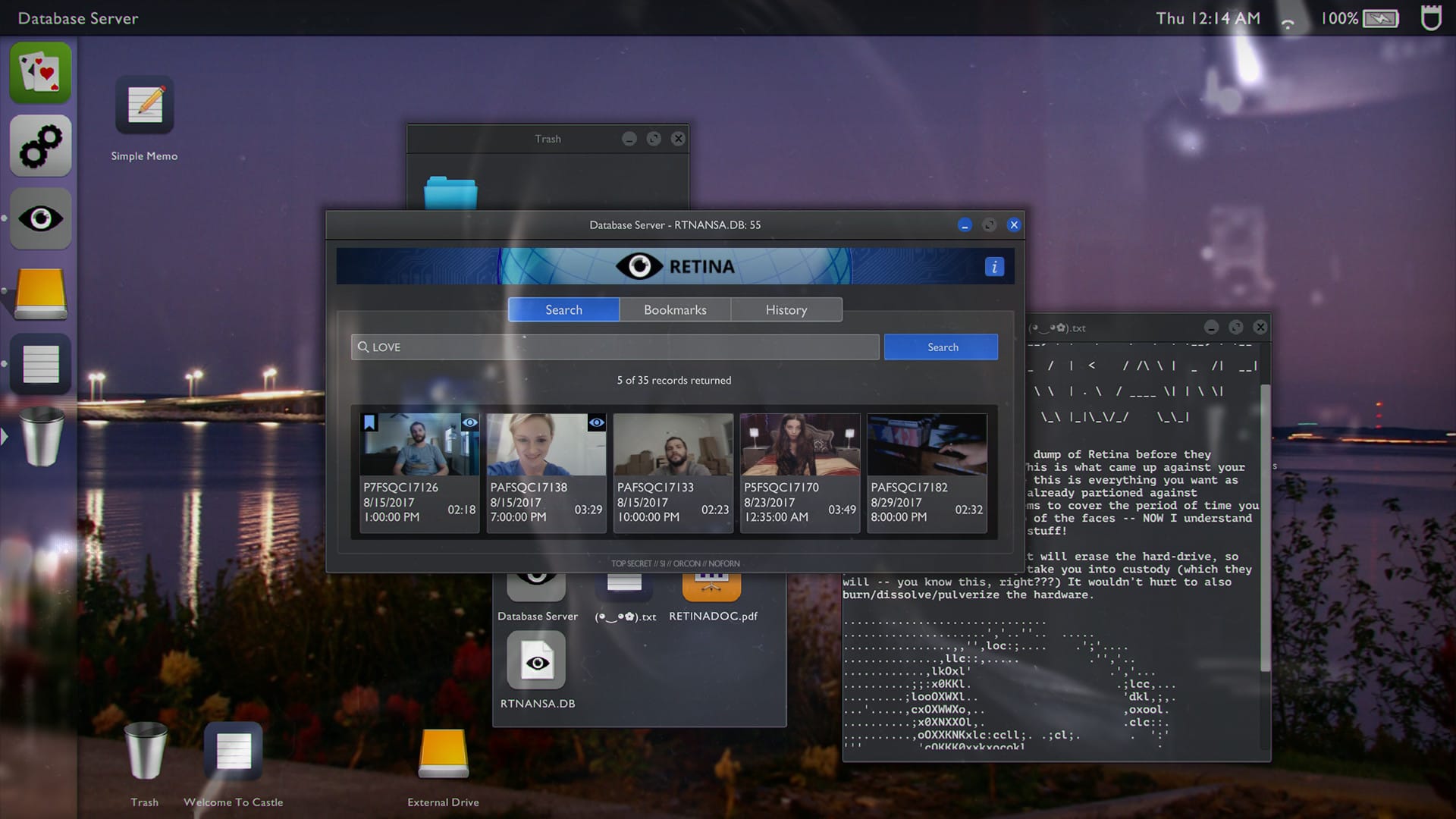



Bottom Line: An ambitious, prestige-tier expansion of the FMV genre that proves more data isn't always better for the detective's soul, though its mechanical stubbornness will test your patience.
The Search Engine as a Character
The brilliance of Telling Lies lies in its intentional friction. In most modern games, developers bend over backward to ensure "quality of life"—they want to remove every possible hurdle between the player and the content. Barlow does the opposite. The search tool is clunky, the database is fragmented, and the first-five-results rule is an arbitrary wall. Yet, this wall is what makes it a game.
Because you can’t just search "the" or "and" to see everything, you are forced to listen. You look for the unique identifiers: a specific brand of beer, a child’s toy, or a niche technical term. When you find a new clip because you guessed a keyword based on a character’s background, the hit of dopamine is genuine. You aren't just following a plot; you are curating a timeline. This creates a unique "Aha!" moment when two disparate clips finally click together, revealing a betrayal or a hidden motive that you—and only you—uncovered in that specific order.
The Problem with the Scrubbing
However, there is a fine line between "narrative friction" and "mechanical tedium." The loudest criticism from the community—and one I find myself agreeing with—is the lack of a proper scrubbing or "skip to start" feature. Clips in Telling Lies can run for several minutes. If you find a clip because a character says your keyword at the very end, the game drops you at that exact timestamp. To see the beginning of the video, you must manually rewind.
In Her Story, clips were seconds long, so this wasn't an issue. Here, holding down a virtual rewind button while watching a video play backward at 2x speed feels like a disrespect of the player's time. Barlow argues this reinforces the "work" of the investigator, but in practice, it often breaks the narrative flow. You find a crucial piece of evidence, but instead of processing the revelation, you're stuck holding a button for forty seconds. It's a rare instance where the skeuomorphism of the laptop interface actively harms the user experience.
A Study in One-Sidedness
The narrative itself is a masterclass in writing for the "unseen." Watching Logan Marshall-Green react to a silent partner on the other end of a call requires the player to engage in a high level of active deduction. You start noticing the pauses. You start timing the responses. Eventually, you find the other side of the call, and you realize the tone you imagined was completely wrong. This is where Telling Lies succeeds most: it highlights the subjectivity of truth. It’s a mature, somber reflection on how much of our lives are lived through lenses and how easily those recordings can be misinterpreted without the full context.