
Bottom Line: A brutal, uncompromising examination of social determinism that proves the most terrifying weapon in an RPG isn't a sword, but a ledger of your own failures.
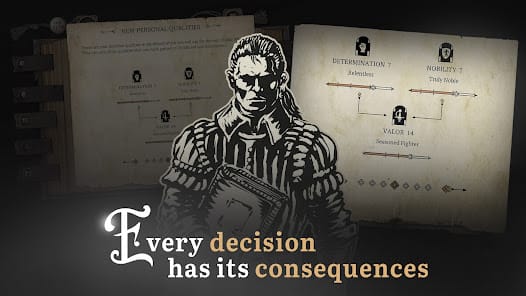
The brilliance of Sir Brante lies in its refusal to be "fair." In most modern RPGs, a player can eventually "max out" and become a god-like polymath. Here, specialization is a survival tactic. If you want to be a revolutionary leader, you will likely have to sacrifice your family’s safety. If you want to be a loyal inquisitor, you must be prepared to betray the very commoners you grew up with. This isn't just moral flavoring; it's baked into the gameplay loop via rigid stat requirements. You will frequently find the most desirable narrative path locked behind a stat check that you missed by a single point five years ago.
The Paradox of Agency
The game thrives on the friction between the player’s desire for freedom and the character's social reality. Every decision modifies hidden and visible variables: your relationship with your cold, noble-born father; your mother's health; the stability of the empire itself. Unlike the "Good/Evil" sliders of the early 2000s, Sir Brante tracks legacy. Your actions as a child—whether you stood up to a noble or bowed your head—shape the traits you carry into adulthood. This creates a sense of onboarding friction that is actually intentional. You aren't supposed to feel powerful in the first chapter; you are a child in a world that views you as cattle.
The Ledger of Life
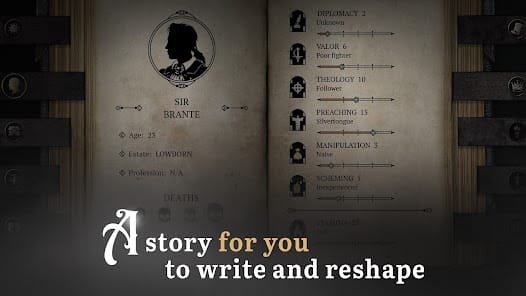
The UI design is functionally a spreadsheet disguised as a memoir, and I mean that as a compliment. You are constantly balancing resources. Do you spend your Willpower to secure a political win now, or save it for a potential family crisis later? The "Lesser Death" system adds a layer of strategic desperation. Knowing you can die and come back allows you to take risks that would be unthinkable in other permadeath games, but each death carries a narrative cost. The world changes when you return. People look at you differently. The game uses the concept of "True Death" as a sword of Damocles, hanging over every risky encounter.
Narrative Architecture
The writing avoids the flowery, overwritten prose common to indie RPGs, opting instead for a clinical, almost historical tone that matches the monochrome aesthetic. The political upheaval of the final chapters is particularly impressive, as the personal drama of the Brante family converges with the macro-level collapse of an empire. The game demands that you take a stance: do you uphold the Great Temple, or do you burn the whole system down? Because the game tracks so many variables, the "end-state" feels earned. You aren't just picking an ending from a list; you are viewing the logical conclusion of forty years of compromises.