
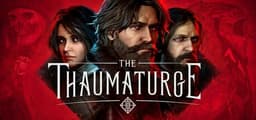
Bottom Line: A dark, intelligent isometric RPG that breathes life into 1905 Warsaw, offering a sophisticated narrative that survives its occasionally rigid investigation mechanics.
The core of The Thaumaturge isn't the combat; it's the interrogation of human frailty. Every quest feels like a surgical operation on the psyche of Warsaw’s citizens. By using his perception, Wiktor doesn't just find clues; he finds the Flaws—the pride, the anger, or the greed—that attract Salutors. This creates a gameplay loop that is intensely focused on narrative momentum.
Narrative Sophistication
The writing here is sharp and unapologetically mature. It handles the political powder keg of the era with a nuance that is rare in the medium. Figures like Rasputin appear not as caricatures, but as pivotal, morally gray actors in Wiktor’s journey. The game excels at presenting "gray" choices that don't just affect the ending, but shift Wiktor’s own internal state. His primary flaw is Pride, and leaning into it provides mechanical benefits while making him an increasingly unlikable, though fascinating, protagonist.
The Combat Loop
Combat is a tactical affair that emphasizes the action queue. You can see exactly when an enemy is going to strike, allowing you to use your Salutors to delay their turn, sap their Focus, or inflict "Dizzy" and "Bleed" states. It’s a rhythmic dance of debuffs. Each Salutor belongs to a specific dimension (Heart, Mind, Deed, Word), and you must swap them mid-fight to bypass enemy resistances. While the system is deep, it does suffer from a certain level of repetition. By the fifteen-hour mark, you’ll likely have a "solve" for most encounters, turning some fights into a chore rather than a challenge.
Investigation Friction
If there is a crack in the armor, it is the linearity of the investigation mechanics. While the "Thaumaturgical Perception" is visually striking—highlighting objects with a trail of red dust—it often boils down to "click the highlighted thing to progress." There is rarely a moment where the player has to actually deduce anything; Wiktor does the thinking for you. This "spoon-fed" approach to sleuthing creates a friction between the high-concept narrative and the low-agency mechanics. You are a detective, but the game rarely lets you fail the case.


