
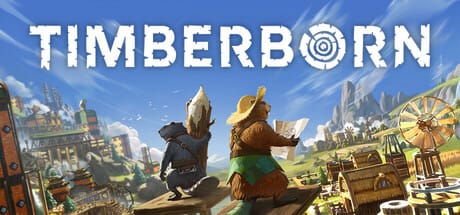



Bottom Line: Timberborn is a masterclass in environmental engineering that proves the most dangerous enemy in a city-builder isn't a rival army, but a dry riverbed. It is a rigorous, rewarding, and remarkably charming simulation of a post-human frontier.
The Hydrological Cycle
Most city-builders suffer from a "solve it and forget it" problem. Once you’ve secured your food and water lines, the tension evaporates. Timberborn solves this by making the environment a rhythmic, recurring threat. The core gameplay loop revolves around the drought. You start in a "wet" season, where the rivers flow freely. You have perhaps ten days to store enough water and grow enough food to survive a five-day drought. But as the game progresses, those droughts lengthen, and the "wet" windows shrink.
This creates a high-pressure engineering puzzle. You begin by throwing up a primitive wooden dam to hold back a small reservoir. By mid-game, you’re blasting through rock with dynamite to create deep-water basins and installing mechanical pumps to move water uphill into secondary irrigation canals. The introduction of "badwater"—toxic, corrosive runoff—adds a layer of complexity that feels like a chemical engineering exam. You have to design bypasses and sluices to divert the poison away from your crops while keeping the clean water trapped. It is stressful, cerebral, and immensely satisfying when a plan holds together.
Vertical Urbanism
The "lumberpunk" aesthetic isn't just window dressing; it informs the structural logic of your colony. Because fertile land is a premium resource—usually limited to the banks of the river—you cannot afford to sprawl. This necessitates vertical construction.
Mechanistry’s implementation of verticality is some of the best in the genre. You can stack beaver lodges on top of warehouses, run bridges over industrial districts, and weave power shafts through the middle of high-rise tenements. This creates a dense, "busy" look that feels organic. It also introduces a secondary logistical layer: power. Since wind and water wheels provide the energy, you have to physically connect your machines via a network of shafts and gears. Mapping out these power grids in three dimensions—without blocking your beavers' walking paths—is a delightful exercise in spatial reasoning.
The Late-Game Grind
While the early and mid-game are tight and terrifying, the late-game can occasionally lose its teeth. Once you have a massive, multi-tiered reservoir and a small army of "beaver bots" (automated workers that don't need sleep or food), the survival element fades. You transition into a "creative mode" where the challenge is purely aesthetic. While Mechanistry has added end-game "monuments" and well-being requirements (like rooftop bars and carousels) to keep you busy, the existential dread that makes the first ten hours so compelling does begin to wane. However, the sheer density of the production chains—from scavenging human scrap metal to manufacturing advanced treated planks—ensures you’ll have plenty to do before you reach that point of complacency.