
Bottom Line: Celestia is a triumph of scientific rigor over flashy artifice, offering an uncompromising, data-driven journey through the cosmos that rewards patience and curiosity.
The Philosophy of Scale
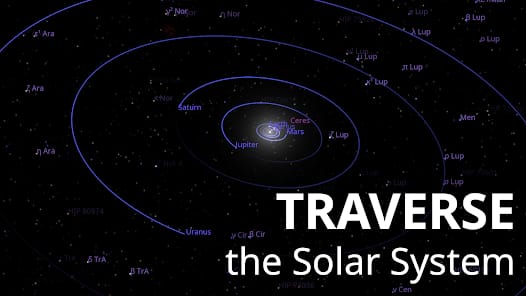
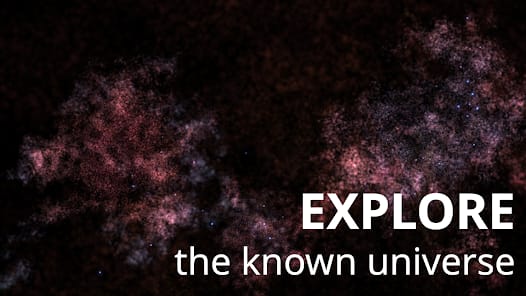
The defining characteristic of the Celestia experience is its handling of scale. Most software struggles with the "Powers of Ten" problem—the transition from the human scale to the galactic scale often results in jittery physics or immersion-breaking loading screens. Celestia’s engine manages this transition with a fluidity that remains impressive even years after its initial debut. Zooming out from a detailed model of the Cassini probe until the rings of Saturn become a mere sliver, and then further until the Sun is just another dot in a sea of stars, provides a visceral sense of cosmic perspective that no textbook can replicate. This isn't just a visual trick; it's a mathematical achievement that reinforces the user's understanding of three-dimensional space.
The Open-Source Legacy
Being an open-source project, Celestia carries a specific kind of "community-first" DNA. The base Android installation is relatively lightweight, but the true depth lies in its extensibility. The sheer volume of community-contributed content—historical satellites, fictional "what-if" scenarios, and hyper-detailed Martian topography—is staggering. However, this modular nature is a double-edged sword. On mobile, managing these add-ons lacks the simple "one-tap" convenience of modern app stores. While the "Celestia Plus" model attempts to bridge this gap via a subscription for premium content, it creates a slight philosophical friction with the project’s purely free-and-open desktop roots.
Interface and Onboarding Friction
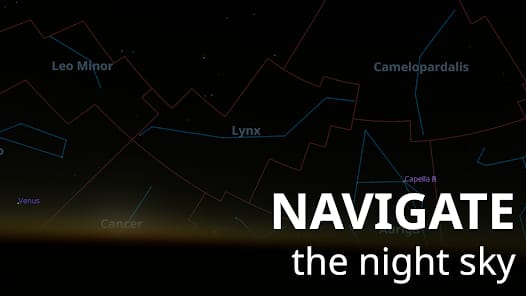
If there is a legitimate critique to be leveled against Celestia, it is the interface. The UI is functional but unapologetically dense. Navigating a three-dimensional universe on a two-dimensional touch screen is an inherently difficult task, and Celestia’s solution involves a learning curve that may deter casual users. Searching for specific objects, adjusting the flow of time, or toggling orbital paths requires a level of intentionality that feels more like operating a scientific instrument than playing with an app. The lack of a modern, "hand-holding" tutorial means that the first thirty minutes are often spent in a state of confused drifting. Yet, once the controls click, the sense of agency is unparalleled. You aren't just looking at the universe; you are exploring it.
Educational Integrity
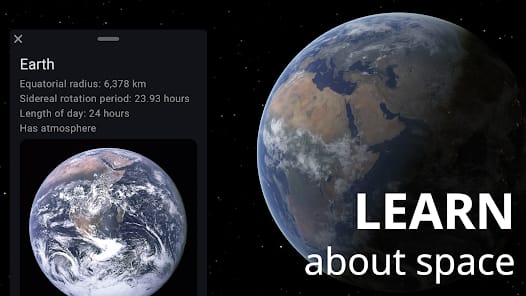
In the classroom, Celestia is a powerhouse. Its ability to demonstrate complex concepts like eclipses, retrograde motion, and galactic structure through real-time manipulation is vital. It avoids the "cacophony" of over-designed educational software, focusing instead on the data. When you look at a star in Celestia, you aren't seeing a generic sprite; you are seeing a representation of a physical object with a specific luminosity, spectral class, and distance from Earth. This integrity makes it more than just a visual treat—it’s a rigorous educational resource.