Bottom Line: ZeroRanger is a radical, meta-textual masterclass that proves the shoot 'em up genre isn't just alive—it's evolving. It’s a demanding, philosophical journey wrapped in an orange-and-green arcade nightmare.
The Mechanical Soul
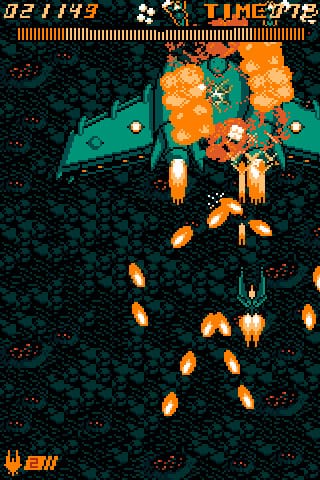
Most shooters treat the "bomb" as a safety net—a way to erase mistakes. ZeroRanger deletes the net. In its place is the Bump Shield, a mechanic that rewards proximity and confidence. If you aren't firing, you can graze or "bump" certain obstacles without death. This creates a rhythmic tension where the player is constantly toggling between aggression and tactical evasion.
The weapon progression system is equally deliberate. You don't just pick up "Power Up" icons; you choose your evolution. The inclusion of drills and back-shots isn't just for variety; these tools are essential for the specific geometry of the stages. Then there is the mecha transformation. When your ship shifts into a sword-wielding robot, the game briefly transitions from a bullet-dodger to a high-stakes action title. It’s a jarring, brilliant pivot that keeps the momentum from ever feeling stagnant.
The Philosophy of the Loop
ZeroRanger is obsessed with the concept of the "cycle." This isn't just flavor text; it’s baked into the Dynamic Difficulty. The game monitors your skill level, scaling the intensity of the "Green Orange" invasion to match your growth. This ensures that the "flow state" is maintained, but it also serves the narrative. You are stuck in a loop of death and rebirth, much like the fighter pilots of Daikon.
The meta-elements here are what truly elevate the experience. Without spoiling the mid-game pivot, let it be said that ZeroRanger is very aware it is a piece of software. It plays with your save data, your expectations of "Game Over," and the very UI itself. It uses the arcade format to tell a story about agency and enlightenment that a more traditional RPG would struggle to convey. It turns the act of replaying a stage not into a chore, but into a ritual.
Audio-Visual Synergy
The soundtrack is nothing short of legendary in shmup circles. It doesn't just provide background noise; it dictates the tempo of the carnage. The marriage between the heavy, rhythmic synth tracks and the high-octane combat creates a sensory feedback loop that makes the 2D sprites feel like they have immense weight. When the music swells during a boss transition, the game feels less like a series of sprites and more like a desperate, cinematic struggle for survival.