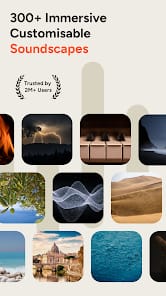

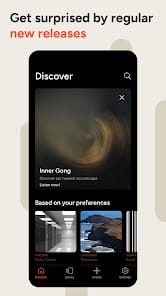
Bottom Line: Forget the looped rain tracks and generic white noise; myNoise is a high-fidelity laboratory for your ears, offering unparalleled control over your acoustic environment without the parasite of a monthly subscription.
To understand why myNoise is superior to its competitors, you have to understand the concept of habituation. The human brain is remarkably good at filtering out constant noise, but it’s even better at detecting patterns. Most sleep apps use 30-second loops; eventually, your brain "memorizes" the loop, and the sound becomes a distraction rather than a mask.
The Engineering of Silence
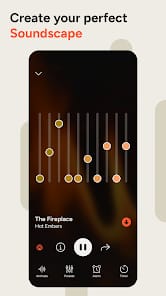
myNoise solves this through frequency-level customization. When you open a soundscape like "Rain on a Tent," you aren't just hearing a recording. You are hearing ten independent channels. If you have tinnitus, you can identify the specific frequency of your internal ringing and adjust the sliders to provide a "notched" masking effect. If you have ADHD and find high-pitched sounds distracting, you can kill the treble and leave only the "brown noise" floor. This isn't just "playing music"; it's active signal processing.
The Animate mode is the app's secret weapon. By setting the sliders to move at different speeds and intensities, the soundscape becomes a living thing. The wind doesn't just blow; it gusts and dies down. The rain doesn't just fall; it patters and then pours. Because the brain never finds a predictable loop, it stays in a state of focused relaxation. It’s the difference between looking at a photograph of a fire and sitting in front of a hearth.
UX and the "Fairness" Philosophy
The interface is unapologetically functional. It doesn’t hold your hand with onboarding tutorials or gamified "streaks." You pick a sound, you adjust the sliders, and you get to work. For some, this lack of polish might feel "unrefined," but for the power user, it's efficient. The Calibration tool is a standout example of this engineering-first mindset. It asks you to lower each frequency until you can barely hear it, creating a "map" of your ears. It’s a level of personalization that makes Apple’s "Personalized Spatial Audio" look like a toy.
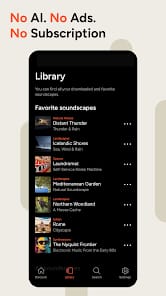
Furthermore, we need to talk about the business model. Most modern apps are designed to be "sticky"—they want your data and your recurring revenue. myNoise is a utility that respects you. It works offline, it doesn't track you, and the developer’s "fairness" model is a relic of an era when software was made by people who cared about the problem they were solving, not their monthly active user (MAU) metrics.