Bottom Line: Proton Calendar delivers on its core promise of end-to-end encrypted scheduling, offering a secure haven for your sensitive time data, yet its commitment to privacy means sacrificing many of the 'smart' conveniences we've come to expect from modern calendar apps.
Proton Calendar's raison d'être is unequivocally privacy, a principle it executes with a technical rigor that few rivals can match. In an era where "privacy-focused" often amounts to little more than a marketing slogan, Proton's implementation of end-to-end encryption for virtually every facet of an event—from the mundane meeting title to sensitive participant lists and locations—is genuinely commendable. This isn't just about data being "private on their servers"; it's about data being unintelligible to anyone, including Proton, should a breach occur or a legal request be made. This commitment is underpinned by Swiss law, a regulatory environment widely regarded as one of the most robust globally for data protection. For the user, this translates into an unparalleled peace of mind, a rare commodity when planning anything from a doctor's appointment to a confidential business meeting.
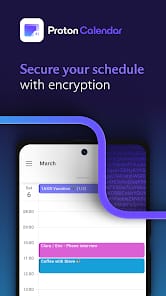
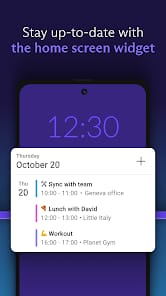
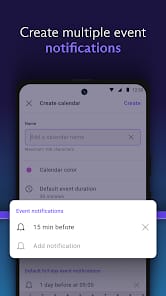
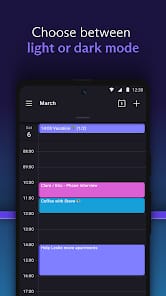
The user experience, while fundamentally sound, reveals the inherent trade-offs of such a security-first approach. The interface itself is a masterclass in minimalist design. It's clean, intuitive, and largely devoid of the visual noise that plagues many other calendar applications. Navigation is straightforward, and core functionalities like creating events, managing calendars, and setting reminders are easily discoverable. The color-coded calendars are a pragmatic touch, allowing for quick visual categorization of personal, work, or family commitments. The cross-platform synchronization across web, iOS, and Android is robust and reliable, a non-negotiable for any modern productivity suite. Your schedule, once entered, appears consistently across your devices, albeit with the expected, minimal latency of encrypted sync.
However, the shadow of its privacy model looms large over its feature set. The most glaring omission is the absence of a native desktop application. While the web interface is competent, relying solely on a browser tab for a primary productivity tool feels archaic in 2026. This isn't merely a convenience issue; it impacts workflow, notification reliability, and integration with a user's operating system environment. Furthermore, the lack of CalDAV or Exchange support is a significant hurdle for many. While understandable from a technical perspective—integrating end-to-end encryption with open, less secure protocols presents considerable challenges—it creates immediate friction for users deeply embedded in established ecosystems or corporate environments. Proton's own ecosystem integration (Mail, Drive, VPN) is excellent, but it exists largely as a walled garden, albeit a very secure one. This means interoperability with external systems often defaults to the lowest common denominator, like ICS file import, rather than seamless, real-time synchronization.
The product's ambition for privacy also restricts its foray into the "smart" features that have become standard in competing calendars. There's no natural language event creation, no intelligent suggestion of locations or contacts based on past behavior, and no automatic time zone adjustments that anticipate your travel. These are not minor amenities; they are workflow accelerants that have significantly streamlined scheduling for millions. Proton Calendar, by design, cannot (or chooses not to) analyze your data to provide these conveniences, precisely because it cannot "read" your encrypted schedule. This presents a stark philosophical choice for the user: absolute privacy at the cost of intelligent automation, or the convenience of automation with a tacit acceptance of data analysis. For many, this will be the crux of their decision. Advanced functionalities, such as more sophisticated sharing options or even certain types of reminders, are often gated behind a paid subscription, which is a reasonable business model but does highlight the entry barrier for those seeking a fully-featured, privacy-respecting tool without commitment. The overall impression is one of a product that is impeccably secure but sometimes feels feature-constrained, a fortress that is perhaps a bit too spartan inside.