
Bottom Line: Zooniverse successfully gamifies scientific contribution, turning the idle "swipe" gesture into a legitimate engine for global research that provides a rare, meaningful alternative to social media scrolling.
The brilliance of Zooniverse lies in its recognition of the micro-contribution. Most educational tools demand a significant block of time—an hour for a lecture, thirty minutes for a quiz. Zooniverse understands that modern life is fragmented. Its core gameplay loop is designed around these fragments. You open the app, select a project, and within seconds, you are looking at a real data point from a multi-million dollar research project.
The Masterstroke of the Swipe
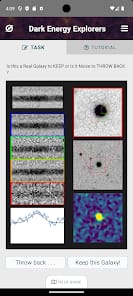
The decision to adopt a swipe-based UI for the mobile app is a masterstroke of design. It takes a gesture that we have been conditioned to use for mindless social validation or dating and re-purposes it for scientific classification. This reduces the cognitive load of participation. Instead of filling out complex forms, you are making a snap judgment: Is there an animal in this photo? Yes or No. If yes, you move to the next layer of detail. This tiered approach to data entry is what makes the app "addictive" in the best sense of the word. It replicates the flow state of a mobile game while producing a tangible, real-world result.
Trust and the Power of the Crowd
One might skeptically ask: How can a random person on a train be trusted to classify a galaxy? Zooniverse solves this through consensus-based validation. Each image or data point is classified by multiple users. If twenty people say it’s a spiral galaxy and one says it’s a smudge, the consensus wins. This removes the pressure of being "wrong" and allows the platform to function with a high degree of reliability. It turns the user into a single neuron in a global brain, contributing to a signal that rises above the noise of individual error.
The Educational Friction
The inclusion of Field Guides and Talk Forums adds a necessary layer of depth. Without these, the app would risk becoming a mindless mechanical turk. Instead, these features provide the "why" behind the "what." When you encounter a classification that puzzles you, the Field Guide provides immediate, contextual education. The forums allow you to interact with the actual scientists who started the project. This transparency is crucial; it builds a sense of community and ownership. You aren't just an anonymous data processor; you are a Citizen Scientist.
The Mobile Constraint
However, the mobile experience is currently a subset of the full Zooniverse ecosystem. Many of the more complex projects—those involving detailed transcription or intricate mapping—remain locked to the web version. This is a pragmatic choice, as trying to transcribe a 19th-century naval log on a 6-inch screen is a recipe for frustration, but it does mean the mobile app feels like a "lite" version of the platform. There is also the issue of project fatigue; some projects are so popular they finish quickly, leaving users with a revolving door of "Completed" banners. The app needs a more aggressive way to surface new, active projects that are specifically optimized for the mobile UI.