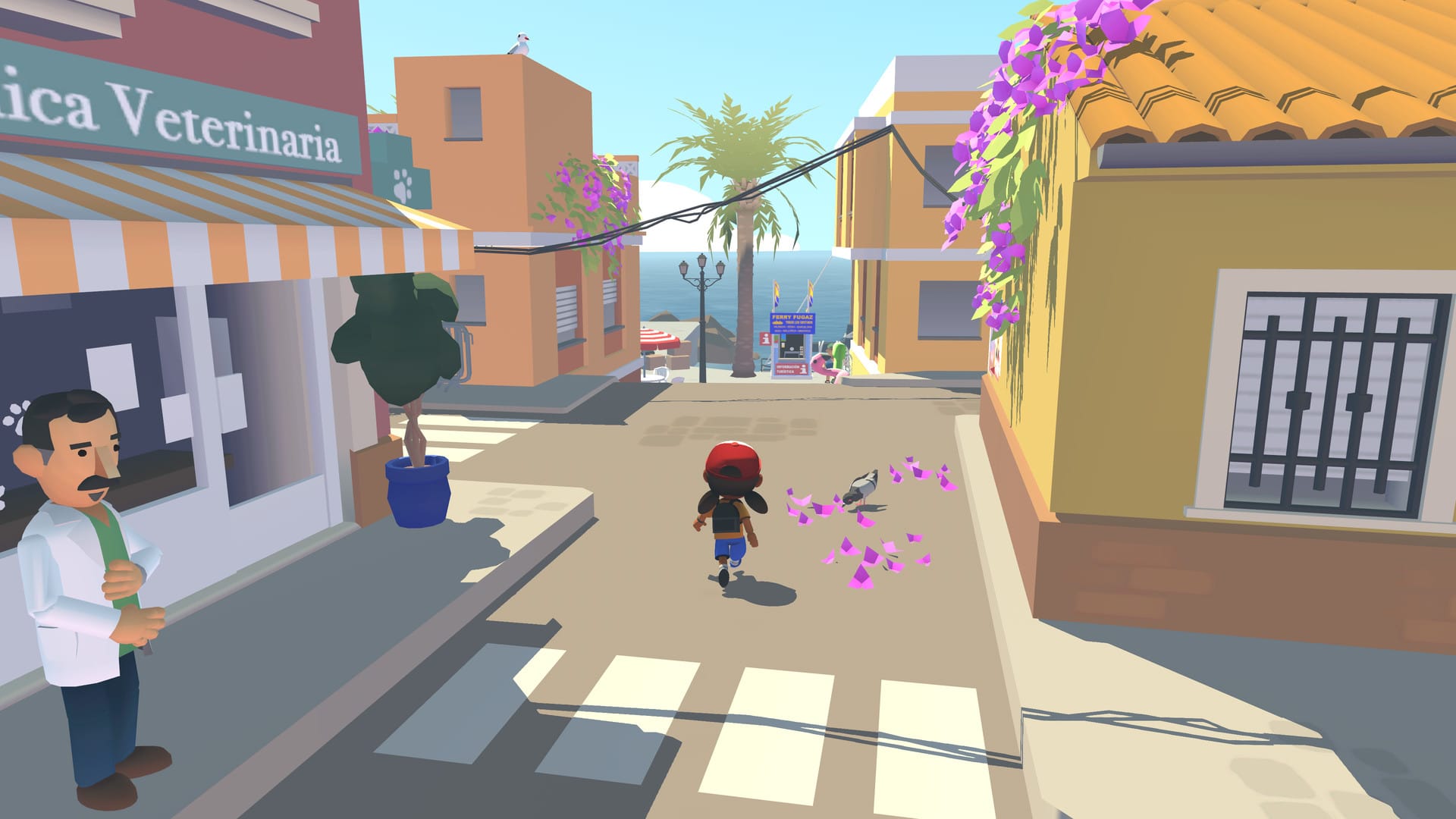

Bottom Line: A gorgeous, sun-drenched lesson in localized environmentalism that prioritizes charm over challenge. While mechanically simplistic, its heartfelt message and satisfying cataloging loop make it a short trip worth taking.
Most modern video games use cameras as tools of surveillance or simple novelty, but the core design of Alba constructs its entire progression loop around the act of seeing. Your primary tool is a smartphone running an identification app. Pointing the lens at a darting bird or a basking lizard initiates a scanning mechanic that matches the creature's silhouette and calls against a database. It is a satisfying, low-friction loop that mirrors real-world birdwatching. The game succeeds because it treats cataloging not as a checklist to conquer, but as a method of developing intimacy with the environment. When you photograph a rare Iberian lynx or a humble house sparrow, you are forced to slow down, observe behavioral patterns, and listen. This mechanical pacing fosters a genuine sense of digital ecology; you begin to recognize habitats—wetlands, castle ruins, pine forests—by their auditory signatures before you even see the animals.
The photography loop is only half of the equation. Ustwo ties this observational gameplay to physical stewardship. Alba cleans up trash left behind by tourists, scrubs oil-slicked gulls, and repairs broken boardwalks. The mechanical weight of these actions is light—a simple button prompt resolves most environmental hazards—yet their cumulative impact is visually striking. The island slowly transforms from a neglected tourist trap back into a pristine sanctuary. This visual feedback loop is incredibly rewarding. As you mend the island, the animal population density increases, presenting new photography opportunities. It is a tight, self-reinforcing design that elegantly demonstrates how conservation and appreciation feed into one another.
Interface and the Skeuomorphic Camera
The user interface design deserves praise for its restraint. In an industry obsessed with cluttered heads-up displays (HUDs) and endless inventory menus, Alba opts for minimalist elegance. The phone screen acts as a skeuomorphic menu, grounding the player in the physical space of Pinar del Mar. Looking at your phone doesn't pause the world; it shifts your perspective. The field guide feels like a physical scrapbook, complete with charmingly drawn badges and handwritten notes.
This lack of friction is crucial for maintaining the game's relaxed atmosphere. Yet, this simplicity sometimes borders on patronizing. The pathfinding system, which projects giant, glowing footprints on the ground, leaves zero room for natural exploration. You never actually get lost on Pinar del Mar, which robs the player of the joy of true geographical discovery. By over-guiding the player's movements, the interface occasionally treats its audience as passive tourists rather than active explorers.
The Limits of Cozy Activism
For all its narrative charm and polished pacing, the game suffers from an undercooked mechanical depth. The puzzles require almost no cognitive effort. Rebuilding a bridge or curing a sick squirrel requires nothing more than holding down a single action button. There are no resource management mechanics, no spatial puzzles, and no real consequences for failure. While this low barrier to entry makes the game highly accessible to younger players, older audiences will likely find the three-to-four-hour campaign lacking in intellectual stimulation.
The narrative, too, wraps up its political conflict with an idealistic ease that feels slightly naive. The local mayor, initially presented as a greedy corporate puppet, is swayed far too easily by a simple pile of signatures. While the game's message of grassroots empowerment is noble, it glosses over the systemic, messy realities of modern environmental politics. By sanitizing the conflict, the developers deliver a heartwarming fable rather than a challenging critique.