Bottom Line: A masterclass in emergent horror that trades scripted jumpscares for a suffocating, player-driven descent into madness. Frictional Games has finally perfected the art of making the player their own worst enemy.
The Economy of Attrition
The genius of The Bunker lies in its pervasive sense of onboarding friction. From the moment you wake up in the infirmary, the game refuses to hold your hand. The central gameplay loop revolves around the generator. It is the literal heartbeat of the experience. Every excursion into the dark corners of the Maintenance or Prison wings is a calculated risk against a ticking clock. You aren't just looking for a key; you’re looking for fuel to buy another five minutes of safety. This creates a psychological pressure that linear horror games cannot replicate. When the lights flicker and hum, signifying the generator is low, the panic that sets in is organic. You aren't scared because the script told you to be; you’re scared because you mismanaged your resources and now you’re 200 yards from the safe room in total darkness.
Physicality and Emergent Gameplay
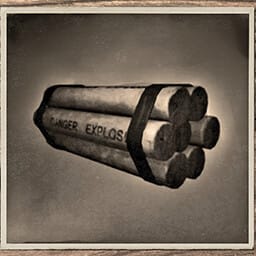
Frictional has doubled down on its signature physics-based interaction, but here it serves a greater purpose. Almost every obstacle has multiple solutions. A locked wooden door can be opened with a specific key, sure. But it can also be smashed with a heavy cinderblock, blown up with a grenade, or shot with your precious revolver. Each choice carries a weight. Smashing the door is free but loud. Using a grenade is fast but alerts the beast and consumes a rare tool. This is emergent gameplay at its finest. The player's own clumsiness or desperation becomes the source of the horror. I once tried to throw a brick at a wooden door, missed, hit a metal pipe, and the resulting clang brought the monster through the ceiling vents in seconds. That wasn't a scripted event; it was a failure of my own physical agency within the world.
The Armed Pacifist
The inclusion of a revolver was a controversial move for Frictional purists, but it is handled with masterful restraint. The gun is a cruel joke played on the player. It provides a false sense of security that evaporates the moment you realize you only have two bullets and the monster is impervious to permanent death. Instead of turning the game into a shooter, the weapon becomes a versatile multi-tool. It can ignite puddles of oil to create fire barriers or blow open padlocks from a distance. It forces the player to constantly weigh the value of a single bullet against the noise it will inevitably make. It’s a brilliant subversion of the "action-horror" trope; you are armed, but you have never felt more vulnerable.
Sensory Deprivation as Design
The "Stalker" AI is perhaps the most impressive technical feat in the game. It lives in the walls and vents, and its presence is communicated through a haunting cacophony of scratches and thuds. Unlike previous Amnesia monsters that would eventually de-spawn or follow a set patrol, this creature is always "there." This constant threat turns the bunker into a high-stakes puzzle box. You spend half your time staring at the map in the safe room, planning the most silent route possible, only to have a pack of rats—a secondary but equally annoying threat—block your path and force you to improvise. The game is less about reflexes and more about mitigating variables.