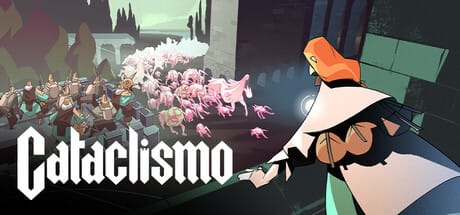

Bottom Line: Cataclismo is a masterclass in tactical construction, trading the abstract "click-to-place" blueprints of the genre for a granular, physics-driven engineering system that makes every merlon feel vital.
The brilliance of Cataclismo lies in the granularity of its agency. In most RTS titles, "building a base" is a macro-level distraction from the "real" game of unit micro-management. Here, the construction is the micro. When you spend the daylight hours manually placing crenellations to give your archers cover, you aren't just decorating; you are optimizing their survival probability.
The Engineering of Defense
The "brick-by-brick" system is more than a gimmick. It introduces a layer of architectural friction that is missing from modern strategy. You cannot simply conjure a wall; you must consider the terrain, the height of the stone, and how your units will actually reach the top. This creates a rewarding flow where the "creative sandbox" and the "survival horror" elements are inextricably linked.
I found myself obsessing over the stability overlay. A blue tint indicates a solid foundation, but as you build outward or upward without support, the colors shift toward a warning red. This visual feedback loop turns the construction phase into a puzzle. Do you build a thick, low wall that can withstand a battering, or a soaring, fragile spire that gives your longbowmen a massive range advantage? The consequences of a mistake are visceral. Seeing a swarm of mutated Horrors chew through a single support beam and watching five minutes of meticulous stone-work crumble in a physics-driven cascade is both heartbreaking and a powerful lesson in engineering.
Combat and the Ranged Meta
The decision to focus almost exclusively on ranged combat is a bold pivot. By removing the traditional melee frontline, Digital Sun forces the player to rely entirely on their architecture to create distance. Your walls are your melee units. They take the hits so your specialized troops—Archers, Cannoneers, and fire-lobbing units—can do their work.
This creates a specific type of tension. You aren't watching health bars; you are watching structural chokepoints. The tactical depth comes from the "Tactical Pause" feature, allowing you to react to a breach by frantically trying to build a secondary wooden scaffold or a temporary barricade while the monsters are literally at the gates. It’s a frantic, satisfying scramble that rewards quick thinking and a deep understanding of the game's piece-set.
The Campaign vs. The Sandbox
The 30-hour narrative campaign serves as an extended tutorial, slowly introducing new materials like wood and stone while teaching the player how to navigate the Mist. However, the roguelite survival mode is where the mechanics truly breathe. Here, the scarcity of resources forces compromises. You might want to build a glorious stone keep, but the clock is ticking, and you only have enough wood for a flimsy platform. This "make-do" engineering is where the game's personality shines brightest.