Overview
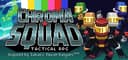
Somebody at Behold Studios looked at the tactical RPG genre — a space policed by Fire Emblem, Final Fantasy Tactics, and XCOM — and asked a question nobody else dared: what if the heroes were broke, unionized, and filming everything on a shoestring? Chroma Squad is the answer, and it’s one of the most conceptually fearless indie games of its era.
The premise does half the marketing for it. Five stunt actors, fed up with a tyrannical boss, walk off the set of a Power Rangers-style superhero show to launch their own independent studio. The player is the director. That framing isn’t window dressing — it’s the entire spine of the game. Every battle is a scene being shot. Every enemy is an actor in a rubber suit. Every dramatic pose and cross-arena team-up is content meant to juice the show’s ratings. The fiction and the mechanics are the same object, and that fusion is where the game earns its keep.
Behold Studios, a Brazilian outfit best known previously for Knights of Pen & Paper, clearly understands the DNA it’s riffing on. This is affectionate parody, not cynical pastiche. The 90s Super Sentai references land because the developers obviously love the source — the cheap explosions, the color-coded heroes, the monster that inexplicably grows to the size of a skyscraper in the third act.
Market-wise, it sits in a strange, uncrowded lane. It’s too management-heavy for pure tactics purists and too combat-driven for the Game Dev Story crowd. That awkward positioning is precisely why it stands out. Chroma Squad isn’t competing with anything; it invented its own small genre and mostly nailed the landing.
Key features
- Dual-Layer Gameplay: A full studio-management loop — hiring actors, buying equipment, crafting DIY armor from cardboard and duct tape, and marketing the show — wraps around grid-based, turn-based tactical combat.
- Cinematic Combat System: Battles reward showmanship. Team-up maneuvers let you fling allies across the arena, morph sequences trigger armored transformations, and coordinated group finishing moves boost audience ratings, tying spectacle directly to progression.
- Kaiju Mecha Showdowns: When the “monster of the week” supersizes, the squad pilots a customized giant mecha in dedicated boss battles — a direct nod to every Sentai finale ever aired.
- Branching Narrative & Deep Customization: Multiple endings, story forks, and granular character and equipment customization give the campaign genuine replay weight.
Analysis
The Gameplay Loop
The core rhythm is elegant: manage, film, profit, upgrade, repeat. Between episodes the player sits in the studio, allocating a finite budget across salaries, gear, and marketing. Then an episode is shot — a tactical battle — and performance in that fight generates audience ratings, which convert to fans and cash, which fund the next round of upgrades. It’s a tight economic engine, at least on paper.
The genius is that combat objectives are directorial rather than purely martial. Some episodes ask the player to keep an ally alive; others reward finishing within a certain number of turns, or pulling off a specific dramatic flourish. Winning fights matters less than producing good television. That single design decision spares every skirmish the “reduce enemy HP to zero” grind that plagues lesser tactics games.
The team-up mechanic deserves special praise. Adjacent squad members can hurl each other across the grid, enabling reach and positioning plays that feel genuinely inventive. Chaining these into a group finishing move — the whole squad converging for a synchronized kill — is the design at its absolute best. It’s tactically meaningful and it looks fantastic on screen. Mechanics and theme, rowing in the same direction.
Where the Cracks Show
Here’s the honest part. The combat, for all its charm, doesn’t have the depth to sustain a full campaign. The tactical toolkit is shallower than genre veterans will want. Enemy AI is serviceable, not cunning. And once the puzzle of team-up positioning is solved, later battles start to feel like variations on a theme already mastered. The systems that dazzle early on don’t evolve enough by the campaign’s back half, and the fights grow repetitive.
The mecha battles are the sharper disappointment. These should be the crescendo — the giant-robot finale every episode builds toward. Instead, they’re conspicuously oversimplified, reduced to a rock-paper-scissors exchange of blocks and strikes that lacks the spatial richness of the core grid combat. They look like a payoff. They don’t always play like one. It’s a case of the presentation writing a check the mechanics can’t quite cash.
The Onboarding
Credit where due: the game eases players in well. The management layer could have been an intimidating spreadsheet, but Behold keeps the friction low, surfacing only the decisions that matter and letting the narrative carry the tutorial weight. New players won’t drown. The trade-off is that the economy never becomes deep enough to obsess over — it’s a supporting act, not a co-star.
Visuals & performance
The retro pixel art is the right call, executed with real affection. Sprites are chunky and expressive, environments read clearly on the tactical grid, and the whole thing wears its 16-bit heart proudly. This isn’t lazy nostalgia — it’s a deliberate aesthetic that reinforces the low-budget-TV-studio fantasy. The cheapness is the point, and the art direction commits to the bit.
The chiptune soundtrack is a standout. Catchy, energetic, and perfectly period-appropriate, it does enormous emotional lifting — the kind of battle theme that lodges in the head after a single listen.
Technically, this is a 2D game of modest scope, and it’s light on hardware by design. It never pretends to be demanding. The UI is clean and readable, though the management screens can feel slightly utilitarian next to the personality-soaked combat. Menus inform; they don’t delight. A minor knock on an otherwise cohesive package.
Platform nuances
On Steam, mouse-and-keyboard is the natural fit. Grid tactics were born for a cursor — precise unit selection, quick movement previews, no fumbling. The interface was clearly designed with a pointer in mind, and the PC version is the definitive way to experience it.
On Nintendo Switch, the calculus shifts. Handheld play makes it a natural commuter game — bite-sized episodes suit short sessions, and the pixel art is crisp on the smaller screen. But controller navigation of the tactical grid introduces mild cursor friction compared to a mouse. It’s never broken, just fractionally slower. Docked play splits the difference. The Switch version trades a sliver of precision for portability, and for many players that’s a trade worth making.
Final verdict
Chroma Squad succeeds on the strength of an idea so good it barely needed the execution to be perfect — which is fortunate, because the execution isn’t. The combat plateaus. The mecha fights fumble their own hype. A genre veteran will exhaust the tactical toolkit before the credits roll, and that’s a hard sell at full price for most players.
None of that dims what Behold Studios pulled off. This is a game with a soul, a sense of humor, and a premise nobody else had the nerve to build. It respects the player’s intelligence, wears its influences with pride, and delivers a fistful of moments — that first synchronized group finisher — that no other tactics game can. It’s not a masterpiece, and it’s not an easy recommendation. It’s something rarer: a genuine original, flaws and all, best left to the faithful. Roll camera.
Reviewed by the Rankeno Strategy & Sim Desk. Scores are out of 10; the overall score is the desk’s editorial judgement, informed by the four sub-scores above. How we review