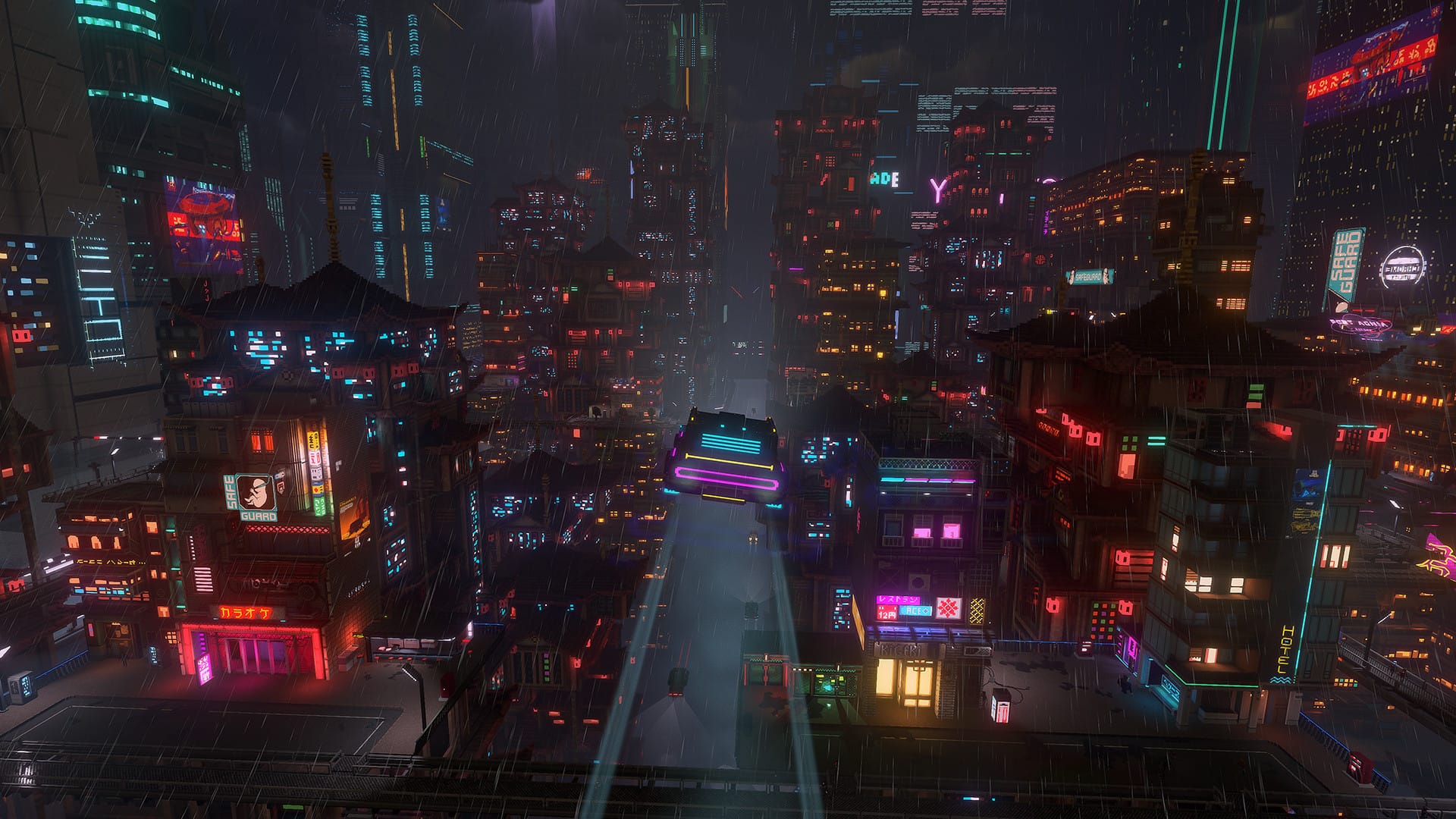

Bottom Line: Cloudpunk is a breathtaking exercise in atmospheric world-building that swaps cybernetic combat for the meditative, rain-slicked life of a futuristic courier. It’s an essential experience on PC, though its ambitious vision struggles to fit within the cramped hardware of the Nintendo Switch.
The core of Cloudpunk isn’t found in its mission objectives, which are—by design—repetitive. You pick up a package, navigate the neon-lit skyways, and drop it off. Instead, the real "game" happens in the interstitial spaces. It’s the conversations with Camus, your AI companion who has been uploaded into your HOVA's computer, and the brief, often heartbreaking interactions with the citizens of Nivalis.
The Meditative Delivery Loop
The gameplay loop is deceptively simple. You spend roughly 70% of your time in your HOVA. The flight mechanics feel heavy and intentional; you aren't zipping through the air like a superhero, but rather navigating a clogged artery of commerce. There is a genuine friction to the movement—managing altitude, avoiding traffic, and finding parking spots—that grounds the player in the reality of Rania’s working-class life. When you do step out of your vehicle, the game shifts to a third-person perspective. Walking through the different districts, from the decaying "Marrow" to the glittering, corporate heights, allows you to appreciate the meticulous detail of the voxel environments. The lack of a traditional "fail state" or combat might annoy those looking for a challenge, but for the rest of us, it provides the necessary breathing room to actually see the world ION LANDS has built.
Narrative as Utility
Writing in Cloudpunk is sharp, cynical, and surprisingly human. Every delivery serves as a window into the systemic rot of Nivalis. You aren't just delivering a box; you are delivering a piece of a person's life, often with ethical weight attached. Should you follow orders and deliver a ticking package, or listen to your conscience? These choices don't necessarily rewrite the game's ending, but they impact the micro-narratives of the NPCs you meet. This is where the game’s "utility" lies—not in a toolset of abilities, but in its ability to provoke thought about corporate control and the soul of artificial life.
The Voxel Aesthetic
Choosing voxels over traditional polygons was a masterstroke. It gives Nivalis a tactile, toy-like quality while simultaneously allowing for massive architectural density that would likely melt a standard GPU if rendered with high-fidelity assets. The lighting engine does the heavy lifting here, reflecting neon signage off the perpetual rain and casting long, blocky shadows that give the city an unparalleled sense of depth. It captures the "decaying future" aesthetic better than many AAA titles with ten times the budget.