
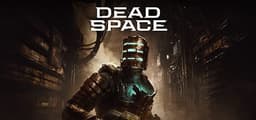
Bottom Line: Motive rebuilt a 2008 classic almost entirely in new materials and kept its original design intact. On PC this is the best version of Dead Space, but traversal stutter, a full-price tag and a design that stays close to the original keep it short of greatness.
The Combat Loop: Anatomy as Interface
Dead Space's big idea from 2008 still holds up. Target a Necromorph's head and you've wasted ammunition. Cut off its legs and it drags itself toward you on its arms. Take the arms and it stops being a threat. That one inversion of shooter instinct forces deliberate, rationed aiming in a genre that usually rewards spraying bullets.
Motive's key addition is the peeling system, and it's more than a visual upgrade. In the original, you judged a limb's durability by counting shots. Here you can watch flesh tear away to expose tendon, then bone. You can read an enemy's remaining health in its body. That tightens the combat loop in a way no HUD element could: you know when one more Plasma Cutter shot will finish the job, and your ammunition math gets sharper as a result.
The arsenal is still the series' best toolset. The Plasma Cutter is the headliner for good reason, but the Line Gun's horizontal sweeps, the Ripper's sawblade and the Force Gun's crowd control each create a distinct tactical role. Upgrading at workbenches with Power Nodes adds a satisfying economy. You'll commit to two or three weapons, because spreading nodes around leaves you with a drawer full of mediocre tools. That's the right design pressure, and Motive kept it.
Stasis and kinesis remain the systems that raise the ceiling. Freezing a charging Brute and then launching a severed Slasher blade into its weak point is still one of the best-feeling moves in survival horror. The remake's physics make kinesis hits feel heavier and more reliable than they did in 2008.
The Ship as a Character
The continuous Ishimura is the change that most reshapes the game. The original was a sequence of discrete chapters connected by a tram. The remake keeps the tram and the chapter structure, but the ship now holds together as one physical space. New security clearance levels gate doors throughout the ship, which turns backtracking into a Metroidvania-lite loop: come back with higher clearance and open rooms you passed twelve hours earlier.
This is where the Intensity Director earns its keep. Old areas don't stay safe. Lights fail, vents rattle, and a Necromorph might drop from the ceiling of a corridor you've already cleared three times. Most of the time it works. It turns revisits from chores into tense situations. Sometimes it tips toward predictability, and by the back half you'll learn to read the director's rhythm. Motive also added circuit-breaker junction choices, where you route power to lights or oxygen or a door. It's a small idea that forces a real trade-off, and it's one of the smartest additions here.
The Additions That Matter, and the Ones That Don't
The zero-gravity rework is a clear improvement. Free flight turns the vacuum sequences from stiff set pieces into navigable spaces, and a couple of the original's weakest chapters are now highlights. The asteroid-defense section, notorious in 2008, has been redesigned into something far less tedious.
The voiced Isaac is the most debated change, and Motive handles it carefully. Isaac speaks when spoken to and works the problem out loud. He doesn't narrate his feelings. It makes him a person instead of an avatar, and it improves the story's middle act, where the silent original leaned hard on other characters to explain everything.
The side quests are uneven. The best of them, especially the storyline built around the ship's senior staff, add real texture to Unitology's rot inside the crew. Others are fetch errands with a new audio log attached. They're worth doing, but they don't change your understanding of the game.
The central criticism is simple: structurally, this is still the 2008 game. The objective chain, the "go here, a door breaks, go fix three things" repetition, and the boss encounters all follow the original closely. If you've played it recently, the remake rarely surprises you on a mechanical level. It impresses you in how it's executed.