
Bottom Line: Graveyard Keeper offers a uniquely dark, deeply systems-driven experience that rewards persistence with a twisted sense of accomplishment, despite its often opaque mechanics and a grind that veers dangerously close to pure drudgery, especially on mobile.
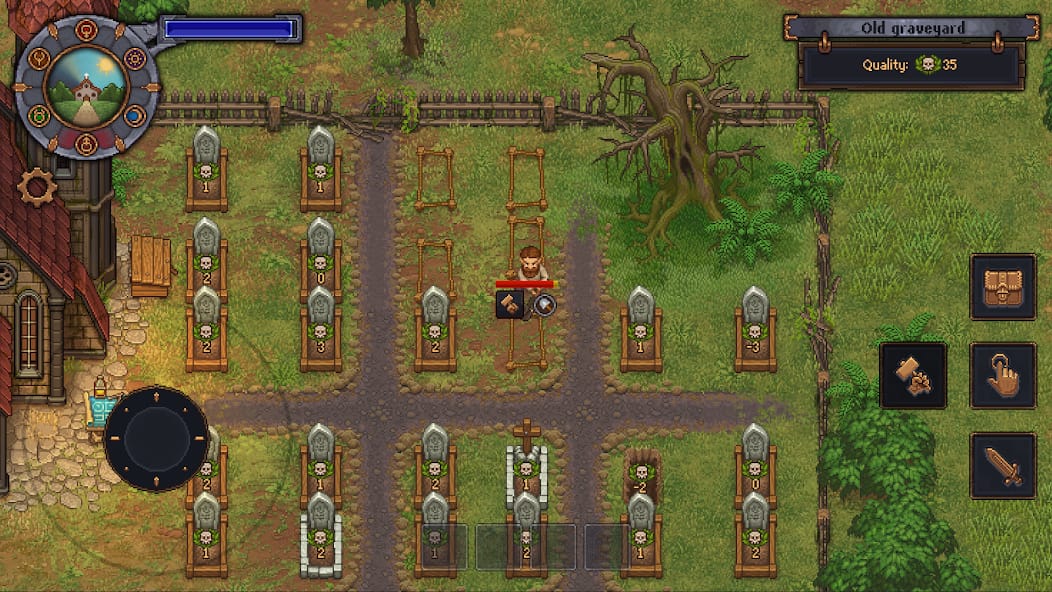
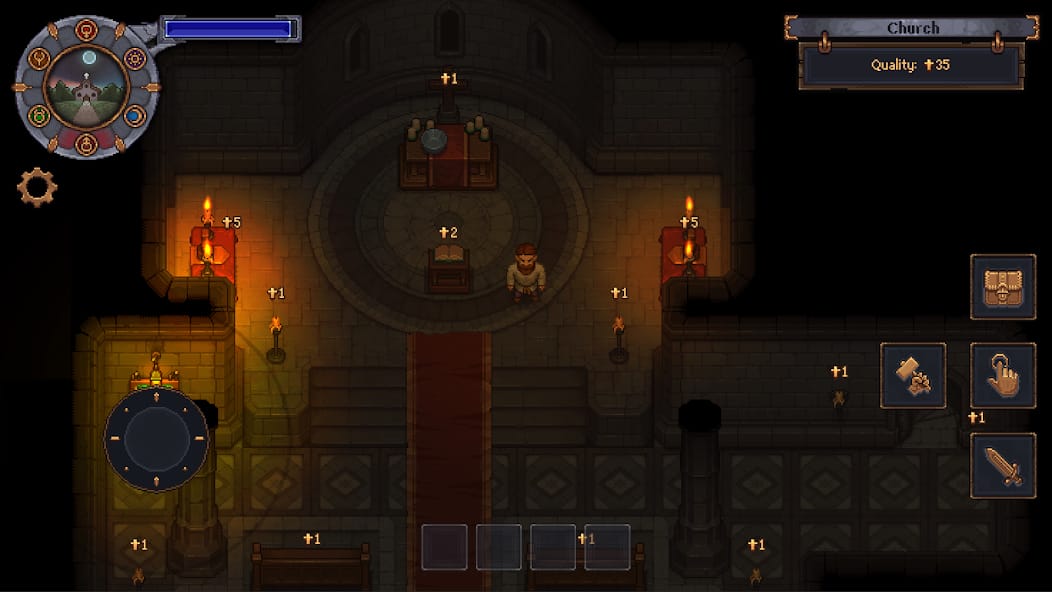
Graveyard Keeper is an exercise in delayed gratification, a testament to the player's tolerance for an often-unforgiving grind masked by charming pixel art and a delightfully grim sensibility. At its core, the gameplay loop is deceptively simple: acquire a corpse, process it, bury it, and then leverage the resulting resources and church income to progress. Yet, this simplicity quickly unravels into a dense web of interlocking systems that demand meticulous planning and an almost pathological commitment to efficiency. The game’s onboarding friction is significant; tutorials are minimal, and many crucial mechanics are discovered through frustrating trial and error or by consulting external wikis. This isn't necessarily a flaw for all players, as it caters to those who revel in unraveling complex systems, but it undeniably alienates others expecting a more guided experience.
The dark humor is, without question, one of Graveyard Keeper's strongest assets. The casual conversation about selling ground human meat to a cannibal or the existential dread conveyed by the talking skull, Gerry, provides a constant source of amusement. This thematic consistency elevates the game beyond a mere clone, imbuing its repetitive tasks with a unique flavor. However, the humor often serves as a sugarcoating for what can be a truly grind-heavy progression system. Advancement in any skill tree—be it theology, crafting, or farming—requires an exorbitant amount of experience points, often earned through repetitive tasks. Need iron tools? Prepare to mine for hours. Want better sermons? You’ll be doing a lot of theological research and crafting sermon notes. This deliberate pace, while offering a tangible sense of accomplishment when a major milestone is reached, frequently transforms into tedious busywork, where progress feels less like a journey and more like a slow crawl up a slippery slope.
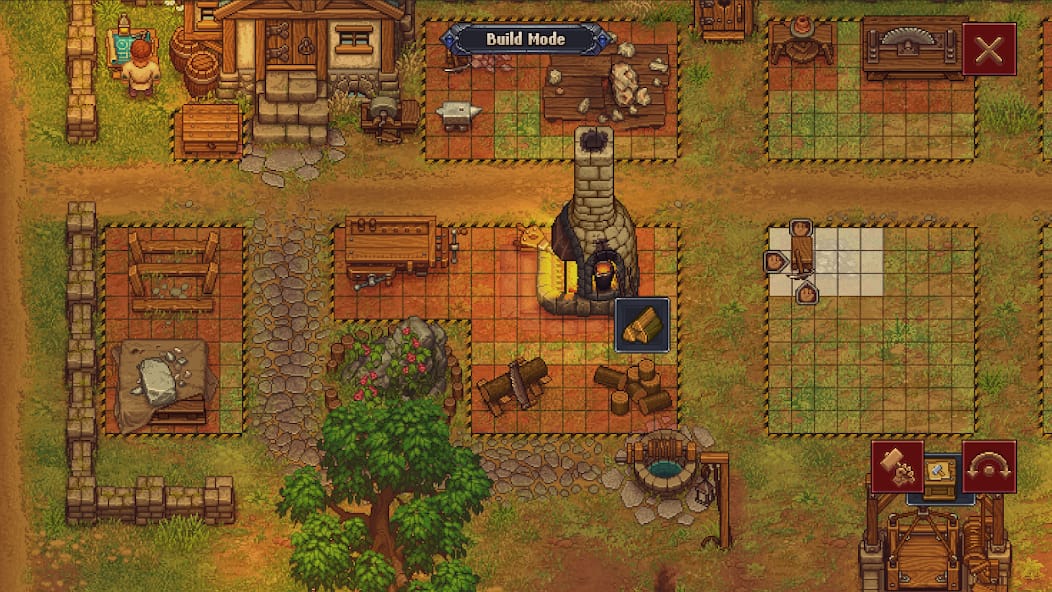
The systems interconnectivity is both a strength and a weakness. Every action, from fishing to crafting a new gravestone, contributes to a larger goal, yet the sheer number of interdependent systems can be overwhelming. Players are constantly managing multiple energy bars, crafting dependencies, and NPC schedules (some characters only appear on specific days of the week). This design, while providing immense depth, can feel like juggling chainsaws while blindfolded. For instance, creating a better grave involves multiple tiers of crafting, requiring resources gathered from different parts of the world, processed in various workstations, and unlocked through distinct tech trees. The rewards for mastering these systems are profound, but the barrier to entry is high.
Critiques often point to the unintuitive mechanics and sometimes frustrating user interface. Simple actions, like transferring items between inventories or understanding the cryptic requirements of certain quests, can be unnecessarily cumbersome. This often leads to wasted in-game days and a feeling of inefficiency that detracts from the overall enjoyment. Despite these criticisms, the game's "Very Positive" rating on Steam suggests that a significant portion of its player base finds the depth and the dark charm compelling enough to overlook these frustrations. They find a perverse joy in optimizing their macabre enterprise and slowly piecing together the narrative of their predicament. Graveyard Keeper isn't a game you passively play; it's a world you inhabit and, inevitably, exploit.