Overview
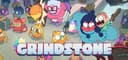
Amid a flood of match-three clones and derivative mobile experiences, Capybara Games delivers Grindstone, a title that eschews easy categorization while stretching what a “puzzle combat” game can be. Launched first on iOS in September 2019 before migrating to Steam and Nintendo Switch, Grindstone positions itself as a carefully built mental workout draped in a vibrant, almost saccharine, cartoon aesthetic. Players assume the role of Jorj, a burly, axe-wielding barbarian whose daily grind involves navigating treacherous, monster-infested grids. This isn’t about matching gems; it’s about chaining kills. Each level presents a unique tactical dilemma, demanding that players think several moves ahead, anticipate enemy behavior, and master the intricate dance of resource management. Capybara, known for its distinctive design sensibilities, has infused Grindstone with a blend of accessible mechanics and genuine strategic depth, distinguishing it from the superficial casual fare that often dominates mobile platforms. It arrives as a premium experience, demanding attention and rewarding mastery — a rare jewel in the crowded digital storefronts, and the logical consequence of thoughtful design meeting careful execution.
Key features
- Tactical Chain-Linking Combat: Players draw paths through adjacent monsters (Creeps) of the same color. The longer the chain, the more potent the attack, culminating in the creation of a Grindstone.
- Dynamic Grindstone Mechanic: Chaining 10 or more Creeps creates a Grindstone, an essential item that allows Jorj to switch the color of his next attack, enabling complex, multi-color combos and setting the stage for highly strategic turns.
- Robust Progression & Customization: With hundreds of handcrafted levels, new enemy types, environmental hazards, and a comprehensive crafting system for gear, weapons, and potions, the game offers extensive opportunity for players to adapt their playstyle and overcome increasingly difficult challenges.
Analysis
Grindstone fundamentally re-evaluates the “match-something” genre, stripping away the arbitrary nature of color-matching for points and injecting it with a palpable sense of danger and reward. The gameplay loop is an elegant, high-stakes game of “Snake” where every move carries consequence. Jorj, our stoic protagonist, must carve a path through a grid of colorful, yet openly hostile, Creeps. The initial hook is simple: link same-colored Creeps to clear them. But this apparent simplicity quickly yields to layers of intricate strategic planning, primarily centered around the eponymous Grindstone.
The ability to generate and utilize Grindstones is where Grindstone transcends its humble origins. Successfully chaining ten or more Creeps spawns this crucial item, which, when collected, allows Jorj to pivot his attack color. This single mechanic transforms the grid from a static board into a dynamic, fluid battlefield. Players are no longer merely reactive; they are architects of their demise or triumph, constantly plotting optimal paths not just for immediate damage but for future strategic positioning. Do you take a shorter, safer chain now, or risk a longer one to generate a Grindstone that could clear half the board in a single, glorious super-combo? This decision-making forms the bedrock of Grindstone‘s enduring appeal.
Levels are carefully designed puzzle boxes, each introducing new enemy behaviors, environmental obstacles, or specific objectives. Some Creeps explode, others shield their allies, and some even alter the grid. This constant introduction of new variables prevents the experience from growing stale, demanding continuous adaptation and refinement of tactics. Furthermore, the game implements a tension-building “enrage” mechanic. As turns pass, Creeps grow agitated, visually changing and becoming more dangerous, eventually attacking Jorj directly. This subtle pressure-cooker design forces players to balance aggressive board clearing with cautious self-preservation, adding a roguelike element of risk management to each encounter.
Beyond the core puzzle mechanics, Grindstone features a surprisingly robust crafting and progression system. Blueprints discovered within levels allow players to forge new weapons, shields, and consumable potions. These items are not mere cosmetic upgrades; they offer tangible benefits, from additional health to unique abilities that can turn the tide of a difficult encounter. This system provides long-term motivation for exploration and replay, encouraging players to revisit earlier levels or tackle daily challenges to gather necessary resources. The integration of these RPG-lite elements feels organic, enhancing the strategic depth without bogging down the core puzzle experience. Capybara has built a user experience flow that, while challenging, is designed to never feel unfair, consistently communicating threats and opportunities with clarity through its expressive visual language.
Gameplay Loop
The daily gameplay loop speaks to Grindstone‘s addictive design. Players tackle a series of increasingly complex levels, each a self-contained puzzle. Success in these levels fuels the crafting system, allowing for new gear that, in turn, facilitates progress through even harder stages. The introduction of daily challenges and a boss rush mode further extends the longevity, providing competitive elements and varied objectives beyond the main campaign. This cycle of challenge, reward, and incremental power growth is built to keep players engaged, continuously striving for the next perfect chain or the elusive three-star completion. The game doesn’t just ask for your time; it earns it through intelligent design and constant, satisfying feedback.
Visuals & performance
Grindstone‘s aesthetic combines brutality with charm to strong effect. The “cartoonish barbarian world” description is apt, featuring vibrant colors, chunky character models, and fluid, exaggerated animations designed to make every axe swing and Creep explosion feel impactful. This visual expressiveness serves a functional purpose, too; enemy states, impending enragement, and item pickups are all communicated with clarity, avoiding UI clutter. The sound design is equally strong, with satisfying “thwacks” and “clinks” accompanying every chain and a dynamic soundtrack that ratchets up the tension as Creeps enrage. As a stylized 2D puzzle game of modest technical demands, it is light on hardware, and the UI is built to work equally well with touch and traditional inputs.
Platform nuances
Grindstone is designed to feel at home across its disparate platforms. On iOS, it works as a premium mobile experience: the “draw a path” mechanic is a natural fit for touch, making it an ideal pick-up-and-play title for commutes or short breaks, yet deep enough for extended sessions. The vibrant visuals are well suited to high-resolution mobile screens.
On Nintendo Switch, portability is a significant advantage, maintaining the mobile-friendly aspects while benefiting from the larger screen real estate in handheld mode. The option of a more traditional control scheme alongside the touchscreen gives players flexibility.
The Steam version offers the graphical headroom of a PC and is arguably best played with a mouse, which provides precision comparable to touch input. While it might lack the immediate “pick-up-and-play” charm of its mobile counterpart, the core strategic depth is undiminished, making it a solid desktop option. Regardless of platform, the core game design carries over intact.
Best for
Puzzle aficionados who appreciate deep strategic planning, players seeking a premium mobile experience, and those who enjoy a challenging, yet rewarding, combat puzzle loop.
Final verdict
Grindstone is a statement. Capybara Games has demonstrated that with creative iteration and careful design, even the most established genres can yield fresh, compelling experiences. It demands thought, rewards foresight, and wraps it all in a charming package. This is a game that respects your intelligence and your time, delivering a satisfying cerebral workout with every swing of Jorj’s axe — and while repetition and difficulty spikes keep it short of essential, it remains a standout title in the modern puzzle landscape and an easy recommendation.
Reviewed by the Rankeno Puzzle & Casual Desk. Scores are out of 10; the overall score is the desk’s editorial judgement, informed by the four sub-scores above. How we review