
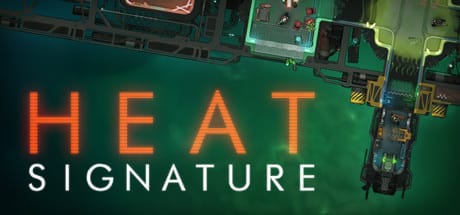


Bottom Line: Heat Signature is a masterclass in emergent strategy that transforms the standard "stealth-action" loop into a brilliant, high-stakes tactical puzzle. It is quite possibly the finest "anecdote generator" on the market today.
The core of Heat Signature isn't found in its gunplay—which is intentionally lethal and often a last resort—but in its decision-making latency. Most action games demand an immediate response to a threat; Heat Signature lets you freeze time, zoom out, and contemplate the three guards currently aiming shotguns at your face. This "pause-and-plan" mechanic shifts the experience from a shooter to a methodical puzzle.
The Clockwork Heist
Success in Heat Signature feels less like winning a fight and more like solving a theorem. Suppose you need to reach a target behind a reinforced door. You could try to find a keycard, but that's the "intended" path. Instead, you use a Swapper to trade places with a guard on the other side of the glass. Suddenly, you're in, he's out, and you’re standing over your objective before the alarm even registers.
This is the "emergent gameplay" that developers often promise but rarely deliver. The gadgets are designed as logical verbs. A "Subverter" doesn't just disable a turret; it flips its allegiance. A "Sidewinder" doesn't just teleport you; it allows you to bypass physical barriers. When these tools interact, the game enters a flow state of pure, unadulterated creativity. You aren't just playing the game; you are outsmarting it.
Friction and Failure
However, the brilliance of the system is only visible when things go wrong. Heat Signature is an expert at escalating friction. One misplaced shot can shatter a window, creating a vacuum that pulls everything—including you and your target—out into space. These moments could be frustrating, but because you have the power to pause and react, they become the highlights of the run. Finding yourself floating in space, only to realize you have a remote-controlled pod you can pilot to "catch" yourself before your oxygen runs out, is a high that few other games can provide.
The Roguelike Rut
If there is a flaw in the vessel, it lies in the procedural repetition. After ten or fifteen hours, the ship layouts begin to bleed together. While the guards' equipment scales in complexity—adding shields, armor, and teleporters of their own—the environments themselves lack aesthetic variety. You are always in a series of metallic corridors. The "thinness" of the narrative also means the drive to continue is fueled entirely by the mechanics. If the gadget-play doesn't click for you, there is little else to hold your interest. The "liberation" of the galaxy is a map-painting exercise that provides a sense of scale but lacks the emotional resonance of a true campaign.
The Weight of Mortality
The permadeath system is handled with a deft touch. When a character dies or is captured, they are gone. But the "Retire" mechanic allows you to end a character's career on your own terms, passing down a legacy item to your next merc. This creates a wonderful sense of generational progress. You aren't just playing a character; you are building a legend in a sector of space that remembers your triumphs and your embarrassments.