
Bottom Line: I Am Your Beast is a hyper-caffeinated, "all-killer, no-filler" revenge thriller that turns the FPS genre into a frantic puzzle of improvisational violence. It’s a masterclass in stripping away mechanical bloat to find the raw, pulsating heart of a flow-state shooter.
The core appeal of I Am Your Beast lies in its violent economy. In most shooters, the gun is your constant companion; here, it is a temporary lease. You might start a level with nothing, snap the neck of a scout, take his pistol, fire three rounds into a group of soldiers, and then—realizing the clip is empty—hurl the empty frame into the face of a sniper to stun him before closing the gap with a knife. This constant gear-cycling creates a tactical friction that is exhilarating. You aren't just managing ammo; you are managing a sequence of rapidly expiring opportunities.
The Flow State as Architecture
The "micro-sandbox" levels are masterfully paced. Most missions can be completed in under two minutes, but you won't do it on your first try. The game encourages a trial-and-error loop that feels closer to a puzzle game than a standard FPS. You learn the patrol routes, identify where the bear traps are hidden, and map out the most efficient line through the forest. When you finally hit that S-rank, the result is a choreographed ballet of carnage that feels earned. The movement system is deceptively deep; the ability to scale trees and drop from above isn't just a gimmick—it’s a necessity for survival against the COI’s overwhelming numbers.
Narrative Through Kineticism
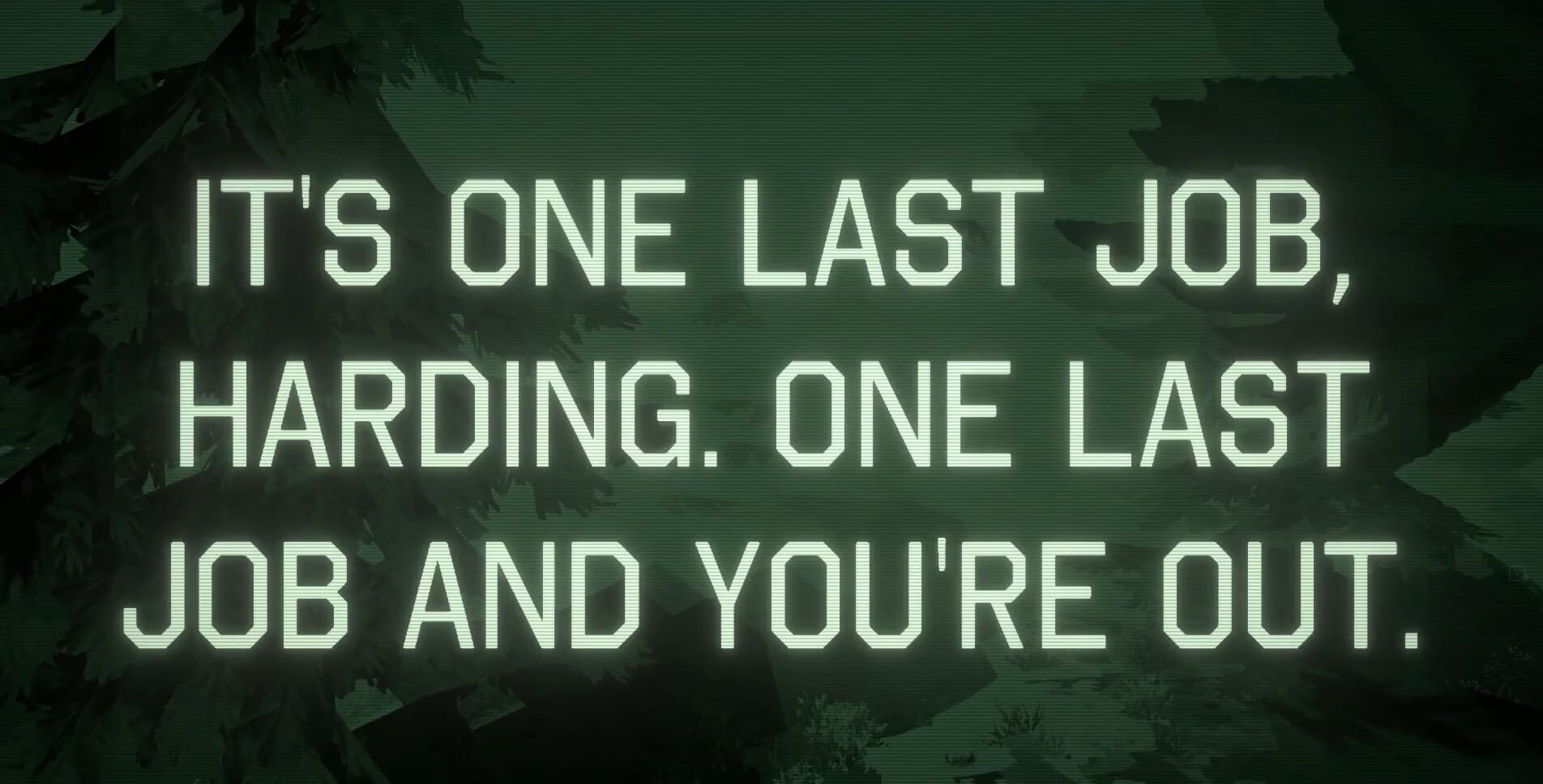
The story of Alphonse Harding is told with a refreshing lack of self-importance. Instead of long, unskippable cutscenes, we get kinetic typography. Words pulse, shatter, and slam onto the screen in time with the dialogue, creating a visual energy that matches the gameplay. It’s a brilliant way to deliver character beats without breaking the player’s momentum. Harding isn't a hero; he’s a man who just wants to be left alone, and the sheer irritation in his voice as he dismantles his former colleagues provides a dark, comedic undertone to the brutality.
Design Philosophy
The UI is sparse, almost skeletal, which is a welcome relief. There is no cluttered HUD to distract from the immediate threat. Every design choice feels calculated to keep you moving. The decision to limit the campaign to a few hours is a bold move that pays off; the game never outstays its welcome and never resorts to "filler" missions. Instead, the longevity comes from the side objectives and hidden challenges that force you to rethink your approach to previously cleared areas. It’s a testament to the strength of the core mechanics that replaying a level for the tenth time feels as fresh as the first, simply because the improvisational nature of the combat ensures that no two runs are identical.