

Overview
Most digital board game adaptations fail the same way: they port the rulebook, keep the bookkeeping, and forget that a screen can do things cardboard cannot. Infinity: HexaDome Tactics takes the other road. Developer Blindspot Games began with a board game adaptation and then reworked the mechanics specifically for video game play. That decision shapes everything else about the product.
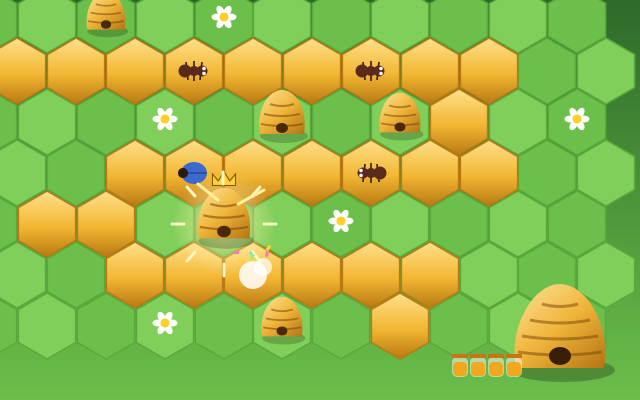
The result is a fast-paced 1v1 turn-based tactics game set in the sci-fi universe of the Infinity tabletop wargame. It released on Steam for PC on September 10, 2026. Each player assembles a roster of champions drawn from broad roles (ranged, melee, control and support) and fights across a compact hex-grid arena. Turns run on action points and resource management, and a deck of tactical cards adds a second layer of planning on top of the positional play.
The content count is modest: a small champion roster, varied arenas and a tactical card pool. Around that sits a single-player campaign that reveals more of the setting with each match, plus challenges, duels against the AI, and online PvP in both friendly and competitive forms.
The positioning is clear. This is not a sprawling squad-management campaign game, and it does not try to replicate the full Infinity wargame. It is an arena duelling game, closer in spirit to a competitive card battler than to a long-form tactics epic. Short matches, small teams and a ranked ladder are the pitch.
The pitch is cautious. A small roster and a competitive ladder ask players to commit before the pool proves itself, and a demo on a separate Steam page lowers the cost of finding out whether the design clicks.
Key features
- Champion rosters: A small roster of heroes across ranged, melee, control and support roles, each with their own abilities, synergies and an ultimate skill.
- Compact hex-grid arenas: Small maps where positioning and outmanoeuvring the opponent decide matches, with several arena layouts.
- Action points and resources: Every turn is a budget. Movement, attacks and abilities compete for the same limited pool.
- Tactical card deckbuilding: A tactical card pool adds a pre-match construction layer and in-match variance.
- Single-player content: A campaign that expands the world match by match, plus challenges and AI duels.
- Online PvP: Friendly and competitive matches against friends or other players.
- Accessibility of entry: Demo and Steam Family Sharing.
Analysis
Roster Construction
The roster is where the game asks for its first real decision. The role spread and champion pool are small, and the design leans on synergies to stretch them. A game like this lives or dies on whether team composition produces distinct plans or collapses into one or two dominant line-ups. A roster this size is enough to learn every matchup, which suits competitive play: nothing an opponent fields should be a mystery after a few weeks. It is also few enough that a single overtuned champion can warp the whole field. Small rosters demand active balance work, and the game’s long-term health depends on the developer supplying it.
Ultimate skills add a tempo question. A powerful once-in-a-while ability gives each champion a threat that the opponent must respect even when it is not being used. That is good design for a duelling game, because it creates decisions on both sides of the board.
The Turn Economy
Action points are the right backbone for a compact arena. On a small hex grid, every step matters, and a shared pool forces trade-offs: reposition the support or spend the points on a second attack. Layering resource management on top adds a longer horizon to each turn, so a player weighs the current exchange against the next one.
The risk is cognitive load. Action points, a separate resource, champion abilities, ultimates and a hand of cards is a lot of state to hold for a game that sells itself on speed. “Fast-paced” and “turn-based with five interlocking systems” pull in opposite directions. The decision to rework the mechanics for video game play is the best argument that this tension has been handled. A computer can track ranges, costs and modifiers that a tabletop player must calculate by hand, which frees the design to keep depth while cutting friction.
Cards as a Second Axis
The tactical card layer is the feature that separates this from a pure positional skirmish game. Deckbuilding gives players something to tune between matches and introduces hidden information during them. An opponent’s board is fully visible; their hand is not. That uncertainty keeps a small-map, small-roster game from becoming a solved puzzle.
It also introduces variance, and competitive players are divided on variance. Draw order can decide a close match. With a modest card pool rather than a sprawling one, deck construction should stay readable, but it also means the range of viable decks may narrow quickly once the strongest cards are identified.
Solo Versus Online
The campaign, challenges and AI duels serve two jobs: onboarding and insurance. A campaign that reveals the world one match at a time is a sensible wrapper for teaching champions and cards in sequence. Challenges are a natural fit for puzzle-like tactical scenarios. Neither is likely to be the main draw. The structure, the roles and the competitive queue all point toward PvP as the intended endgame.
That is where the queue becomes relevant. A competitive 1v1 game needs people in it, and a small community is a risk. Friendly matches against friends sidestep the problem. Ranked play does not. Solo content is the fallback, and its depth is the open question for anyone who buys this without a regular opponent.
What the Score Says
A mixed reception argues against buying blind. The specific complaints are not confirmed, so no cause should be assumed. The demo exists for exactly that reason.
Visuals & performance
The setting does a lot of the visual work. The Infinity universe is established sci-fi with a recognisable cast of factions and characters, and a champion-based game benefits from that: the champions need to be distinguishable at a glance on a crowded hex grid, and a mature source setting supplies distinct silhouettes and identities to draw from.
The interface carries a heavier burden than the art. A tactics game with action points, resources, cards and ability ranges must surface all of that without burying the board. Clarity of range indicators, cost previews and card text is the real measure of quality here, and the fact that the mechanics were rebuilt for digital play suggests the interface was designed alongside the rules instead of bolted on afterwards.
On performance, expectations should be modest in the good sense. A turn-based game on compact arenas with a handful of units per side is light on hardware by design, and turn-based play is less sensitive to latency than real-time play.
Platform nuances
The game is PC-only, on Steam. No console or mobile versions exist, which is a missed opportunity for a format that suits short sessions and touch input.
- Input: A hex-grid tactics game with a card hand is built for mouse and keyboard. Controller support and Steam Deck compatibility are unconfirmed.
- Family Sharing: Supported, which is useful for a household that wants to try it on one purchase.
- Demo: Hosted on a separate Steam page, so it must be searched for instead of found on the main listing.
- Pricing: $19.99.
Final verdict
Infinity: HexaDome Tactics makes the correct structural choice and then accepts the constraints that come with it. Rebuilding the rules for the screen, keeping the arenas compact and limiting the roster to a learnable size all serve a clear goal: quick, dense, competitive duels. The card layer adds the hidden information that a small board needs.
The weaknesses are scale and momentum. A small champion pool and a modest card set are a starting point, not a deep pool, and a competitive game with a small community has to earn its staying power through updates and balance work. At $19.99, we rate it a focused tactics game with a narrower audience than its premise deserves. Play the demo first; for players with a regular opponent, it is an easier recommendation after that.
Reviewed by the Rankeno Strategy & Sim Desk. Scores are out of 10; the overall score is the desk’s editorial judgement, informed by the four sub-scores above. How we review