Overview
The crossword has survived for over a century on a diet of obscure clues and “crosswordese”—those weird, three-letter words like AUK or ODO that only exist in the minds of constructors. Zach Gage and Jack Schlesinger, the duo behind modern classics like SpellTower and Good Sudoku, clearly decided the format was due for a radical autopsy. Their creation, Knotwords, doesn’t just tweak the formula; it removes the clues entirely, transforming a test of knowledge into a test of structural reasoning.
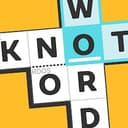
Published on mobile by Noodlecake, Knotwords occupies a space that feels both inevitable and startlingly fresh. It shares more DNA with Sudoku than with the New York Times Sunday puzzle. Instead of being told that “14 Across is a flightless bird,” you are presented with a grid divided into irregular, tetronimo-like blocks. Each block contains a specific set of letters. Your task is to arrange those letters so that every row and column forms a valid English word. It sounds simple until you realize that every placement is a constraint that ripples across the entire grid.
The game enters a market saturated with “daily” habits, but it distinguishes itself through sheer elegance and a lack of predatory monetization. While many mobile titles try to trap you with energy bars and flashing lights, Knotwords presents itself as a digital piece of stationery—clean, quiet, and deeply focused. It isn’t just another distraction; it’s a tool for mental sharpening that respects the player’s intelligence and their time.
Key features
- Clueless Grid Construction: The removal of traditional clues shifts the focus to spatial reasoning and vocabulary structure rather than trivia recall.
- The Daily Loop: A tiered system of puzzles—from the “Mini” to the “Daily” and the massive “Weekly”—provides a well-scaled difficulty curve that rewards consistency.
- Integrated Dictionary: A thoughtful feature that allows players to look up definitions in-engine, turning a moment of frustration into a vocabulary-building opportunity.
Analysis
To understand why Knotwords works, you have to understand the specific frustration of the traditional crossword. If you don’t know who the 19th-century Prime Minister of Bulgaria was, you’re stuck. You’re locked out of the puzzle not because you’re bad at puzzles, but because you lack a specific, useless fact. Knotwords solves this by making the English language itself the clue.
The Gameplay Loop
The experience is defined by deductive reasoning. When you look at a three-letter vertical block that must contain a ‘Z’, and the horizontal row it intersects requires a vowel, the puzzle begins to solve itself through logic. You aren’t guessing; you’re eliminating impossibilities. This creates a “flow state” that is rare in the genre. The Monday grids are small and approachable—coffee-break material. By the time the Weekly puzzle arrives, the sprawling grids demand a sustained stretch of intense concentration.
The difficulty scaling is particularly impressive. Gage and Schlesinger have a knack for “fair” difficulty. When you’re stuck in Knotwords, the design never feels like cheating. The letters you need are right there, staring at you from their designated blocks. The failure is yours alone—a failure to see the pattern. That design choice makes the eventual “click” of the final letter satisfying by construction.
Interface & Experience
The interface is a study in minimalism. There are no “level select” maps with three stars to earn. There are no “gold coins” to buy hints. The game is the grid, and the grid is the game. This lack of friction is what makes it so addictive. You open the app, and you are immediately in the puzzle.
However, the “minimalism” occasionally veers into the sparse. While the built-in dictionary is a stroke of genius, the cursor behavior on mobile is built for small grids and can feel fidgety on larger ones, where precision is paramount. It’s a minor flaw in an otherwise polished package, but in a game that prides itself on surgical precision, any imprecision stands out.
What’s most refreshing is the game’s humility. It doesn’t demand your attention with push notifications or streaks that feel like a second job (though streaks exist for those who want them). It sits on your home screen like a well-worn book, waiting to be picked up. In the current mobile landscape, that kind of restraint is practically revolutionary.
Visuals & performance
Visually, the game is a triumph of subdued aesthetics. The color palette is soft, the typography is sharp, and the animations are functional rather than flashy. It looks like something that could have been designed by Braun in the 1960s.
On the technical side, a 2D game of this scope is light on hardware, and the design suits quick sessions: the app is built to open straight into a puzzle, which is critical for a game meant to be played in the “in-between” moments of life.
Platform nuances
Knotwords is available on iOS and Android, and it feels most at home there. This is a “thumb game.” The tactile nature of dragging letters and tapping blocks fits the mobile form factor perfectly. On a tablet, the larger Weekly puzzles breathe a bit more, reducing the need for zooming and panning, but the smartphone remains the ideal vessel for the Daily Mini.
Final verdict
Knotwords is a great game, and a genuinely important one for the puzzle genre. It proves that there is still room to innovate in even the most tired formats. By focusing on constraints rather than clues, Gage and Schlesinger have built a puzzle that feels like it has always existed, yet somehow feels entirely new. We recommend it wholeheartedly to anyone who values their brain—just don’t expect the minimalism to hold your hand.
Reviewed by the Rankeno Puzzle & Casual Desk. Scores are out of 10; the overall score is the desk’s editorial judgement, informed by the four sub-scores above. How we review
Embed this score badge on your site
Publish an app or game? Submit it for review