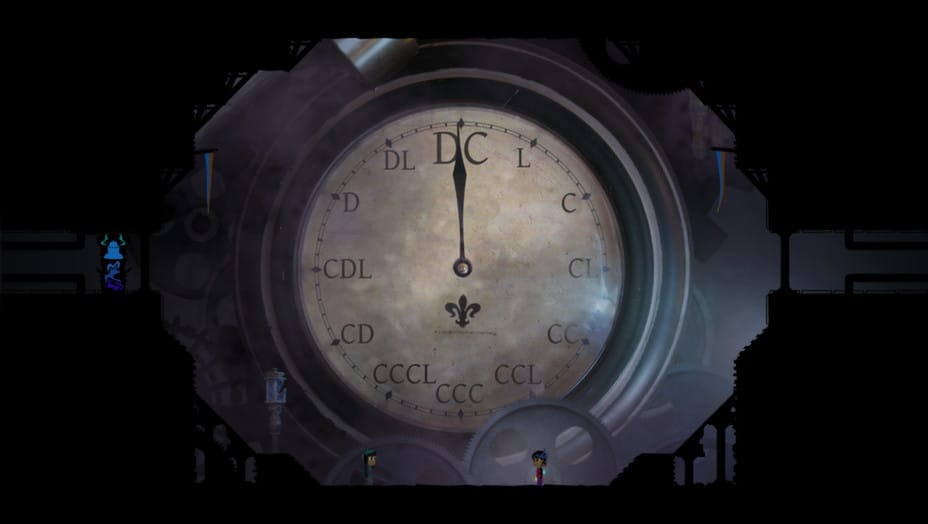



Bottom Line: A sprawling, meditative underground labyrinth with genuinely brilliant physics-based traversal—undercut by two chatty fairies who won't let its gorgeous silence breathe.
The Gameplay Loop
Strip away the story and Underground is a movement toy, and a superb one. The genius is in the two-form system. As the sprite, Mi clings to vertical surfaces and climbs with precision. Tap the switch and she becomes Bob, a physics object—no climbing, no fine control, just momentum, bounce, and the swing of a grapple line. Neither form can solve a room alone. You climb to a ledge as the sprite, launch off, become Bob mid-fall to bounce across a gap, then flick back to the sprite to grab the wall on the far side.
That mid-air switch is where the game lives. It's a timing and physics problem, not a combat one, and mastering it produces the same satisfaction as nailing a clean line in a platformer like Celeste—minus the punishment loop. The absence of combat isn't a missing feature; it's a design thesis. Every problem is spatial. Can I get there from here? The answer is always some choreography of forms and momentum.
The single-use power flowers are the smartest wrinkle. Instead of the Metroidvania ritual of unlocking a double-jump and keeping it forever, Underground gives you disposable tools. Absorb a flight power, and you get one burst of multi-directional movement before it's gone. This forces you to read the room before you commit—a small but constant tax on your attention that keeps traversal from ever going on autopilot. It's the anti-power-fantasy. You never feel invincible; you feel resourceful.
Where the Loop Frays
Here's the problem with 1,800 rooms: you have to walk back through a lot of them. The map is magnificent to inhabit and miserable to re-traverse. When a side quest or bell hunt sends you across the world, the lack of fast, generous shortcuts turns exploration into backtracking as a chore. The meditative flow that makes the first ten hours hypnotic can curdle into tedium when you're retracing familiar ground for the fourth time. This is the single most common—and most legitimate—complaint against the game, and it's structural, not a bug.
The Fairies Problem
Mi is mute. Two fairies speak for her, and they will not stop. The concept is clever: your dialogue choices are filtered through these companions, so you're never quite in control of Mi's voice. In practice, the writing swings between preachy, self-aware, and needlessly irreverent, and it constantly punctures the atmosphere. You'll be drifting through a hushed, beautifully scored cavern—genuinely transported—and then a fairy cracks a fourth-wall joke or launches into a meandering monologue. The tonal whiplash is real. Nygren built a temple to silence and then hired two hecklers to stand at the door. Some players find the banter charming. Many find it the game's worst enemy.