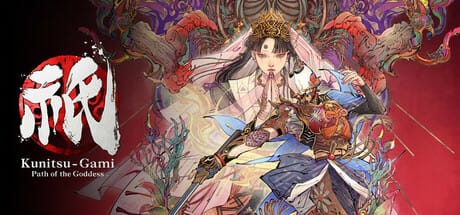



Bottom Line: A visceral, visually opulent masterclass in genre-blending that proves the tower defense formula isn't dead—it just needed a sword and a soul.
The brilliance of Kunitsu-Gami lies in its strategic friction. Many hybrid games fail because they compromise both halves to make the whole work; here, the action and the strategy are locked in a symbiotic struggle. During the day, the game is a race against the sun. You must cleanse defilement, rescue villagers, and, most crucially, carve a Spirit Path for Yoshiro to reach the Torii gate. Every second spent exploring a corner for extra crystals is a second Yoshiro isn't moving. If she’s caught in the open when the sun dips below the horizon, you’ve already lost half the battle.
The Rhythm of the Ritual
When night falls, the game transforms. The Seethe pour out of the gates, and the graceful exploration of the day is replaced by the rhythmic violence of the night. Soh’s combat is balletic—a series of "Kagura" dances that feel more like a ritual performance than a brawling system. But you cannot win alone. You are constantly micromanaging your villagers, repositioning them in real-time to counter waves of grotesque Yokai.
The tactical depth is staggering. You might start a wave with your Ascetics slowing enemies at a choke point while Archers rain fire from the ridges, only to realize a massive "Great Gaki" is breaching your rear. The ability to swap villager roles mid-combat—at the cost of precious crystals—turns every encounter into a fluid, high-speed puzzle. It’s not about building a static defense; it’s about managing a living, breathing ecosystem of violence.
The Boss Encounters
The journey culminates in massive boss fights that test the limits of this synergy. These aren't just tests of Soh's DPS; they are multi-stage tactical puzzles. You have to coordinate villager support to expose weaknesses while Soh performs high-risk precision strikes. The grotesque design of these bosses, inspired by classic Japanese art, provides a terrifying contrast to the elegance of Soh’s movements.
The Rebuilding Loop
Between these harrowing missions, the game slows down. Rebuilding liberated villages offers a breather, allowing you to spend Musubi to upgrade your units and Soh’s abilities. While some might find the village management a bit "checklisty," it provides the necessary emotional stakes. You aren't just clearing levels; you are reclaiming a home. The upgrades feel earned, and the progression from a struggling guardian to a divine force of nature is paced with surgical precision.