


Bottom Line: A masterclass in friction-less exploration that proves the most compelling open worlds don't need to be massive; they just need to be meaningful. It is an essential antidote to the "map-marker fatigue" of modern gaming.
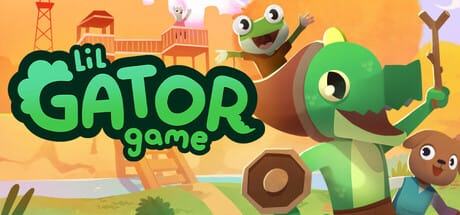
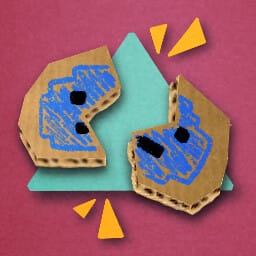
The brilliance of Lil' Gator Game lies in its mechanical honesty. Most open-world games try to hide their constraints behind "immersion" or "realism." MegaWobble does the opposite: it celebrates the artifice. When you "bop" a cardboard monster, it doesn't bleed or fade away with a complex animation; it just falls over with a satisfying thud. This isn't a lack of polish; it's a design philosophy. By removing the threat of failure, the game shifts the player's focus from "how do I survive?" to "where can I go next?"
The Loop of Kinetic Joy
The gameplay loop is built entirely around kineticism. In many games, moving from Point A to Point B is the friction you endure to get to the "fun." Here, the movement is the fun. The climbing system is a direct riff on Breath of the Wild, but without the stamina meter. You see a cliff? You climb it. No sweating, no falling to your death, no eating twenty apples mid-ascent. Once at the top, you can glide across the island, and the physics of the tattered shirt feel remarkably refined. There is a tactile weight to the shield-surfing that makes hurtling down a grassy hill feel genuinely exhilarating. This is friction-less design executed with surgical precision.
Narrative Weight through Play
While the aesthetics are bright and the dialogue is often laugh-out-loud funny, there is an undercurrent of melancholy that gives the game its staying power. The central conflict—the drifting apart of siblings—is handled with a surprising amount of emotional intelligence. The gator’s frantic desire to build the "perfect game" is a transparent, heartbreaking attempt to win back a sister’s attention. Every quest you complete for a NPC isn't just checking a box; it’s adding a citizen to a world you are desperately trying to make "real" enough to compete with the boring reality of college homework. It’s an affecting commentary on the bittersweet transition into adulthood.
Interface and Onboarding
The onboarding friction is virtually non-existent. Within minutes, you understand the verbs of the world. The UI is minimalist, staying out of the way of the vibrant environment. The game respects your time, offering a dense 3–5 hour experience that never overstays its welcome or pads its runtime with unnecessary filler. It’s a tightly wound piece of software that knows exactly what it wants to be and refuses to compromise that vision for the sake of "hours played" metrics.