
Bottom Line: Tarsier Studios turned childhood dread into a five-hour masterclass in atmosphere, and even its rough edges can't dull the terror. Short, punishing, and unforgettable.
The Gameplay Loop
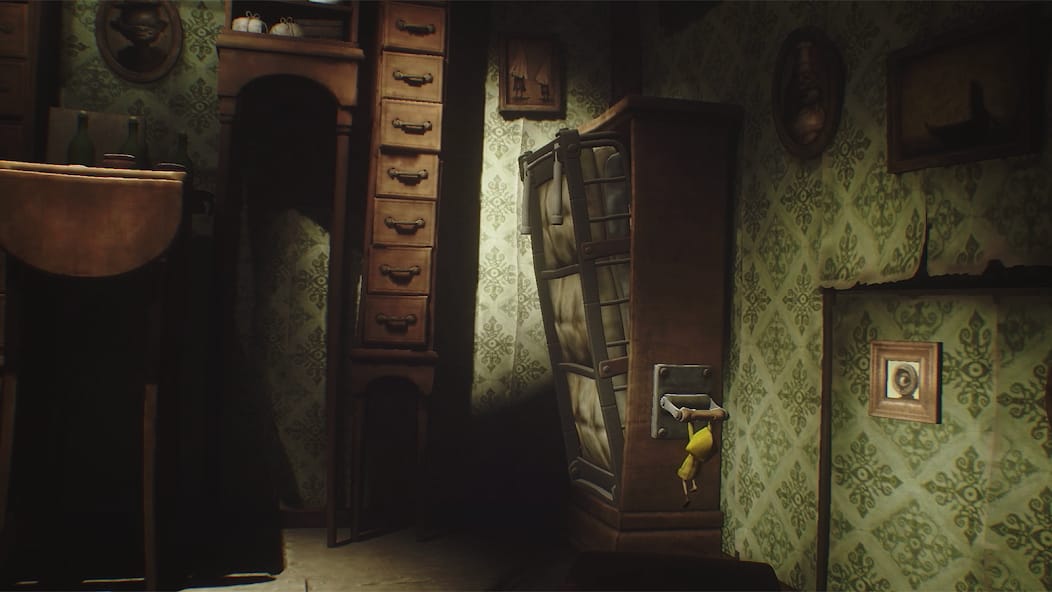
The core rhythm of Little Nightmares is observe, plan, execute, panic. Each room is a small stage. You study the threat—its patrol pattern, its sightlines, its weaknesses—then you thread the needle. Crawl under the table. Wait for the Janitor's blind sweep. Sprint for the door. The tension isn't in the difficulty of any single action; it's in the timing, and in the certainty that a misread will end with a monster's hand closing around you.
This is where Tarsier's design philosophy earns its praise. The puzzles are physics-based and grounded—drag a crate here, swing on a chain there, distract a guard with a thrown object. Nothing feels arbitrary. The solutions grow organically from the space, and the game rarely holds your hand. That trust in the player is refreshing. You'll figure things out because the environment tells you how, not because a tutorial prompt flashed on screen.
But the loop has friction, and it's worth being honest about it. The checkpoint system leans hard on trial-and-error. Certain chase sequences and platforming gauntlets demand you die—sometimes repeatedly—to learn the correct path. The first attempt is functionally reconnaissance. For some players, that's a fair exchange: death as teacher, tension as reward. For others, replaying a 30-second stretch for the fifth time drains the dread and replaces it with irritation. The horror works best the first time. Repetition is its natural enemy, and the game occasionally forgets that.
The Interface (Or Lack of One)
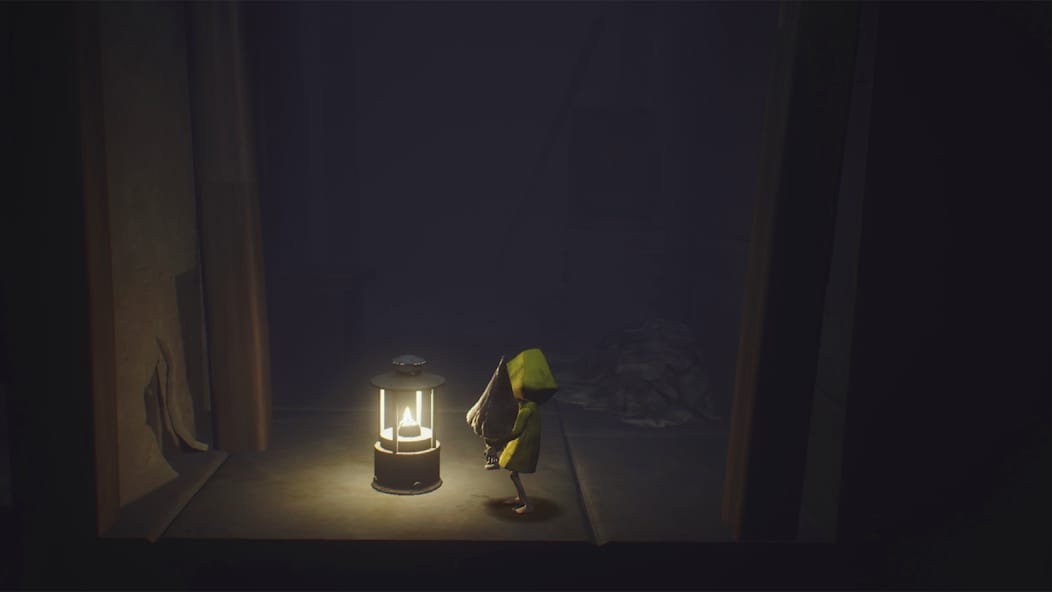
There is almost no UI here, and that's a deliberate, confident choice. No minimap. No objective marker. No inventory clutter. Six carries a single lighter that flickers a small pool of warmth into the dark, and that's your entire toolkit. The screen belongs to the world. This minimalism is one of the game's greatest strengths—onboarding friction is nearly zero, and immersion is total. You're never pulled out of the fiction by a heads-up display screaming at you.
The Vulnerability Engine
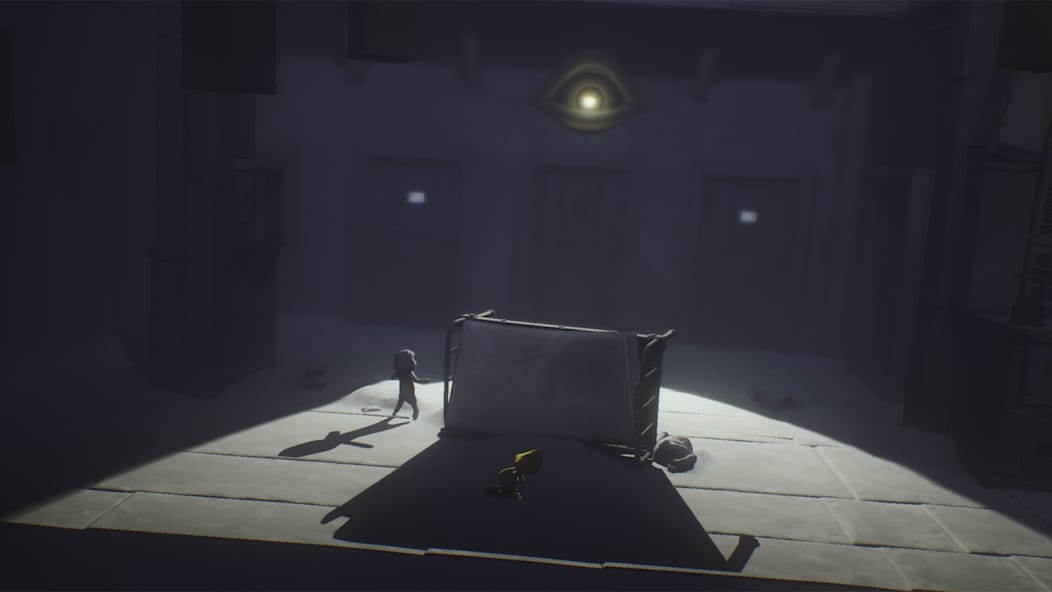
What separates Little Nightmares from lesser horror is its commitment to powerlessness. Six is small. She's slow. She's hungry—a recurring mechanic where she must eat to continue reveals something deeply unsettling about her arc, and the game lets that discomfort land without comment. Every design decision, from the camera framing to the scale of the doorknobs, exists to remind you that you are prey. Most games make you feel capable. This one makes you feel like a mouse in a house full of cats.
Where It Stumbles
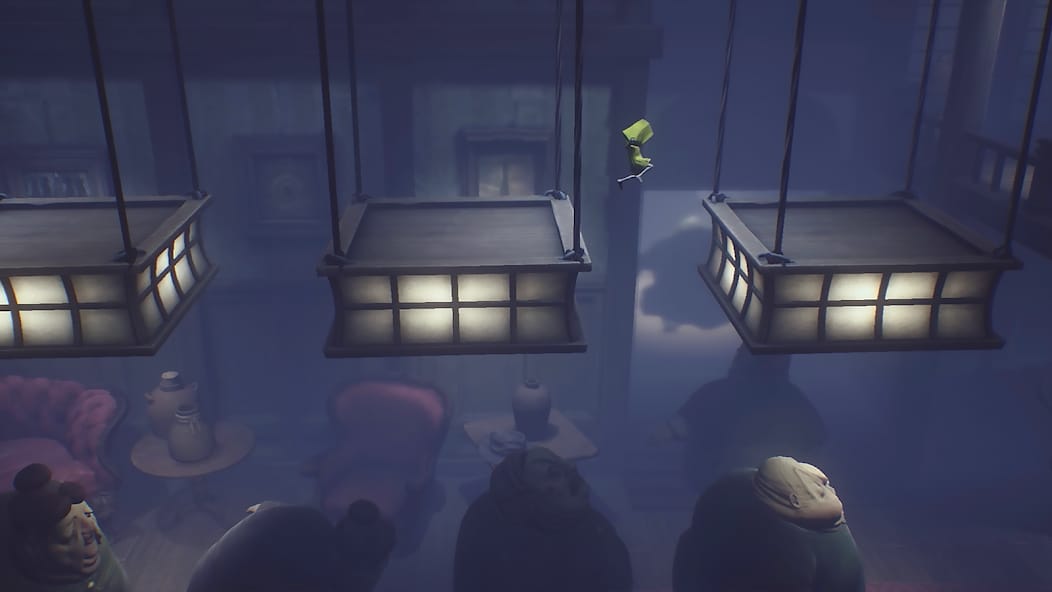
The 2.5D perspective, gorgeous as it is, introduces depth-perception problems. Because you're moving through a three-dimensional space rendered on a fixed-plane camera, judging exactly where a platform sits—or whether that jump lands on the ledge or in the void—can be a guessing game. Deaths that should feel earned instead feel cheap, the fault of an ambiguous camera angle rather than a player mistake. It's the single most consistent complaint leveled at the game, and it's a legitimate one.