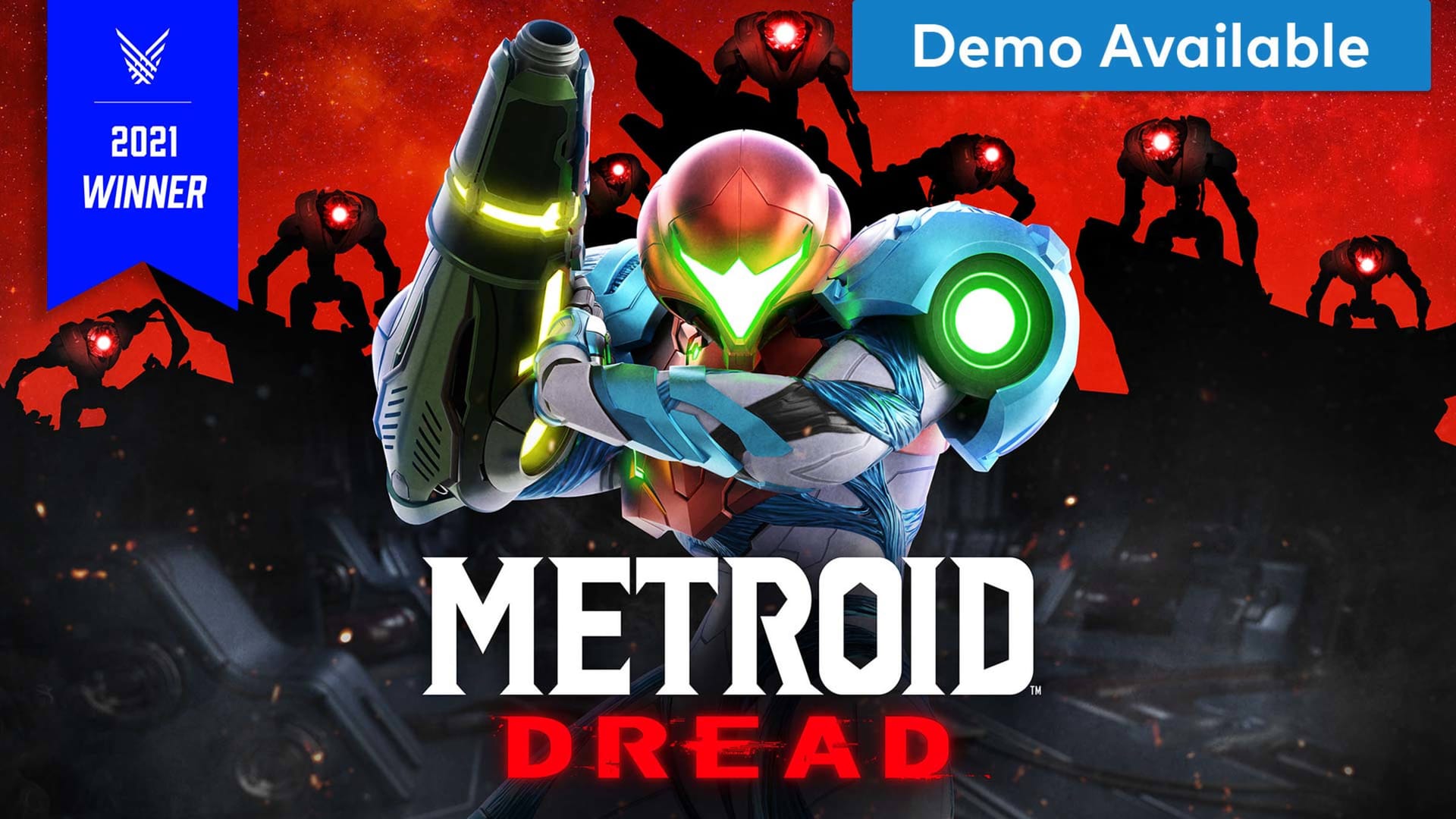

Bottom Line: Metroid Dread is the best 2D action game Nintendo has shipped in a decade — a lean, mean, occasionally merciless machine that justifies the 19-year wait for a proper Fusion sequel. It's short and it's $59.99, and you should pay it anyway.
The movement is the argument
Every review of every Metroidvania eventually says "movement feels good." Ignore the cliché inflation: Dread's traversal is genuinely best-in-class. Samus accelerates instantly, slides through gaps without breaking stride, mantles ledges, and snaps her arm cannon to any angle with the left trigger. There is close to zero input latency between intention and action, and MercurySteam understood that in a genre built on backtracking, the feel of crossing a room for the third time is the entire product. Rooms you crawled through at hour one become parkour lines by hour six. That transformation — the map staying still while you become faster than it — is the genre's oldest trick, and Dread executes it with more precision than any game since Super Metroid.
The Melee Counter deserves scrutiny, because it's the mechanic most likely to divide veterans. Standard enemies telegraph a flashing lunge; parry it and they die instantly, coughing up health and ammo. Critics of Samus Returns argued this turned exploration into a rhythm of stop-wait-parry. Dread's fix is elegant: the counter now works while dashing, so you plow through enemies rather than pausing for them. It converts a defensive mechanic into an offensive one and keeps the game's tempo relentless.
The E.M.M.I. gamble
The E.M.M.I. zones are the riskiest design in the game and the most interesting to argue about. Inside these sectors, the soundtrack drops to a heartbeat, the color palette goes cold, and an unkillable robot pathfinds toward every sound you make. Your tools are the Phantom Cloak, environmental awareness, and prayer. The escape counter, when caught, has a window so tight the game openly tells you not to rely on it.
When this works, it produces the most genuine tension Nintendo has published in years — a scramble through vents with a robot's spider-legs clattering one screen behind you is legitimately dreadful, in the way the title promises. When it doesn't work, it's a checkpoint-retry loop that interrupts the exploration you actually came for. The failure case is real: die four times to the same E.M.M.I. and tension curdles into tedium, because stealth systems this binary don't allow for improvisation, only route memorization. The zones are smartly checkpointed and each robot introduces a new wrinkle (one hears better, one freezes you, one moves faster), but the mechanic peaks in its first three encounters and coasts afterward.
The counter-argument — and I find it persuasive — is that the E.M.M.I. sections exist to make the power fantasy legible. Each zone ends with you acquiring the Omega Cannon, reversing the hunt, and executing your tormentor. The loop of fear, then revenge is the game's emotional engine, and no other Metroid has one.
Bosses, and the difficulty question
Dread's boss fights are the best in the series and among the best in the genre — multi-phase duels that demand you use everything: counters, free aim, movement, positioning. The final boss in particular is a masterpiece of escalation. They are also hard. Not artificially hard; every attack is readable and every death teaches. But an eight-hour game where individual bosses can eat forty minutes of attempts will bounce some players, and the original release shipped without Rookie Mode. The free update that added it (and Dread Mode) fixed the difficulty curve at both ends, which is the correct outcome arrived at a year late.
The remaining structural criticism is guidance. Dread is more linear than it appears — hidden one-way doors and subtle environmental funnels shepherd you along a critical path with surprising force. Purists who want Super Metroid's get-lost-and-like-it opacity will notice the invisible hand. Everyone else will appreciate never being stuck for the wrong reasons.