Bottom Line: A harrowing, twenty-minute descent into the static-filled mind of a girl buying groceries. It is less a "game" and more a brutal, beautiful simulation of psychological collapse that lingers long after the credits roll.
The Mechanics of Friction
Most games are designed to be "smooth." We talk about "fluid movement" and "intuitive interfaces" as the gold standards of design. Milk inside a bag of milk inside a bag of milk rejects this entirely. The core gameplay loop is built on friction. Every interaction, from talking to a store clerk to simply acknowledging an object on the ground, feels like dragging a heavy stone uphill. This is a brilliant translation of social anxiety into mechanical terms. You aren't just clicking through dialogue; you are navigating a minefield of potential triggers and mental shutdowns.
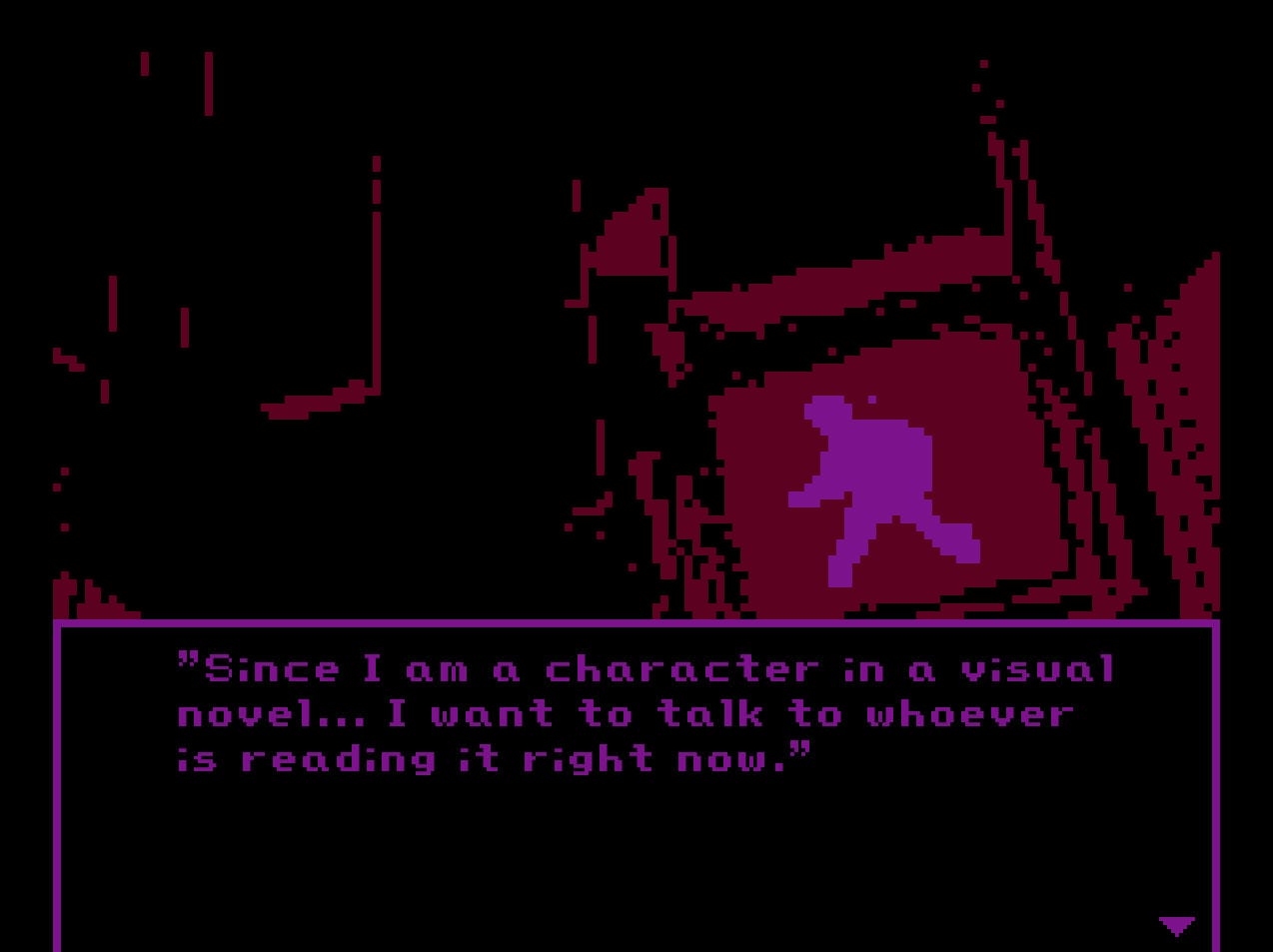
The player’s role as the "inner monologue" is perhaps the game's most insightful masterstroke. You aren't playing as her; you are playing with her, or perhaps against her own worst impulses. You have to choose your words carefully. Be too harsh, and she retreats; be too vague, and she loses her grip on reality. This creates a unique form of onboarding friction where the player must learn the logic of a broken mind rather than the logic of a game engine. It’s a simulation of caretaking—both of oneself and of another—that feels remarkably authentic.
The Horror of the Internal
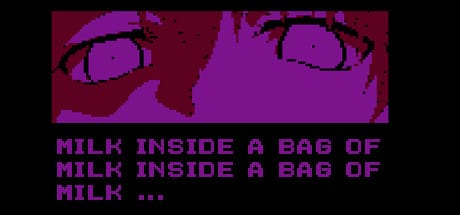
While labeled as psychological horror, this title eschews the tired tropes of the genre. There are no sudden loud noises or monsters lurking in the shadows. The horror is entirely internal and existential. The writing uses a rhythmic, almost staccato delivery that mimics the looping nature of intrusive thoughts. When the protagonist fixates on the "bagness" of the milk, it’s not a quirky character trait; it’s a terrifying look at how dissociation can strip the meaning from the most basic elements of reality.
The game challenges our definition of "challenge." The difficulty doesn't come from reflexes, but from the emotional labor required to witness someone's pain without the ability to "fix" it. There is a persistent sense of dread that permeates the twenty-minute runtime, a feeling that the world could simply dissolve into pink static at any moment. This instability is the game’s greatest strength. It captures the latency between a thought and an action that defines the experience of severe depression and anxiety. By the time you reach the checkout counter, you feel as exhausted as the protagonist. That exhaustion is the point. Kryukov isn't interested in entertaining you; he is interested in making you feel the weight of a brain that refuses to cooperate. It’s a brief experience, but its density is staggering. Every line of dialogue is a deliberate choice, contributing to a sense of claustrophobia that makes the small world of the game feel like an infinite, inescapable labyrinth.