

Bottom Line: Mount & Blade: Warband offers unparalleled medieval sandbox freedom and a combat system that remains profoundly rewarding, despite its visually archaic presentation and UI that actively resists modern sensibilities. This is a game that demands patience, but repays it with rich, player-driven sagas.
Mount & Blade: Warband's enduring appeal isn't immediately obvious. Its rough-hewn exterior, a tapestry of textures and models that felt dated even at its 2010 release, initially masks a depth few games achieve. Yet, peel back that veneer, and you discover a singular experience, a game that masterfully blends the visceral thrill of personal combat with the cerebral demands of grand strategy.
The Grinding Gears of Calradia
The core gameplay loop is elegantly brutal. You start as a lone adventurer, often penniless and unmounted, in a vast, war-torn land. Survival dictates your early choices: questing for local lords, trading goods between cities, or, more often, preying on weaker bandits. Slowly, painstakingly, you recruit peasants, train them into hardened warriors, and accumulate wealth and renown. This progression isn't a linear march; it's a constant grind against overwhelming odds, a dance with permadeath (if enabled), and a perpetual struggle for resources. Every victory, however small, feels earned, a testament to the player's persistence and tactical acumen. The sense of building something from nothing, of transforming a ragtag band into a formidable army, is extraordinarily compelling.
The Unforgiving Art of War
At the heart of Warband lies its combat system, an aspect that continues to defy contemporary design trends. It's not about button mashing or flashy combos; it's about timing, positioning, and directional control. Whether swinging a two-handed sword, couching a lance from horseback, or unleashing volleys of arrows, every action requires deliberate input. The four-directional attack and block system, especially when mounted, provides a level of nuance and physical feedback rarely found. This system, once mastered, becomes fluid, addictive, and profound. A perfectly timed block followed by a devastating counter-attack, or a well-executed cavalry charge that shatters enemy lines, delivers a dopamine hit few other games can replicate. However, the initial onboarding friction is significant. Players will stumble, miss, and die repeatedly as they acclimate to its unique rhythm. This steep learning curve is not a bug; it's a feature, demanding commitment and rewarding mastery with a sense of genuine accomplishment.
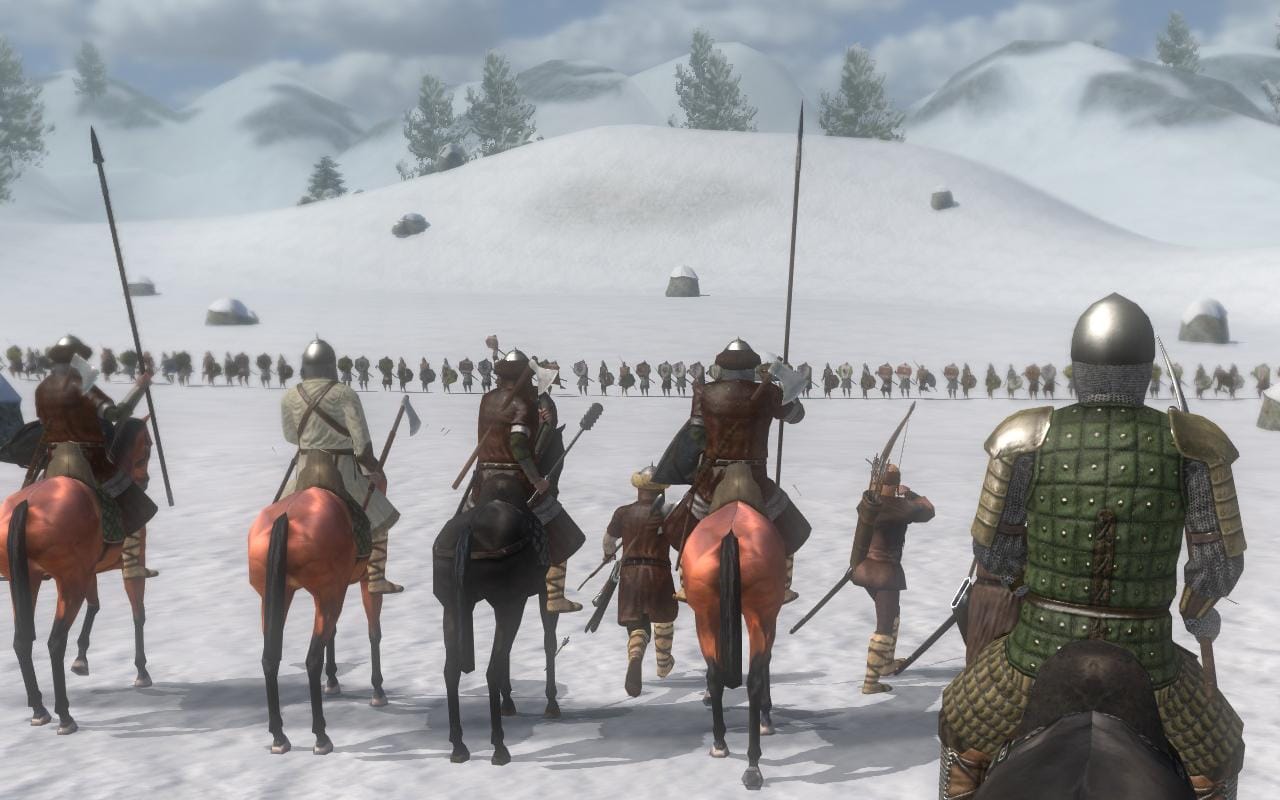
Beyond personal duels, the real-time army command adds another layer of strategic depth. Issuing orders to your archers, infantry, and cavalry mid-battle, adapting to terrain and enemy formations, elevates skirmishes from mere brawls to tactical engagements. This fusion of first-person action and real-time tactics creates a unique gameplay identity that has influenced a generation of developers.
The Clunky Crown of Command
While the strategic depth of kingdom management is impressive—from managing your fiefs and recruiting companions to navigating political alliances and betrayals—it's here that the game's antiquated interface becomes most apparent. The menus are a labyrinth of text, often requiring multiple clicks to perform simple actions. Important information is frequently buried, and the sheer lack of visual polish or intuitive design can be a significant barrier. There's no voice acting to guide you, relying solely on text dialogues that, while functional, lack the immersion expected in modern RPGs. This stark functionality forces players to engage with the underlying mechanics directly, fostering a deeper understanding of the systems but at the cost of immediate accessibility. It's a game that respects your intelligence, but not necessarily your time. The "outdated graphics" and "clunky user interface" are not merely aesthetic critiques; they represent deliberate design choices (or limitations) that shape the entire player experience, creating a barrier for entry for many, but a badge of honor for those who overcome it.