Bottom Line: A haunting, geometric odyssey that proves architecture can be more terrifying—and more beautiful—than any scripted monster. It is an uncompromising vision of scale that demands your attention and, occasionally, your patience.
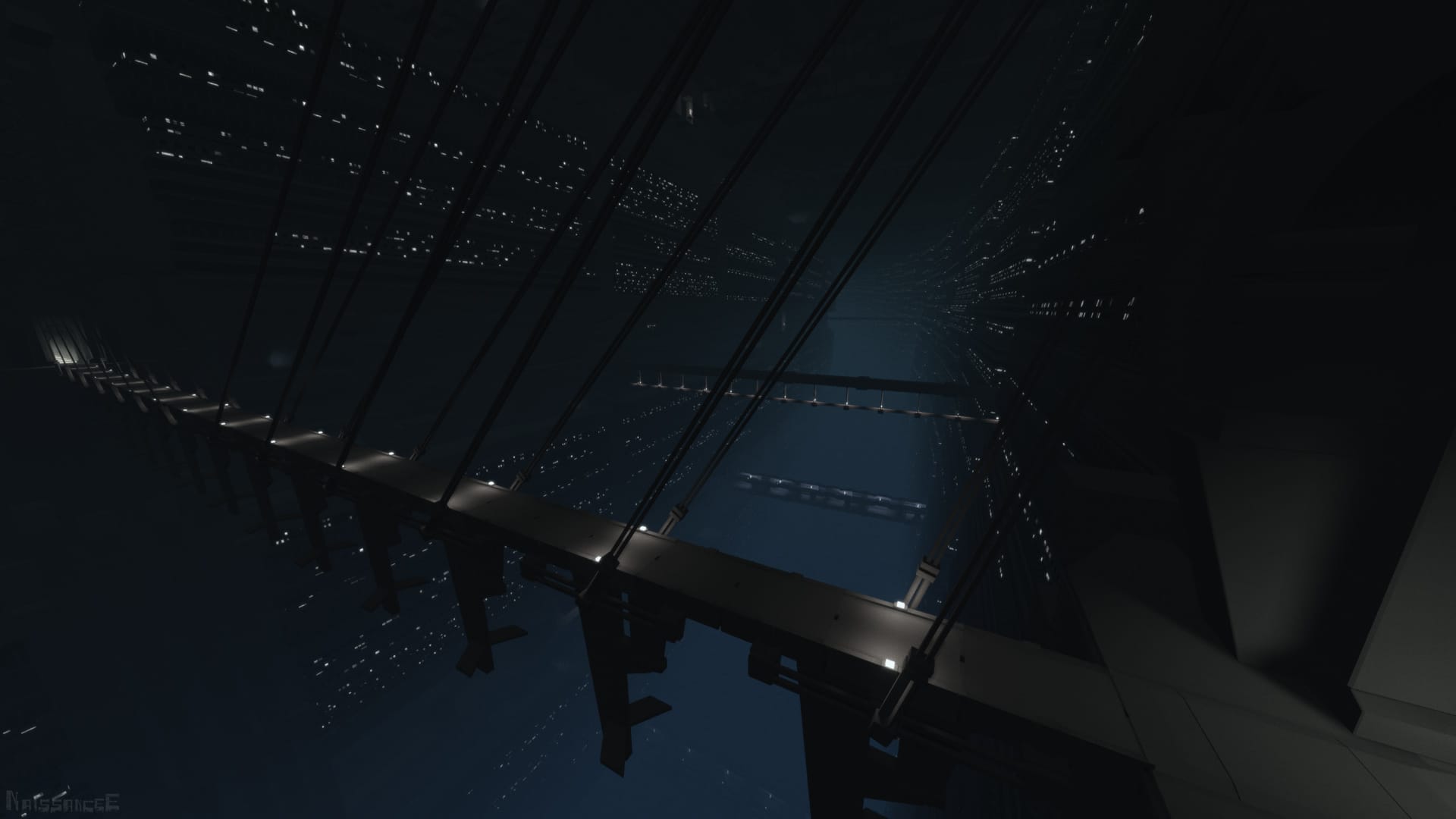
The core experience of NaissancE is defined by the tension between the player’s puny movements and the world’s colossal indifference. Most modern games are designed to make the player feel like the center of the universe; NaissancE does the opposite. It succeeds by weaponizing spatial awareness. You aren't just looking for an exit; you are trying to comprehend the logic of a space that wasn't built for human habitation.
The Mechanics of Presence
While primarily an exploration game, NaissancE introduces a rhythmic breathing mechanic that remains one of its most polarizing features. To sprint, you must manually trigger inhalations and exhalations. It’s an intentional friction. It forces you to pay attention to Lucy’s physical state in a world that feels entirely metaphysical. While some find it clunky, I argue it’s essential. It prevents the player from simply holding "Shift" and zoning out. You are forced to engage with the rhythm of your own survival. However, when this mechanic is paired with the game’s more demanding platforming sequences, the frustration levels can spike. First-person platforming is notoriously difficult to get right, and NaissancE occasionally stumbles here. The "old-school" precision required can feel at odds with the contemplative, atmospheric goals of the rest of the experience.
Environmental Logic
The game is essentially a series of spatial puzzles. How do you cross a room that changes shape when the light shifts? How do you descend a tower that defies Euclidean geometry? The gameplay loop is a constant cycle of awe, confusion, and eventually, revelation. The lack of traditional signposting means your successes feel earned. When you finally find the path through a maze of shifting shadows, it’s because you learned to read the architecture, not because an arrow pointed the way.
The Horror of the Infinite
There is a specific kind of "spiritual horror" at play here. It’s not the horror of being chased, but the horror of being irrelevant. The megastructure feels ancient and functional, yet its purpose is entirely opaque. This creates a sense of profound isolation that few games achieve. You are a biological glitch in a perfectly ordered, geometric machine. This thematic consistency is NaissancE’s greatest strength. Every design choice, from the lack of textures to the ambient, industrial soundscape, serves to reinforce this feeling of being an intruder in a vast, silent mind.