
Overview
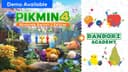
How much is a resolution bump and a promise worth? That is the question this release poses. Pikmin 4 – Nintendo Switch 2 Edition + Dandori Academy repackages Nintendo’s strategy-adventure game for Switch 2 with improved visuals, a new challenge mode, microphone support and a sharing feature. The base game is untouched in structure. The player is a rescue officer stranded on a mysterious planet, growing, plucking and commanding small plantlike Pikmin to haul treasure, fight creatures and track down a missing crew.
The organising idea is Dandori, the art of planning and multitasking efficiently. Every design decision feeds it: Pikmin types with distinct strengths, a dog companion named Oatchi who carries items and speeds up traversal, and a world that rewards the player who splits a squad across several fronts rather than marching it in a single column. It is real-time strategy shrunk to garden scale and stripped of the genre’s usual intimidation.
The Switch 2 Edition layers four additions on top. Visuals improve in both TV and handheld modes, reaching higher resolution when docked. Dandori Academy adds exam-style stages that grade command skills with medals, with stages rolling out over time. Oatchi now responds to voice commands through the system microphone. And Dandori Battles can be shared through GameShare, locally or online via GameChat, with a friend who does not own the game.
Pricing sets the terms of the debate. The full package is sold at a premium, and owners of the original Switch version pay for an Upgrade Pack and can transfer their save data. The base game is not in dispute. The upgrade is.
Key features
- Dandori-driven strategy: Grow, pluck and command Pikmin with type-specific strengths to carry treasure, fight creatures and rescue a missing crew, with efficiency as the measure of skill.
- Oatchi, the dog companion: Carries items, aids traversal, and now accepts voice commands through the Switch 2 system microphone.
- Dandori Academy: Exam-style stages that test command skills and award medals, with stages released over time.
- Enhanced visuals: Improved presentation in TV and handheld modes, with higher resolution when docked.
- GameShare Dandori Battles: Shared battles locally or online via GameChat, even with a friend who does not own the game.
- Upgrade path: Paid Upgrade Pack for original Switch owners, with save data transfer.
Analysis
The Dandori Loop
The design’s strength is that it turns time management into the adventure. Carrying treasure, fighting creatures and searching for crew all draw on the same finite resources: Pikmin and time. Because each Pikmin type has its own strengths, every task becomes a small allocation problem. Which group goes where? Who stays behind to carry? The loop rewards foresight over reflexes, and it scales cleanly, since a casual player can muddle through while an optimiser chases the tightest possible route.
Oatchi is a key piece of the structure. A companion that both carries items and improves mobility collapses two roles into one unit, which cuts the micromanagement that makes real-time strategy awkward on a controller. He works as a supporting commander, a transport and a workhorse at once. The base game’s design explains why it holds up: the systems interlock rather than pile up.
Dandori Academy
The headline addition is where the argument starts. Dandori Academy distils the campaign’s central skill into exam-style stages with medal rankings. On paper, it suits the game well. Medals give optimisers a clear target, and short graded stages suit handheld sessions better than a long expedition does.
The delivery model is the problem. The stage count is substantial, but they are released over time, so buyers at launch pay for a schedule rather than a complete mode. That structure explains the split in opinion. A regular cadence can work as a reason to return; it also looks thin to anyone who measures an upgrade by what is included on day one. We side closer to the sceptics. A challenge mode built from the existing rule set extends the game without changing it. It offers more tests, not new ideas.
Voice Commands
Directing Oatchi by voice through the system microphone is the novelty feature of the package. Its design logic is sound: a spoken order frees the hands for squad management, which fits a game about doing several things at once. Whether it becomes a habit or a curiosity depends on how much of Oatchi’s command set it covers, and nothing published specifies that. Treat it as a pleasant extra, not a reason to buy.
GameShare Battles
This is the clearest consumer-friendly addition here. Dandori Battles can be shared with a friend who does not own the game, locally or online via GameChat. That turns a purchase into a shared competitive mode and doubles as a demo for the uninitiated. It applies only to Dandori Battles, not the full game, but for a competitive side mode that scope is right.
The Reception Gap
The gap is not about the base game’s design; it is about what the edition adds and how it is sold. The campaign underneath remains the draw. The new material is thinner, and the delivery schedule makes the value harder to judge at launch. That tension is the real story of this release.
Visuals & performance
The art direction, with its tiny creatures and outsized everyday treasure, depends on scale and detail, so it stands to gain more from added resolution than most styles. Higher resolution when docked gives texture and depth of field more room to sell the garden-level perspective, and improvements in handheld mode matter for a game whose short stages suit portable play. The visual upgrade is a refinement of an already attractive game, not a remake. No frame rate target is published for either mode, so buyers should not assume one.
Platform nuances
This edition is exclusive to Nintendo Switch 2. The microphone-driven Oatchi commands, GameShare and GameChat features all rely on that system’s hardware and services. The original Switch version remains the base for upgraders: the Upgrade Pack unlocks the enhancements, and save data transfers, so progress is not lost. New buyers pay the full package price. Online sharing runs through GameChat, while local sharing needs only a nearby friend.
Final verdict
Two products share this name, and they deserve different verdicts. As a first purchase, this is a good way to play a Nintendo strategy game: sharper, more shareable, and carrying a challenge mode that will grow over time. As an upgrade, it is a modest bundle whose main attraction arrives piecemeal, sold for a fee that invites scepticism.
We rate it as a solid but unremarkable package: the foundation is strong, and the new material leans on that foundation rather than building on it. Newcomers should consider it. Existing owners should wait until more of the Academy’s stages are out, then decide whether the additions are worth the upgrade.
Reviewed by the Rankeno Puzzle & Casual Desk. Scores are out of 10; the overall score is the desk’s editorial judgement, informed by the four sub-scores above. How we review