
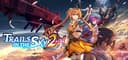
Overview
Sequels usually spend their first hours re-introducing the cast. Trails in the Sky 2nd Chapter spends them taking one of its leads away. Having helped quell a coup in the Kingdom of Liberl, Estelle and Joshua are promoted to senior bracers. Then, on the eve of the Queen’s Birthday Festival, Joshua reveals a secret from his past and disappears. What follows is Estelle’s search for him, set against the rise of Ouroboros, a secret society plunging Liberl into chaos.
This is a full remake of the second entry in Nihon Falcom’s story-driven JRPG series, published by Nihon Falcom. It releases September 16, 2026 on Steam and Nintendo platforms. The positioning is unambiguous: this is the second half of a story, not a fresh on-ramp. The plot picks up directly after 1st Chapter, and clear data from that game carries over to unlock bonus items that smooth early progression. Falcom is building for the returning player and makes no apology for it. The design is built around that continuity rather than around a fresh start.
The reservations are narrower but consistent. The combat is iterative, with issues carried over from earlier Trails games, and the story focus is heavy enough that gameplay can feel secondary. Both complaints are fair, and both are also descriptions of what the series has always been. This game is a narrative delivery system with an RPG attached. It ranks among the stronger examples of its kind, provided that is what the buyer wants.
Key features
- Hybrid Combat: Real-time Quick Battles sit alongside turn-based command battles, so the game can vary its pacing between routine and set-piece encounters.
- Brave Rush: A new system for linking character attacks during Quick Battles, giving the real-time layer a party-wide mechanic of its own.
- New Crafts and S-Crafts: Fresh character skills and super moves expand the roster’s toolkits beyond 1st Chapter.
- Orbment Customisation: The orbment system lets players tailor each character’s magical Arts, which is where the game’s build depth lives.
- Save Carry-Over: Clear data from 1st Chapter unlocks bonus items that ease the opening stretch.
- Side Activities: Fishing, poker and cooking with companions break up the main quest.
- Returning Playable Cast: Fan-favourite characters rejoin as party members.
- Full Dual Audio: English and Japanese voice acting.
Analysis
A Premise That Does the Heavy Lifting
The smartest design decision here is structural, and it is made in the opening. Removing Joshua converts a two-hander into a pursuit, and gives Estelle a personal motive that runs in parallel with the national-scale threat. The player always has two questions pulling forward: where is he, and what does Ouroboros want with Liberl? A lesser sequel would have escalated the stakes and left the relationships static. This one makes the relationship the stakes.
It also explains the design’s emphasis. Story and character work are the product’s central mechanic, not a pleasant bonus. Everything else exists to pace the plot, give it texture, and provide something for the hands to do between revelations.
Combat: Two Systems, One Inherited Problem
The hybrid battle design is sound on paper. Quick Battles handle encounters in real time, and command battles shift to turn-based play. The split acknowledges something older JRPGs ignored: not every fight deserves a menu. Brave Rush is the notable addition, letting players link character attacks inside Quick Battles. It gives the action layer a reason to think about the party as a unit instead of a single controlled character with spectators.
The limits are equally clear. New Crafts, new S-Crafts and one linking mechanic amount to refinement, not reinvention. Combat issues from earlier Trails games carry over, and the additions do not suggest Falcom tried to fix them. Anyone who found 1st Chapter’s battles the weakest part of the package should expect the same hierarchy here: story first, combat in service of it.
We consider that a defensible choice, if not an ambitious one. A direct continuation that overhauled its systems would break continuity with a game many players finished weeks or months earlier. But “defensible” is not “exciting”, and the combat’s limits are real.
Orbments and Build Depth
The orbment system gives the game its mechanical identity. Letting players customise each character’s Arts means party composition is a matter of configuration as well as selection. That matters more in a sequel with returning fan-favourite party members. A larger playable roster only has value if those characters can be shaped into distinct roles. Orbments give tinkerers a reason to open the menu, and they are the strongest counter to the charge that gameplay is an afterthought.
Side Content and Pacing
Fishing, poker and cooking with companions are familiar genre furniture. Their value here is in pacing and character. A plot built on a disappearance and a conspiracy needs pressure valves, and cooking with companions puts the cast in low-stakes situations the main story cannot afford. These are not reasons to buy the game. They are reasons the story-heavy structure is less exhausting than it might be.
The Onboarding Question
Onboarding friction for veterans is close to zero, and the carry-over bonus is a small, well-judged reward for loyalty. For everyone else, the friction is total. The story begins from the aftermath of a coup the player is assumed to have witnessed, with a relationship they are assumed to care about. Nothing in the feature set indicates a route in for newcomers. That is honest design, but it means the game’s value depends on a second purchase. For anyone who has not finished 1st Chapter, the real cost of entry is two games.
Visuals & performance
As a full remake, not a remaster, the game is rebuilt instead of upscaled. Presentation is part of the pitch: the remake is meant to give the story a cleaner, more current look without changing its shape. The audio is the more concrete strength. Full English and Japanese voice acting suits a game whose main appeal is dialogue, and it changes how a text-heavy JRPG is consumed.
As a design-level expectation, a game that mixes turn-based and real-time combat should be more forgiving of modest hardware than a pure action title. The Quick Battles are where any platform shortfall would show first.
Platform nuances
- Steam: Menu-driven command battles map naturally to mouse and keyboard, but the real-time Quick Battles and Brave Rush chaining are designed with a controller in mind.
- Nintendo: The game ships on Nintendo hardware. A story-led RPG with fishing, poker and cooking on the side is a natural fit for portable sessions.
- Parity: Voice options and language support are part of the game rather than a platform-specific extra.
- Save Carry-Over: The 1st Chapter bonus depends on existing clear data, so continuing on the system where 1st Chapter was finished is the safer choice.
- Pricing: A paid release at $59.99.
Final verdict
Trails in the Sky 2nd Chapter knows exactly what it is: the second half of a story, built for the people who played the first. Its design choices follow from that. The opening weaponises attachment to the cast. The combat extends 1st Chapter’s systems without disturbing them, and the carry-over bonus greets returning players by name.
The criticisms are real. Brave Rush and a batch of new Crafts do not amount to a reinvention, and the inherited combat flaws remain inherited. Players who tolerate the battles to reach the next scene will keep tolerating them. But the story and cast, the things this series exists to deliver, land with force.
We rate it Great. We recommend it clearly to anyone who has finished 1st Chapter, with the caveat that combat is not the draw. Everyone else should start there. The sequel does not wait for latecomers, and the story is better for it.
Reviewed by the Rankeno RPG & Adventure Desk. Scores are out of 10; the overall score is the desk’s editorial judgement, informed by the four sub-scores above. How we review