
Bottom Line: Return to Monkey Island isn't merely a nostalgic rehash; it's a meticulously crafted point-and-click adventure that respects its lineage while confidently forging a new path, even with its controversial art direction.
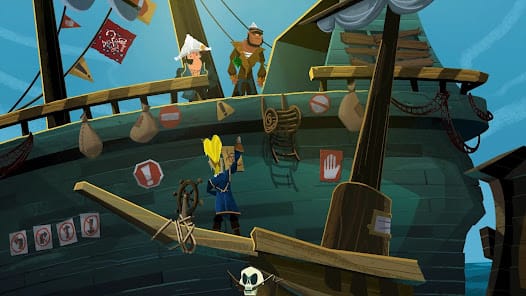
Return to Monkey Island operates within a fascinating paradox: it is an ardent celebration of its own legacy while simultaneously an act of subtle subversion. Gilbert and Grossman have not simply manufactured a sequel; they have engaged in a dialogue with it. The core gameplay loop remains steadfastly point-and-click, a comforting anchor in an industry increasingly dominated by open worlds and action mechanics. This adherence to form, however, is not a concession to nostalgia but a confident declaration of the genre's enduring power. The context-sensitive interactions are a masterclass in UX design, eliminating the clunky verb-coin interfaces of yesteryear without sacrificing the investigative depth central to adventure games. Every clickable object feels purposeful, every dialogue choice weighted, contributing to a fluid, less frustrating investigative process.
The puzzles themselves are a delightful mix of the logical, the absurd, and the deeply referential. Players will find themselves grappling with intricate item combinations, navigating elaborate dialogue trees to extract critical information, and occasionally resorting to classic adventure game moon logic, albeit with a modern polish that generally prevents outright frustration. The game’s integrated hint system, a contentious feature in some circles, is a welcome concession for a broad audience. It’s implemented thoughtfully, revealing clues incrementally rather than outright solutions, preserving the satisfaction of discovery while mitigating the infamous dead-ends that could plague older titles. This strikes a crucial balance, acknowledging that not every player has the patience for obscure puzzle design in 2026.
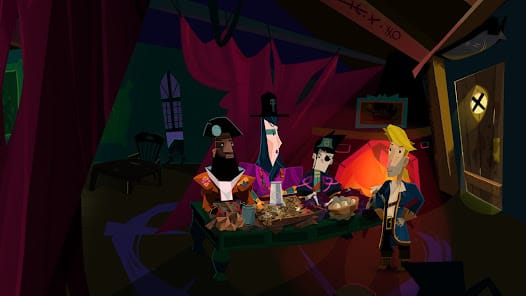
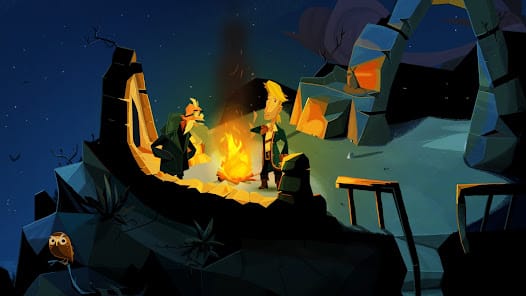
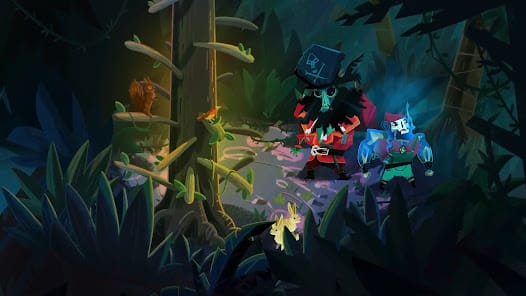
Narratively, Return to Monkey Island is a triumph of character continuity. Guybrush Threepwood remains the lovable, often bumbling, but ultimately tenacious hero fans remember. His interactions with a world that has moved on, in some ways, and stubbornly refused to in others, are a source of constant amusement and occasional poignancy. Elaine Marley, no longer merely the damsel in distress, has agency and purpose, reflecting a more mature approach to character development. LeChuck, the persistent specter of Guybrush’s past, is as menacing and comically inept as ever. The writing is consistently sharp, replete with the series’ trademark self-aware humor, fourth-wall breaks, and an underlying current of melancholy that hints at the passage of time. It's a game that understands its audience has grown up alongside Guybrush, and it offers reflections on closure, ambition, and the stories we tell ourselves. The critical reception, averaging an 87 on Metacritic and an 8.1 from IGN, validates this nuanced approach, praising the game's ability to evoke the past without being enslaved by it. The complaints, minor as they are, often center on the game’s somewhat ambiguous ending, a deliberate choice by Gilbert that forces players to confront the nature of narrative resolution itself—a bold move for a series famed for its definitive conclusions. This decision, while perhaps unsatisfying for some, solidifies the game's position not just as a sequel, but as a meta-commentary on the very act of storytelling and fandom.