

Bottom Line: Shogun Showdown is a masterclass in tactical restraint, proving that a single dimension is all you need for a deep, punishing, and utterly addictive strategy experience.
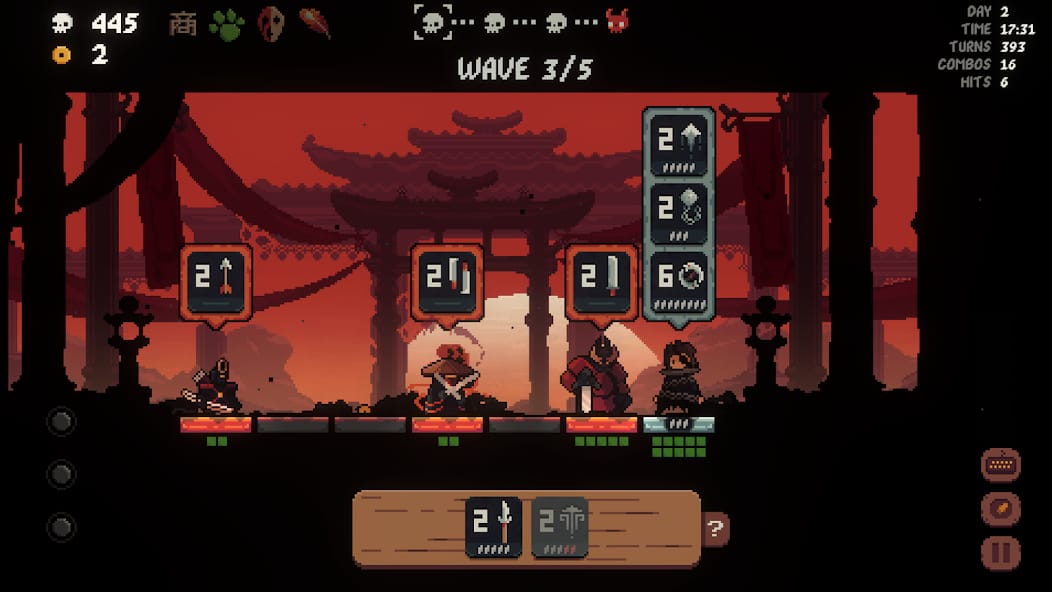
The core of Shogun Showdown is its Turn Economy. In most turn-based games, "waiting" or "moving" feels like a filler action. Here, they are as significant as a lethal blow. If you turn your back to an enemy to prepare a bow shot, that turn spent rotating is a turn the enemy uses to close the gap. This creates a high-stakes dance where the player is constantly weighing the cost of preparation against the necessity of immediate action.
The Art of the Buffer
The Buffering System is the game’s true mechanical triumph. By allowing you to queue up three actions, Shogun Showdown elevates its combat from simple trading of blows to a rhythmic, cinematic experience. You might spend two turns "charging" a heavy strike and a third turn "moving" into range, only to unleash a flurry of steel that clears the screen. This system introduces a layer of forward-thinking that few roguelikes manage. You aren't just playing for the current turn; you are setting up the board for a payoff three turns down the line. It turns every encounter into a micro-puzzle: "How do I kill these three samurai without taking damage, given my current cooldowns?"
Procedural Depth and Progression
The variety in the eight playable characters isn't just cosmetic. Each warrior forces a fundamental shift in how you view the 1D grid. One might specialize in "swapping" positions with enemies—turning their own momentum against them—while another might rely on long-range projectiles that require careful line-of-sight management.
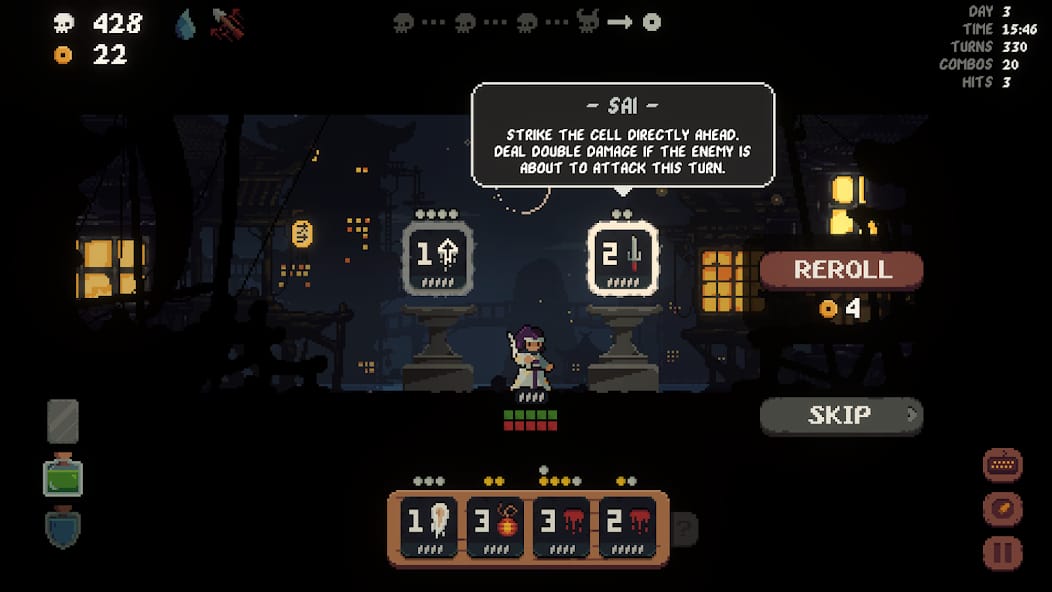
The "Ascension" style difficulty system, known as Days, provides the necessary hook for long-term engagement. As the "Days" progress, the game introduces new enemy types and environmental hazards that stress-test your understanding of the mechanics. The upgrade system for tiles is equally robust; choosing whether to reduce a tile's cooldown or increase its raw damage is a meaningful trade-off that can define the success of a run. It avoids the "power creep" trap by ensuring that even a fully upgraded player can be dismantled in seconds if they miscalculate a single move.