Bottom Line: Space Station 14 is a brilliant, open-source reclamation of the most chaotic social experiment in gaming. It successfully trades the archaic, unplayable friction of its predecessor for a modern engine that lets the brilliance of its emergent storytelling shine through.
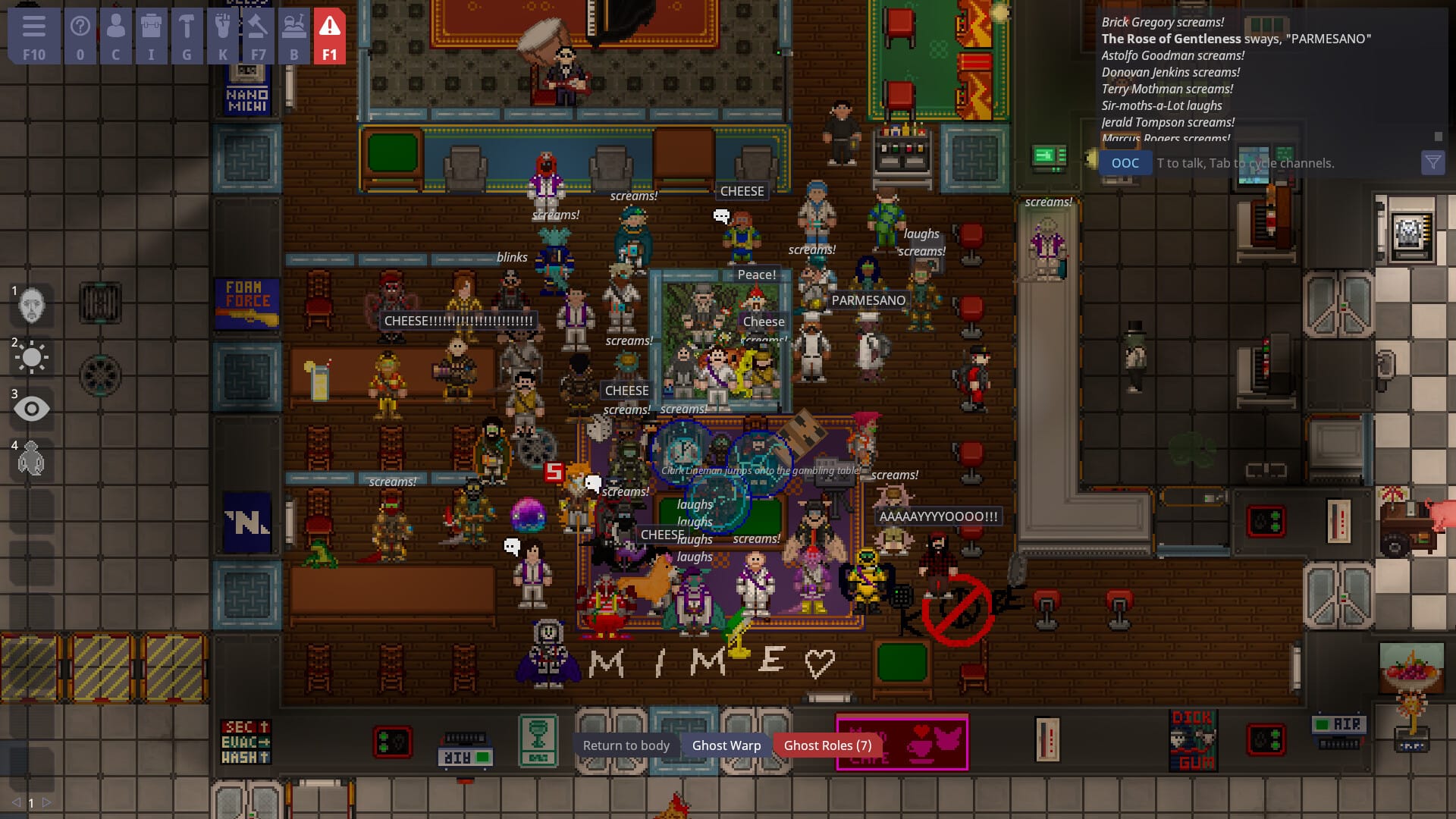
The core of Space Station 14 isn't found in its menus or its graphics; it’s found in the mechanical friction between its systems. To understand this game is to understand that every action has a cascading effect. When an engineer forgets to calibrate the singularity engine, the resulting power surge doesn't just flicker the lights—it blows the doors to the brig, releases a prisoner who happens to be a syndicate agent, and inadvertently starts a fire in the kitchen that consumes the station's oxygen supply. This is the gameplay loop at its finest: a delicate balance of order constantly threatened by the entropic nature of player agency.
The Bureaucracy of Survival
Onboarding is the game’s greatest hurdle. Unlike modern titles that hold your hand through a sanitized tutorial, SS14 throws you into the deep end of a high-fidelity simulation. If you choose to be a chemist, you aren't just clicking "craft" on a potion; you are mixing specific reagents, managing temperatures, and praying you don't accidentally create a chlorine gas cloud in the hallway. This level of granularity is intimidating, but it creates a sense of earned mastery. When you finally learn how to hack a door or perform surgery, you aren't just using a skill—you are exploiting the game's internal logic.
The social hierarchy acts as the game's primary "quest" system. There are no waypoints here. Instead, you have a radio headset and a supervisor. The tension of the game stems from the asymmetry of information. You know your job, but you don't know if the person standing next to you is a loyal coworker or a traitor with a thermal explosive in their backpack. This creates a perpetual state of low-level paranoia that is unique to the genre.
Interface and Accessibility
The move to the Robust Toolbox cannot be overstated. In the old days, simply picking up an item was a three-click ordeal. Now, the interface is contextual and relatively intuitive. However, "intuitive" is a relative term here. The UI still demands a significant amount of screen real estate, and managing your inventory during a crisis still feels like a high-speed game of Tetris. There is a lingering onboarding friction that the developers haven't quite solved. New players are often met with a wall of jargon and complex hotkeys that can feel more like a job than a hobby.
Furthermore, while the engine is modern, the content is still catching up to its twenty-year-old ancestor. Long-time veterans of the "13" era will notice missing features—specific antagonist types, certain complex machinery, or niche job roles. It’s a trade-off: you get a game that actually runs at 60 frames per second, but you lose some of the sheer encyclopedic depth that defined the original's cult status.