Bottom Line: Nintendo has built the most complete, most generous, most mechanically confident Splatoon ever made — and then wrapped it in netcode and menu friction that would get a Western live-service shooter roasted alive. It's a brilliant game with an infrastructure problem.
The Gameplay Loop
The core loop is close to perfect, and I want to be specific about why rather than just asserting it.
Most shooters are subtractive. You reduce the enemy team's health to zero, and you win. Splatoon is additive — you're building something, constantly, and the enemy is building over it. This inverts the risk calculus in a way that changes how the game feels minute to minute. In Call of Duty, retreating is a neutral act. In Splatoon 3, retreating is only viable if there's ink on the floor behind you to swim through. Your escape route is a resource you had to manufacture earlier. Aggression and infrastructure are the same activity.
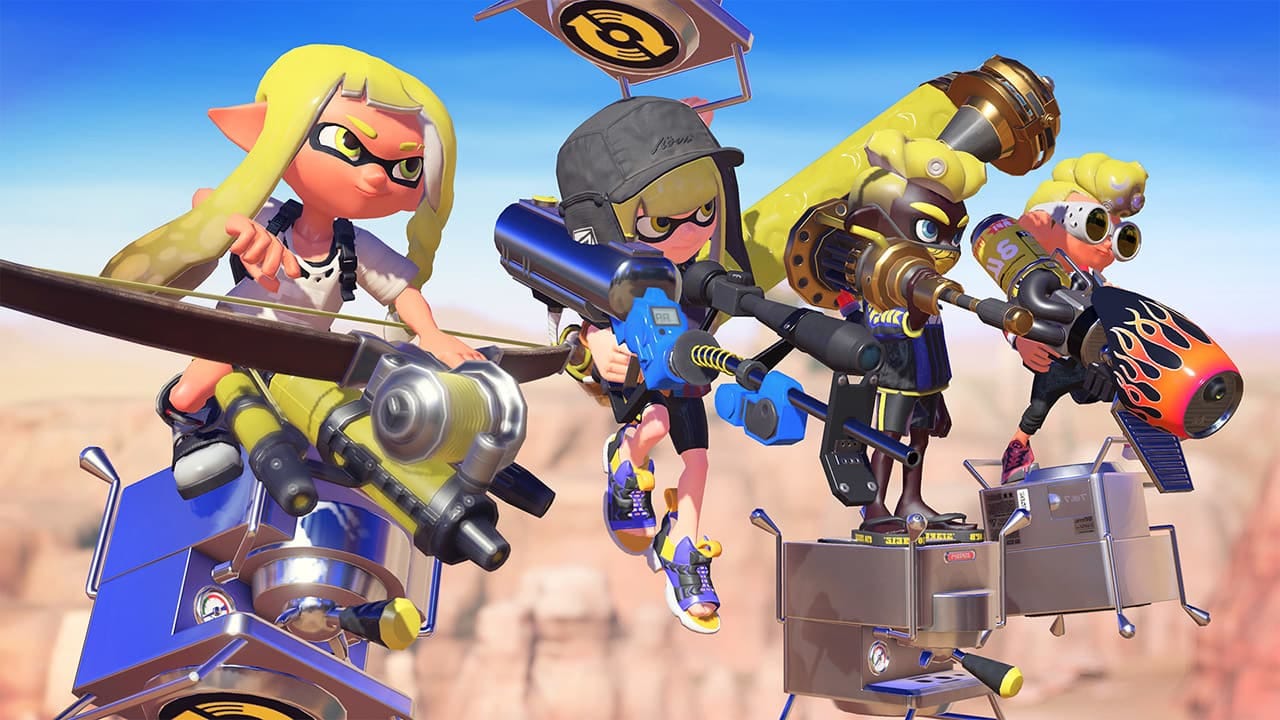
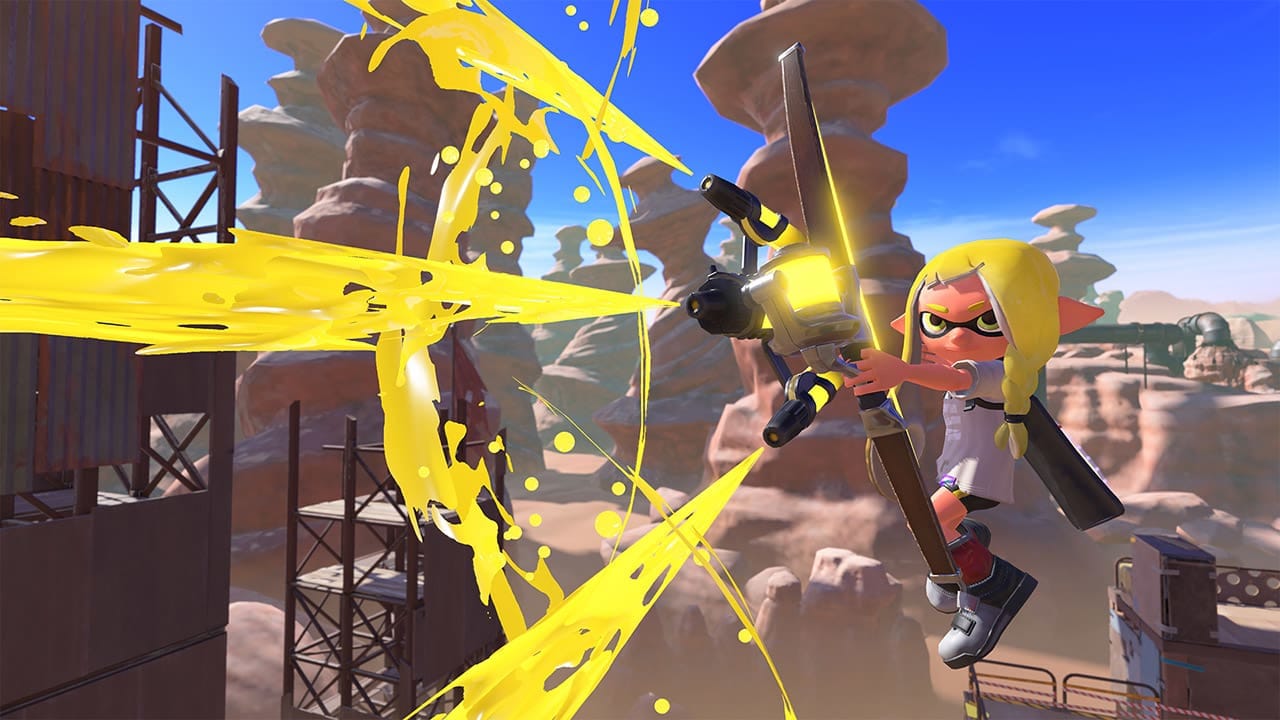
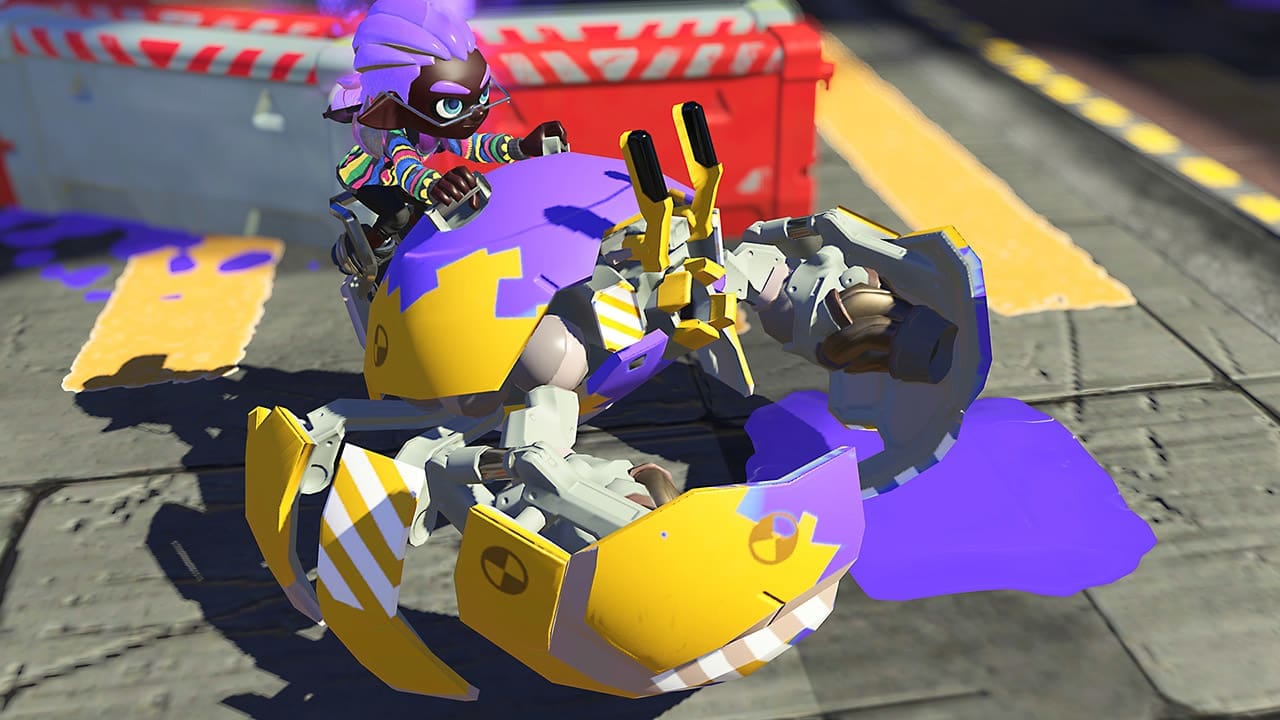
That's the design insight the whole franchise sits on, and Splatoon 3 tunes it more sharply than either predecessor. Weapon balance is tighter. The special weapons — Splatoon 2's weakest system, where a few specials could single-handedly decide a match — have been rebuilt around area denial and repositioning rather than instant-win buttons. The new Squid Surge and Squid Roll movement techniques add a genuine skill ceiling to traversal: rolling out of your ink flips your direction and grants brief bullet immunity, which turns duels into something closer to a fighting game exchange than a pure aim contest.
Salmon Run is where the sequel earns its number. Next Wave adds the Egg Throw — you can lob power eggs across the map instead of physically carrying them — which transforms a mode that was about panicked jogging into one about spatial logistics and communication under pressure. The King Salmonid encounters give shifts a genuine climax. And making it permanently available instead of schedule-gated is the sort of fix that sounds like a footnote and is actually the difference between a mode people love and a mode people remember fondly.
Where It Iterates Instead of Innovates
Here's the fair criticism, and it's the one nearly every critic landed on: if you put a Splatoon 2 match and a Splatoon 3 match side by side, a non-player could not tell them apart. The maps are new. The weapons are new. The feel is not. For a franchise whose entire identity was built on doing something nobody else was doing, spending an entire generation on refinement rather than reinvention is a defensible choice that still leaves something on the table.
Return of the Mammalians is the clearest example. It's charming, well-paced, and structurally clever — Alterna's mission-select hub with its hidden paths is a real improvement over Splatoon 2's linear kettle progression. But it's easy, it's short, and it exists primarily as a laboratory for teaching you weapons you'll then use online. Compare it to the Side Order DLC, which arrived later and was received substantially better precisely because it took a swing: a roguelike tower climb with build-crafting, permanent progression, and actual difficulty. Side Order is what a Splatoon campaign should be. It's telling that Nintendo had to sell it separately to justify making it.
The Interface Is the Enemy
This is where I stop being nice.
Splatoon 3 has, by a wide margin, the worst between-match friction of any modern competitive shooter. Every session begins with a mandatory news broadcast from Deep Cut. Every map rotation announcement plays out at its own pace. Menu dialogue you have read four hundred times cannot be meaningfully skipped. In a game whose median session is a stack of three-minute matches, the connective tissue between matches is a tax you pay repeatedly, and it compounds into genuine resentment.
To be clear, Nintendo did fix real problems here. You can change your entire loadout between matches without leaving the lobby — a Splatoon 2 sin that required a full return to the plaza. The lobby has a practice range so you're inking targets during matchmaking instead of staring at a spinner. Someone on that team understood the assignment. They just weren't allowed to finish it.
Netcode: The Structural Flaw
Splatoon 3 runs on peer-to-peer networking. Not dedicated servers. In 2022. For a first-party title from the most profitable game company on earth.
The consequences are exactly what you'd predict. Latency is inconsistent and host-dependent. Hit registration in close-range duels — the exact moments that decide ranked matches — can feel arbitrary. And when one player's connection drops, the entire lobby is dissolved with a "Communication Error," wiping progress for seven other people who did nothing wrong. Compounding this: Nintendo's voice chat solution routes through a smartphone app rather than the console, which for a team-coordination game is an ergonomic non-starter.
This is the single largest gap between critic scores and player scores. It's invisible in a review week. It's unavoidable across a thousand matches.